

Toronto is a truly unique city. Its downtown core is steeped in history, reflected in the diverse details of its buildings. Every structure has its own story and a distinct architectural style, shaped over decades. At one point, Toronto even developed its own signature style, setting it apart from any other city. More on toronto-future.
Natural Disasters and Their Impact on Architecture
In the early 17th century, French colonists laid claim to the lands of the Iroquois and other Indigenous peoples. In 1760, the British captured the region, displacing the French. In 1793, these territories became the Town of York, and after years of development, it achieved city status as Toronto in 1834.
Unfortunately, few historic buildings remain in Toronto due to major fires. One such fire on April 7, 1849, devastated a large part of the city centre, including the city hall. Another catastrophic fire occurred in 1904, destroying 118 structures in just eight hours. This was the largest natural disaster in the city’s history, forever altering its appearance. As a result, and due to the subsequent rapid growth of the metropolis, most of Toronto’s buildings are modern, as the city was unable to preserve its entire architectural heritage.
Industrial Architecture
In the mid-19th century, the development of railways and ports for steamships spurred the active urbanization of Toronto’s once predominantly green areas. Thanks to its convenient harbour, the city transformed into a major hub for trade and industry. Factories and plants sprang up along the waterfront, including oil refineries, soap factories, aircraft plants, and munitions manufacturing.
However, by the 1970s, the world began to change, and many of these enterprises were no longer needed. Companies started moving production overseas where labour was significantly cheaper, leading to large-scale deindustrialization in Toronto. Factories were either converted into offices and lofts or demolished to make way for high-rises and residential complexes. It is this very process that shaped the modern appearance of the city we see today.

Commercial Architecture
Toronto continued to flourish thanks to its harbours, factories, and growing population, gradually becoming Canada’s commercial hub. With this development, major banks began erecting grand skyscrapers that reshaped the city’s skyline. This is how the city’s financial district was formed – the heart of the country’s business life, where high-rise buildings towered over smaller structures.
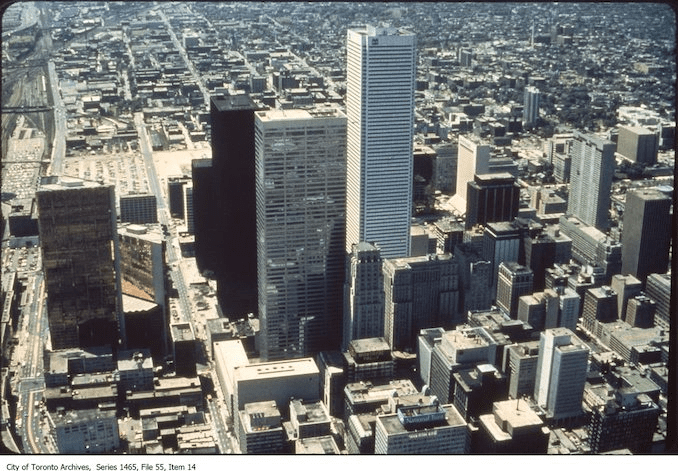
Toronto’s hotels initially started as small inns, but as the city’s population and prosperity grew, they transformed into large-scale, high-rise buildings. This trend began in the early 20th century, with new hotels designed to match the grandeur of the financial district’s skyscrapers. Examples of such architectural gems include the historic Fairmont Royal York, built in a château style, and the Park Plaza Hotel (now Park Hyatt Toronto), which originally featured Art Deco elements. Thanks to its status as the nation’s business capital, Toronto continued to see the development of world-class hotels.
In the city’s early days, commerce was limited to small, family-run shops amidst numerous factories. However, with the spread of capitalism, large shopping centres began to appear in Toronto. The first of these was Yorkdale Shopping Centre, officially opened in 1964. Designed based on market research, it boasted an exceptionally convenient location but faced criticism for its eclectic mix of modernist styles. In 1977, it was joined by the Eaton Centre, whose red brick façade echoed the surrounding industrial buildings. Since then, shopping centres have proliferated, with significant complexes like Fairview Mall and Sherway Gardens solidifying Toronto’s status as Canada’s premier shopping destination.
Residential Architecture
When the first settlements appeared in the 19th century, developers chose the Georgian style, even though it was already losing popularity in Great Britain and the United States at the time. Early settlers quickly appreciated its practicality and durability. Initially, buildings were constructed from logs, and later from planks, brick, or stone. Georgian style is characterized by symmetry, minimalist decor, and a wide structure.
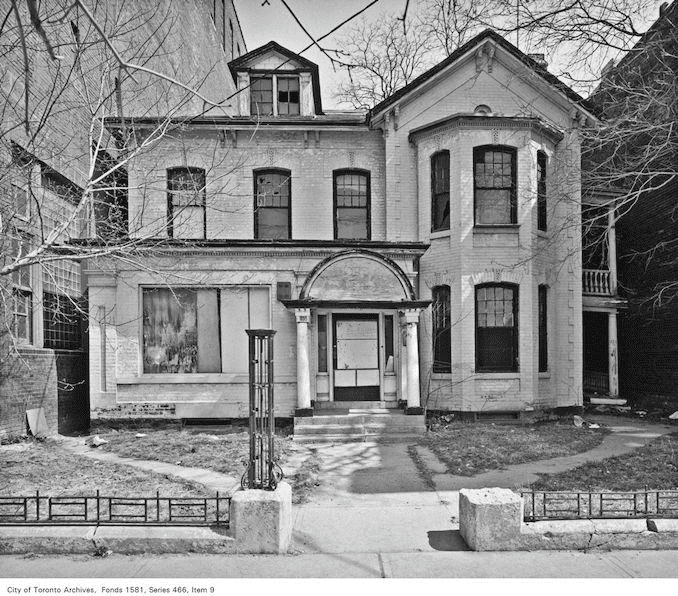
In the early 19th century, the Victorian style gained popularity, fashionable in England and France at the time. Its main features include asymmetrical façades with bay windows and wings, decorative ornamentation, and vibrant colours. Victorian architecture encompassed several variations, including Second Empire, Stick-Eastlake, Folk Victorian, Queen Anne, Richardsonian Romanesque, and Shingle styles.
In the late 19th century, Toronto developed a unique architectural style known as bay-and-gable, a local interpretation of Victorian design. These houses were tall and narrow, often semi-detached, which allowed for the efficient use of limited housing space amidst rapid population growth. Their architecture combined elements of Victorian style but featured large windows and elongated façades. Most of these homes were built in The Annex neighbourhood, enabling the middle class to settle in the city, as traditional Victorian mansions were largely affordable only for wealthy families.
Most structures in Toronto were built with red brick. This is because local clay deposits were ideal for producing this particular material. Due to its widespread use, red brick remained the primary building component even when other options became available.
As the city expanded in the 1950s, rapid suburban development began. This was made possible by the popularization of automobiles. It was then that the Green Belt Legislation was enacted, a law aimed at preserving large green spaces in Southern Ontario. In the 1960s and 70s, Toronto saw the mass construction of apartment buildings and condominiums in response to a population boom. A huge influx of middle- and lower-class families led to the demolition of a significant number of Victorian buildings. Meanwhile, gentrification intensified in the city centre, drastically changing its architectural landscape.
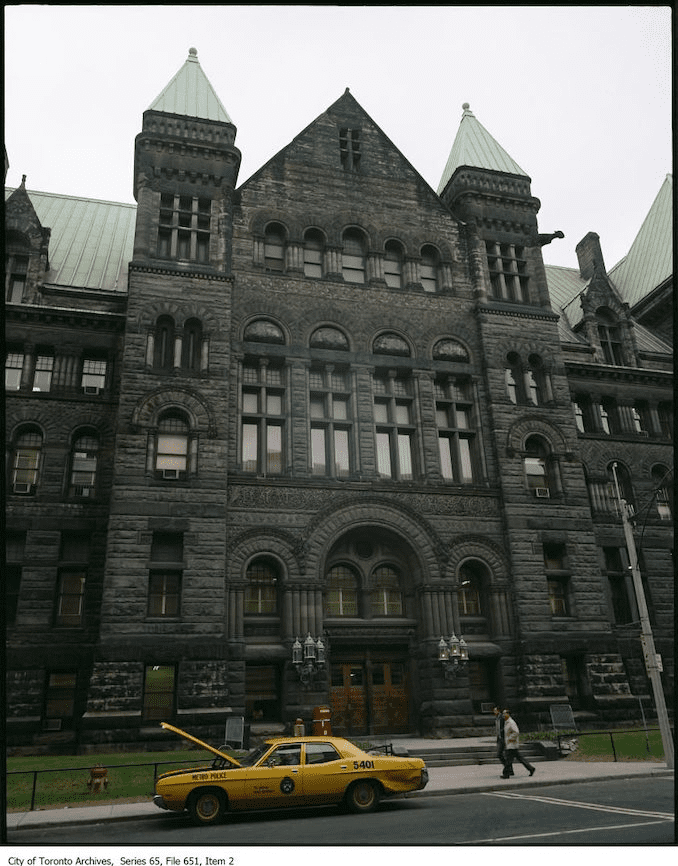
As the population grew, the ‘towers in the park’ concept, borrowed from dynamic New York City, began to dominate Toronto’s architecture. This marked the beginning of the city’s development with high-rise buildings set back from the sidewalks, preserving green spaces and landscaping. With the increasing number of residents, deindustrialization occurred, creating more opportunities for residential construction. In the 1980s, the Ontario Condominium Act was passed to regulate the rapidly growing housing market. It was during this period that the condominium boom began, which continues to this day as the city’s population keeps growing. Thanks to this, remnants of industrial development gradually disappeared, and active development of areas near the financial district commenced. A significant role in shaping Toronto’s modern skyline was played by the architectural firm architectsAlliance, which made substantial contributions to the design of the city’s residential high-rises.