

Toronto is a unique city, rich in history, which is reflected in the diversity of its architectural styles. Every detail and element of its buildings holds meaning, telling stories of those who once walked its streets, the events that took place, and the eras they represent. In this article, we explore the evolution of Toronto’s modern architecture and how it came to be. Read on at toronto-future.
The Settlement of Toronto
In the early 17th century, French colonists claimed lands belonging to the Iroquois and other Indigenous peoples. By 1760, the British seized this territory, expelling the French. In 1793, the area was renamed York, and later, in 1834, it became known as Toronto.
A somber fact about Toronto is its scarcity of historic buildings, primarily due to devastating fires. For instance, the Great Fire of Toronto on April 7, 1849, obliterated much of the city’s downtown core, including the city hall. Over the course of eight hours, approximately 120 buildings were destroyed. This tragedy stands as the most significant disaster in the city’s history. Consequently, as Toronto rebuilt and evolved into a metropolis, much of its landscape was shaped by new constructions.
Industrial Architecture
By the mid-19th century, the development of railways and steamship ports catalyzed urbanization, transforming green spaces into productive hubs for the city. Increased trade fueled the growth of manufacturing industries, including oil refineries, soap factories, aviation plants, and munitions factories along Toronto’s expanding waterfront.
However, by the 1970s, as global shifts reduced the need for local factories, industrial production in Toronto began to decline significantly. Corporations realized they could cut costs by outsourcing labor overseas, where wages were lower. This sparked a wave of deindustrialization in Toronto. Factories were repurposed as offices, lofts, or demolished altogether to make way for apartments and condominiums.
The Construction of Banks and Shopping Centres
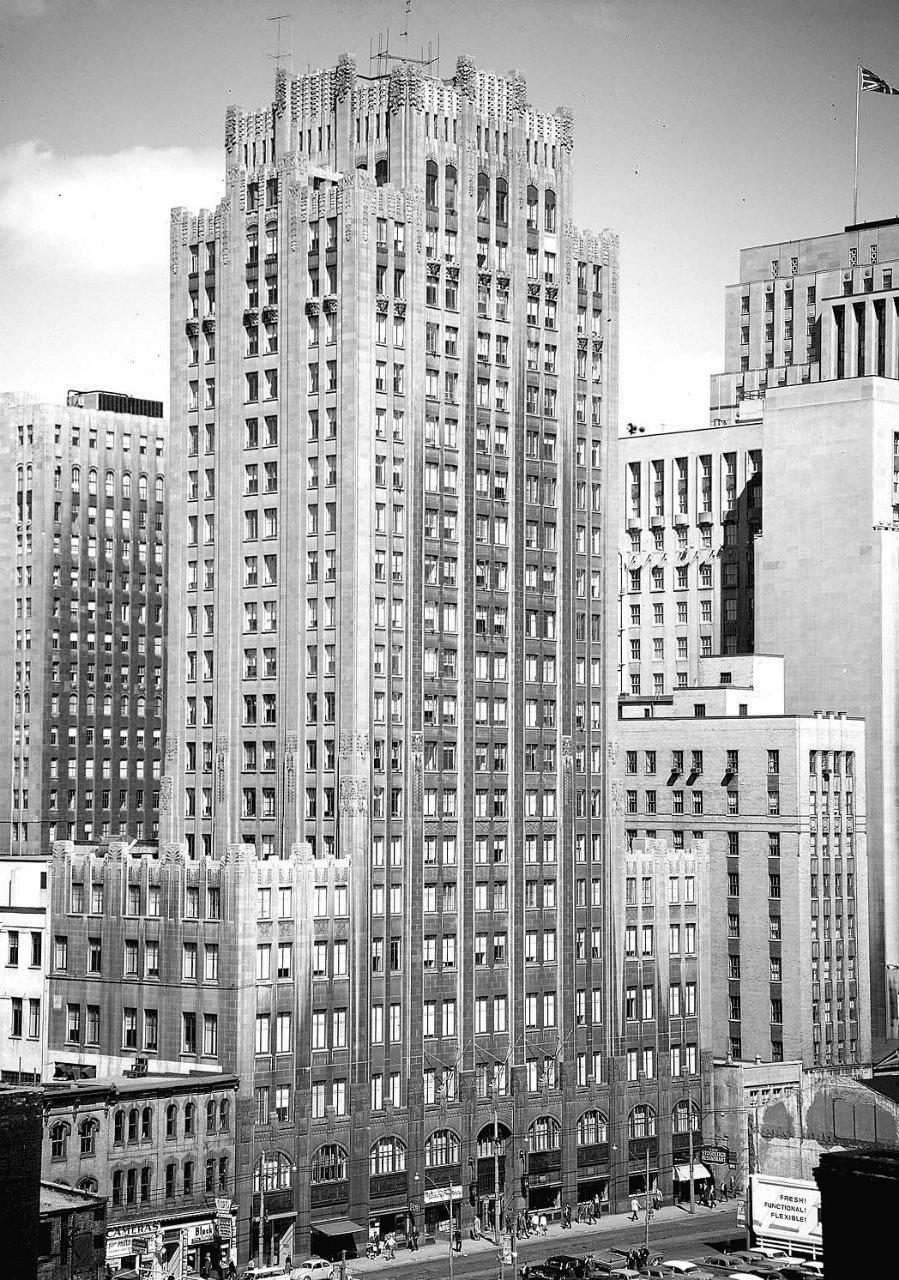
As Toronto prospered, thanks to its harbors and industries, it developed into the commercial heart of Canada. This led to the rise of tall buildings disrupting the previously low skyline—most notably banks. These structures established Toronto’s financial district, created to provide a competitive edge over smaller buildings and solidify its status as the country’s business hub.
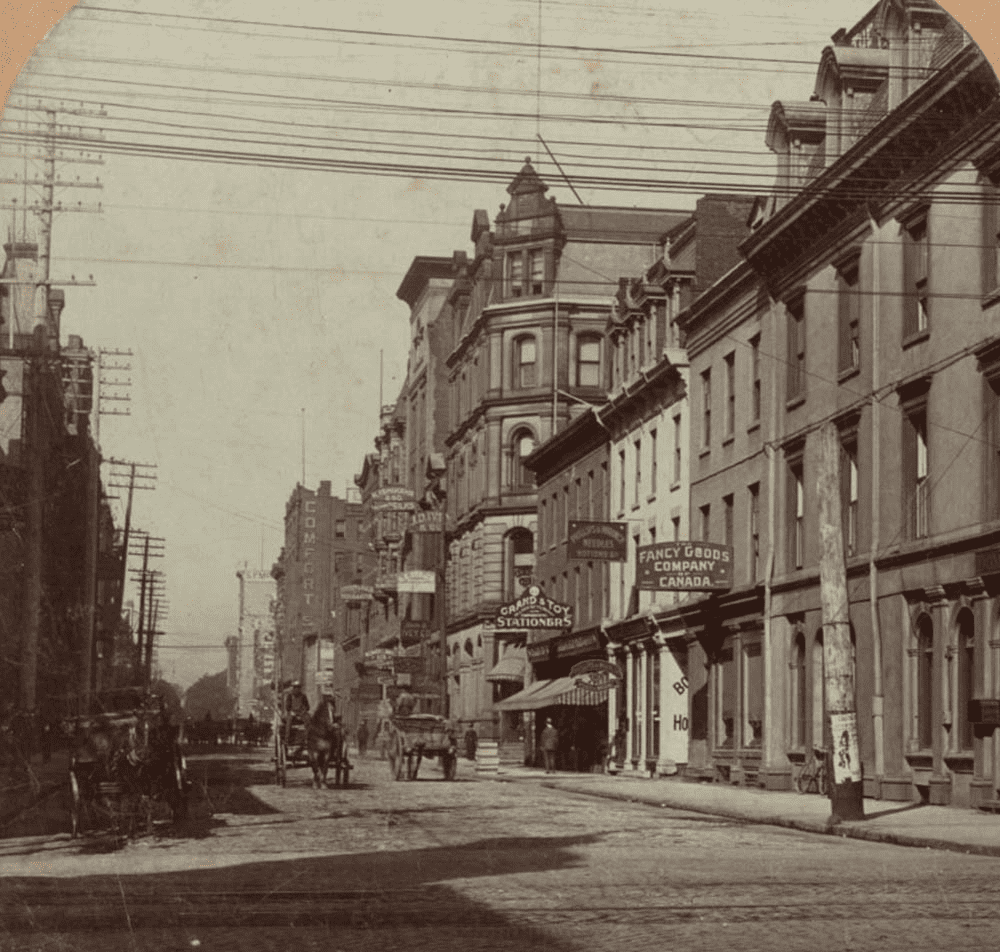
Early hotels in the city resembled modest inns. However, as Toronto’s population and wealth grew in the early 20th century, they transformed into towering structures. The intention was to match the grandeur of skyscrapers dominating the financial district. This evolution is exemplified by the Chateauesque-style Fairmont Royal York and the originally Art Deco Park Plaza Hotel, now Park Hyatt Toronto. As the city became the business capital of Canada, Toronto continued to flourish, building increasingly grand hotels.
In parallel, Torontonians worked diligently to develop a network of retail spaces. With the rise of capitalism throughout the city, large shopping centres began to emerge. It all started with Yorkdale Shopping Centre in 1964, marking Toronto’s journey toward becoming the “shopping capital of Canada.” Yorkdale was designed with market research to optimize accessibility, although critics initially dismissed it as a blend of modernism. In 1977, Eaton Centre followed suit, constructed with red bricks reminiscent of nearby factories.
Population Growth and Residential Developments
In the early 19th century, as settlement began, Torontonians adopted the Georgian architectural style, even though it had fallen out of favor in Britain and the United States. Early settlers appreciated its practicality and durability. Initially constructed from logs, these homes later used clapboard, brick, or stone. The Georgian style is characterized by its symmetry, minimal ornamentation, and broad structures.
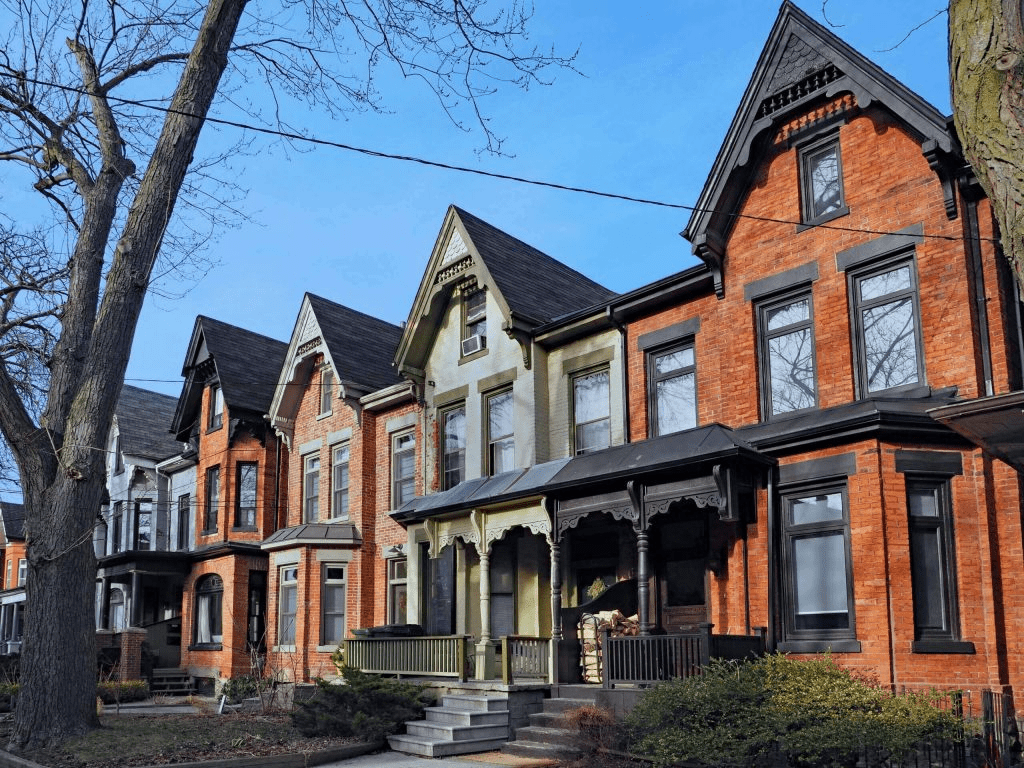
By the early 19th century, Victorian architecture gained prominence due to its popularity in England and France. This style, marked by asymmetrical shapes, decorative trims, and vibrant colors, came in many variations, including Second Empire, Stick-Eastlake, Folk Victorian, Queen Anne, Richardsonian Romanesque, and Shingle Style. By the late 19th century, Toronto developed its unique take on Victorian architecture, known as the Bay-and-Gable style. These buildings were designed to maximize narrow plots, reflecting the city’s fluctuating population. Featuring high windows and extended depth, these structures accommodated the growing middle class in Toronto, while traditional Victorian homes remained reserved for wealthier residents.
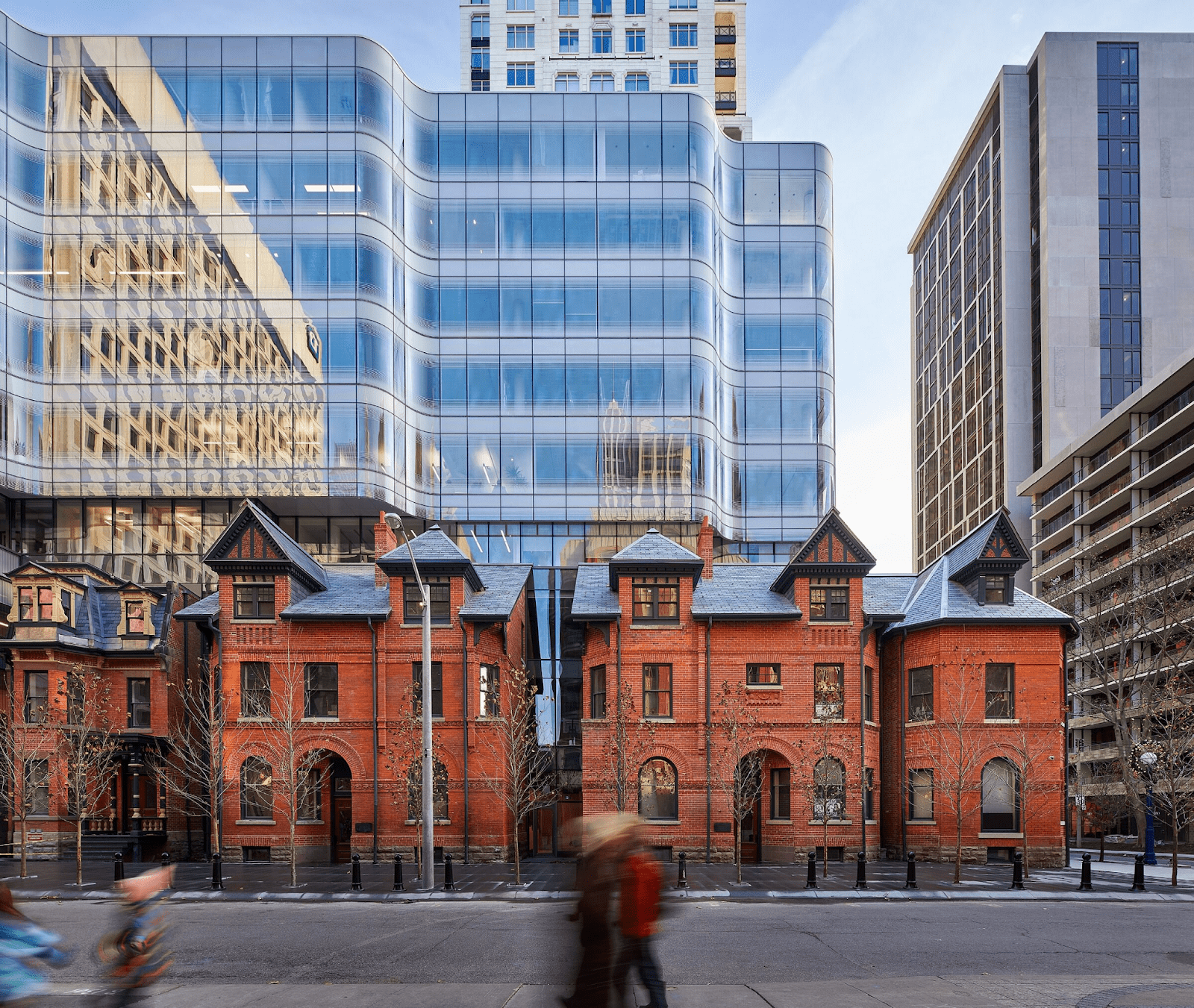
Most homes were constructed with red brick, a staple material in Toronto’s housing development. Over the decades, as other materials became accessible, construction methods diversified. By the 1950s, suburban development flourished, fueled by the growing popularity of automobiles. During this period, the Ontario Greenbelt Act was introduced to preserve large swathes of green space in southern Ontario. The 1960s and 1970s saw a surge in apartments and condominiums, driven by the baby boom. This rapid growth in lower- and middle-class families necessitated high-density housing, unfortunately leading to the demolition of many Victorian homes.
Gentrification began to reshape parts of Toronto’s downtown. As the population continued to increase, the city embraced the “tower in the park” concept inspired by bustling New York City. These structures integrated green spaces, providing ample room between sidewalks and buildings. As immigration drove Toronto’s deindustrialization, new housing opportunities emerged to accommodate the influx of newcomers.
The 1980s saw the enactment of the Ontario Condominium Act to regulate the booming market. The condominium boom of the 1980s ushered in even more residential developments, a trend that persists today. This expansion led to further transformation of the industrial core, with residential buildings now encroaching on the financial district. Looking ahead, Torontonians must focus on incorporating more green spaces into the urban environment. In the 1990s, the growing condo market drew inspiration from Southeast Asian models, where dense populations necessitated innovative housing formats.
Toronto’s architectural history reflects its evolution from a settlement into a thriving metropolis, shaped by waves of industrial, commercial, and residential development. The city’s past, present, and future are etched into the design of its buildings, offering a glimpse into its ever-changing identity.