

Torontonians are incredibly lucky, as the city boasts a large number of museums, galleries, and exhibitions. The metropolis constantly hosts festivals, cultural happenings, and various events. Among this diverse array, the Art Gallery of Ontario (AGO) stands out. This extensive museum complex spans 45,000 square metres, ranking it as one of North America’s largest art museums and the second-largest art museum in Toronto, after the Royal Ontario Museum. Read more about the history and development of the Art Gallery of Ontario on toronto-future.com.
The Gallery’s Beginnings
In 1900, the Art Museum of Toronto was founded. Its founders included members of the Toronto Society of Arts and other dedicated art enthusiasts. In 1903, the Ontario provincial parliament passed an act to establish the museum.
The museum has been at its current location since 1910, when it inherited The Grange, a Georgian-style manor. The first formal exhibition opened in this manor in 1913. Over time, the museum’s premises gradually expanded, and by 1993, their total area reached 38,400 square metres.
In 1916, the museum developed plans to build a small section of a new gallery building, designed in the Beaux-Arts style. Just two years later, the first galleries adjoining The Grange were opened. In 1919, the name was changed to the Art Gallery of Toronto, and in 1966, the museum received its current name – the Art Gallery of Ontario.
In 1920, the museum also allowed the Ontario College of Art (now OCAD University) to construct a building on its grounds. Four years later, a decision was made to expand the Museum. A sculpture court, two adjoining galleries, and the main entrance on Dundas Street were opened.
Another expansion took place in 1935, opening two additional galleries. Notably, part of this project was funded by the Eaton’s department store chain. The museum’s collections of European and Canadian art began to grow. In 1965, another 340 works were acquired from the Canadian National Exhibition. A year later, the museum was renamed the Art Gallery of Ontario.
Continuous Development and Reconstruction
The Art Gallery of Ontario continuously expanded and increased its gallery space. In the 1970s, the gallery began another expansion, resulting in the opening of the Henry Moore Sculpture Centre in 1974.
Another significant expansion occurred in 1993. This created 9,290.3 square metres of new space and renovated 17,651.6 square metres, increasing the museum’s area by 30%. Also in the 1990s, there were plans to develop a pedestrian centre from University Avenue to the art gallery. However, a lack of funding prevented this project from being realized.
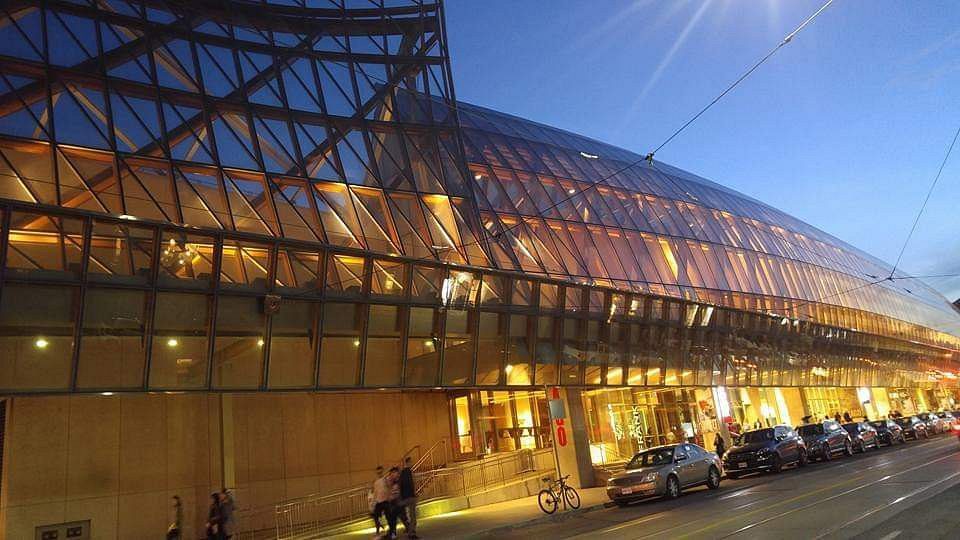
In the 2000s, the museum underwent a significant renovation led by architect Frank Gehry, completed in 2008. The project, named “Transformation AGO,” increased exhibition space by 47% and gave the museum a modern design featuring glass and blue titanium. In the 2010s, the museum complex was renovated by KPMB and Hariri Pontarini Architects.
The Gallery’s Impressive Collection
At the Art Gallery of Ontario, visitors can explore over 90,000 works of art. It also houses the world’s largest collection of Canadian art. Particularly noteworthy are works by the Group of Seven, as well as European masterpieces by artists like Rembrandt, Rubens, and Picasso. The museum also boasts the world’s largest collection of works by British sculptor Henry Moore, housed in a dedicated wing – the Henry Moore Sculpture Centre.
Additionally, its European art collection is considered one of the most comprehensive outside of Europe and the United States, featuring works by Tintoretto, Lorenzo Bernini, and Anthony van Dyck. Furthermore, the museum holds significant collections of African art and works by contemporary visual artists.
It’s worth mentioning that the Art Gallery of Ontario offers a variety of educational programs for children and adults, including interactive exhibitions and workshops. Visitors can also see temporary exhibitions featuring renowned artists from around the globe. The museum also organizes cultural events and festivals that support the development of art and cultural activity in the city. Moreover, the museum has special programs for curators, including those specializing in Indigenous art.
And, of course, the museum building’s architecture impresses all visitors. Following its renovation, it has become one of Toronto’s iconic landmarks. Additionally, the gallery offers visitors a restaurant, a café, and a unique gift shop. Admission to the museum is free for individuals aged 25 and under, making it accessible to young people.
The Art Gallery of Ontario is one of North America’s most renowned art museums, located in the heart of Toronto. The gallery attracts over a million visitors annually and is celebrated for its diverse art collections. The museum’s collection includes numerous works by Canadian, First Nations, Inuit, African, European, and Oceanic artists. In addition to its permanent collection, the museum has organized and hosted many travelling art exhibitions.
We hope you found this material informative and learned more about your city.