

Toronto has not witnessed many aviation disasters in its history, but the crash that occurred on July 5, 1970, claimed the lives of many innocent people. This tragedy brought immense sorrow to the victims’ families and left a lasting scar on the memory of many. Read on toronto-future.com for a detailed account of the incident.
What Happened?
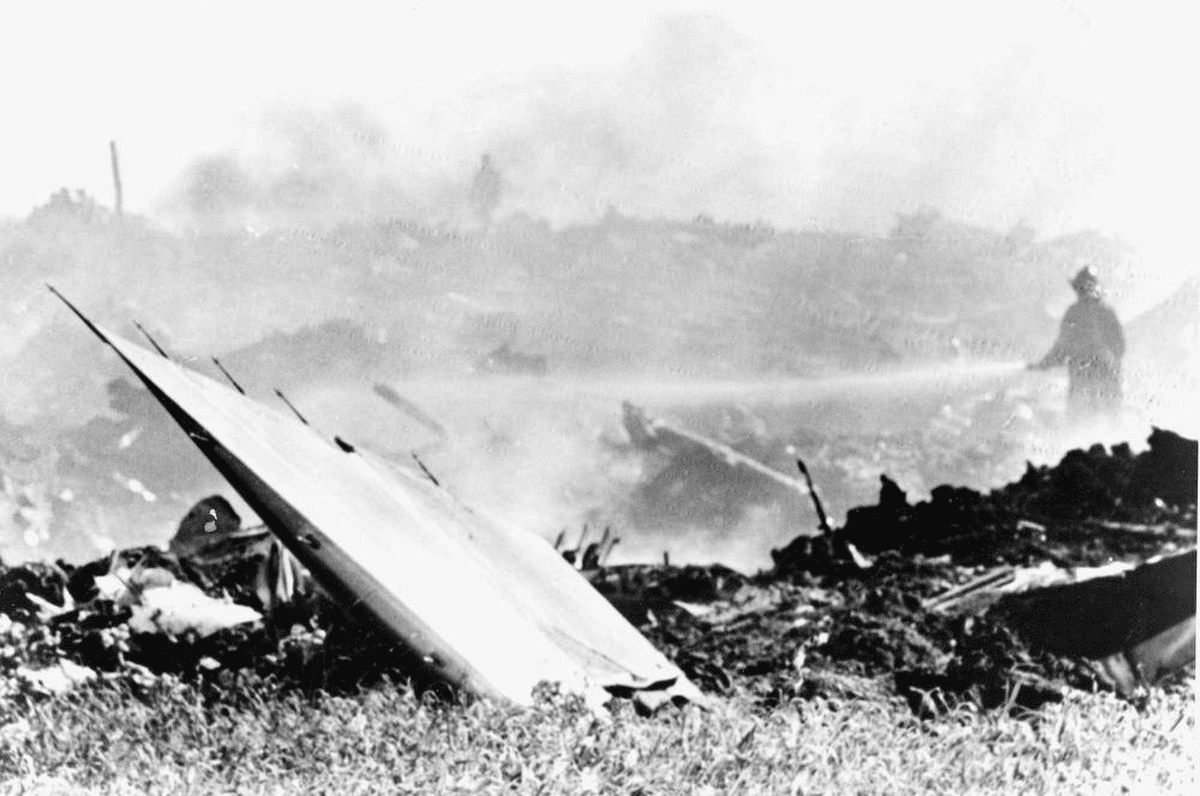
Air Canada Flight 621, a DC-8-63 CF-TIW, carrying 100 passengers, six flight attendants, and three crew members, departed from Montreal Airport at 7:17 AM, bound for Toronto. The flight lasted nearly an hour. Upon arriving at Toronto Airport at 8:06 AM, the aircraft touched the runway and crashed.
A pre-landing inspection of the plane was conducted, but the checklist for deploying the landing gear and ground spoilers was deliberately skipped. Both the captain and the first officer were aware of the incomplete inspection but took no corrective actions.
Everything seemed fine until problems emerged mid-air. Noticing a malfunction, the captain instructed the first officer to deploy the ground spoilers just before the aircraft touched the runway. Following this, the engines were throttled down, and the ground spoilers were deployed when the plane was 60 feet above the runway. This caused the aircraft to plummet rapidly.
In a panic, the captain activated all four engines and pulled back on the control panel, causing the aircraft’s nose to pitch upward. Despite the captain’s efforts, he could not prevent the plane from hitting the runway.
Upon impact, the No. 4 engine and its pylon detached from the aircraft, falling onto the runway alongside parts of the lower wing structure. The No. 3 engine’s attachments were damaged but continued functioning even after the crash.
After this violent landing, the aircraft suddenly ascended to 3,100 feet. During this ascent, a conversation took place between the pilot and the airport dispatcher. The crew believed they could attempt another successful landing on Runway 32.
However, the crew did not account for the impending disaster that would occur within 40 seconds. As the aircraft gained altitude, smoke and flames appeared. Approximately two and a half minutes after the first impact, a fire broke out near the No. 4 engine, causing parts of the wing structure to fall to the ground.
Moments later, the No. 3 engine also caught fire, detached from the wing with its pylon, and crashed to the ground. The plane made a sharp maneuver, rapidly lost altitude, and shed more of its wing structure before slamming into the ground at high speed—about 220 knots. The aircraft hit the ground with its left wing raised and its nose pitched downward.
All 109 people on board perished in the crash.
Mistakes Cost Lives
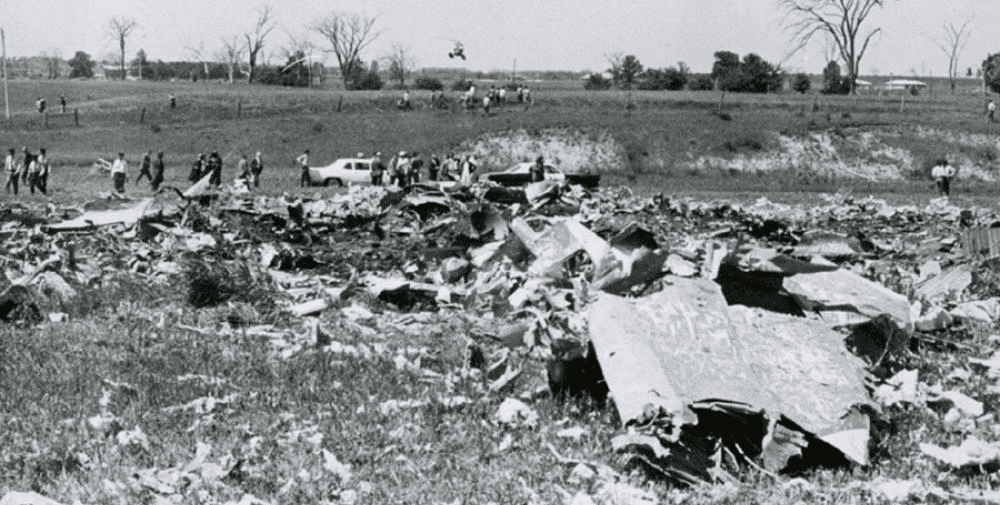
An investigative commission was formed to examine the disaster. The board published its official report on January 29, 1971, concluding that pilot error caused the crash.
Several factors contributed to the tragedy. The primary cause was the captain’s failure to perform a complete pre-flight systems check. Additionally, the aircraft manufacturer, Air Canada, shared some blame for not clarifying in the manual that the ground spoilers could deploy mid-flight.
Recovery and identification of the victims were slow due to the need to excavate a deep crater formed by the crash. Over 20 of the passengers were later identified as U.S. citizens.
In 2013, landowners and developers of the crash site in Toronto petitioned to designate the area as a cemetery and memorial garden. The memorial was officially opened in July 2013 near Degrey Drive and Decorso Drive in modern-day Brampton.
This small memorial park, spanning 3,000 square meters, contains 109 white granite markers. It serves as an eternal reminder and testament to the high cost of human error.