

Toronto is Canada’s largest city. The metropolis resembles a concrete jungle, with a vast number of buildings and architectural structures dotting its landscape. Among these diverse buildings, hotels constructed in the last century hold a special place. Today, we’ll delve into the history of the creation and development of the Hotel Victoria, located at 56 Yonge Street. Read more about this on toronto-future.com.
Built After the Great Fire
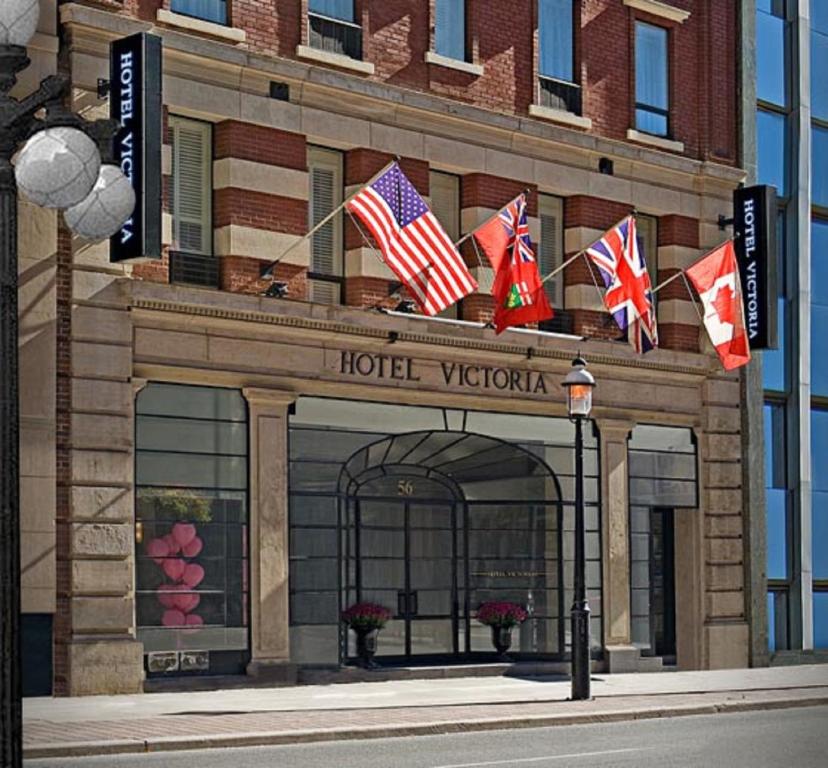
The history of this hotel is quite fascinating. The building was constructed in the early 1900s, following the Great Toronto Fire of 1904. It’s worth remembering that this fire destroyed over a hundred buildings, with total damages estimated at over $10 million.
In 1906, a former hotel clerk named Frederick Mossop acquired a plot of land on Yonge Street. When purchasing the land, he knew he wanted to build a modern and safe hotel on this site. He commissioned architect J.P. Hynes to design the new structure.
Even during the construction phase, significant attention was paid to fire safety. Consequently, the hotel became one of the first in the city built using fireproof materials. Construction lasted three years, and in 1909, the hotel opened its doors to visitors. It was an eight-storey building with 48 rooms. The total construction cost amounted to $250,000 – a considerable sum at the time. It’s also worth noting that the hotel was originally named after its owner: Hotel Mossop.
Regarding its construction, the building stands on a foundation of eighteen concrete caissons that extend down to bedrock – the first such foundation installed in Toronto. Importantly, all steel structures were fully protected at every point with non-combustible material. For instance, the stairs were made of iron with slate steps. Furthermore, the doors and windows throughout the building were made of metal with fire-resistant glass.
Renaming the Hotel
Initially, the hotel was popular among travellers, but this lasted only a few years. In the 1920s, the city was under Prohibition, which negatively impacted the hotel’s development. In 1927, ownership passed to the Elliott brothers, who undertook a major renovation and reopened the hotel under a new name – “Victoria.”
It should be noted that the renamed and refurbished hotel emphasized an atmosphere of royal luxury and stability. Then came the Second World War. However, the hotel owners didn’t stand idly by. Hotel Victoria actively supported patriotic initiatives by establishing the “Churchill Club” to raise funds for the war effort. When the war ended, the hotel became a popular meeting place for veterans and business people.
By the 1950s and 60s, the hotel began to decline again. Hotel Victoria was no longer profitable and, in fact, was in debt. In 1971, Paul Phelan bought the hotel. The new owner invested $2 million in its renovation and modernization. Thus, Hotel Victoria was transformed into a stylish European-style boutique hotel. It’s important to add that the new owner managed to preserve the building’s historic details. New design elements were also added, which restored the hotel’s popularity in the 1970s and 80s.
Later, the hotel was sold again. In 1984, Charles Goldsmith acquired the property. The hotel underwent another renovation. The ground floor façade was updated, modern glass panels were added, and the marble walls and historic mouldings were restored. Two years later, the hotel reopened its doors to visitors.
In 1997, the hotel was acquired by the Silver Hotel Group. In 2017, the hotel was sold once more. This time, the new owner was QuadReal Property Group.