

Modern Toronto is impressive with its scale and unique architectural sites. Our city has changed a lot. It has grown from a small settlement into a modern metropolis with numerous skyscrapers. Today, we’ll talk about the history of multi-storey buildings in Toronto. After all, such a change in the city signified only development and growth. Read more about this on toronto-future.com.
Architectural features of the very first multi-storey buildings
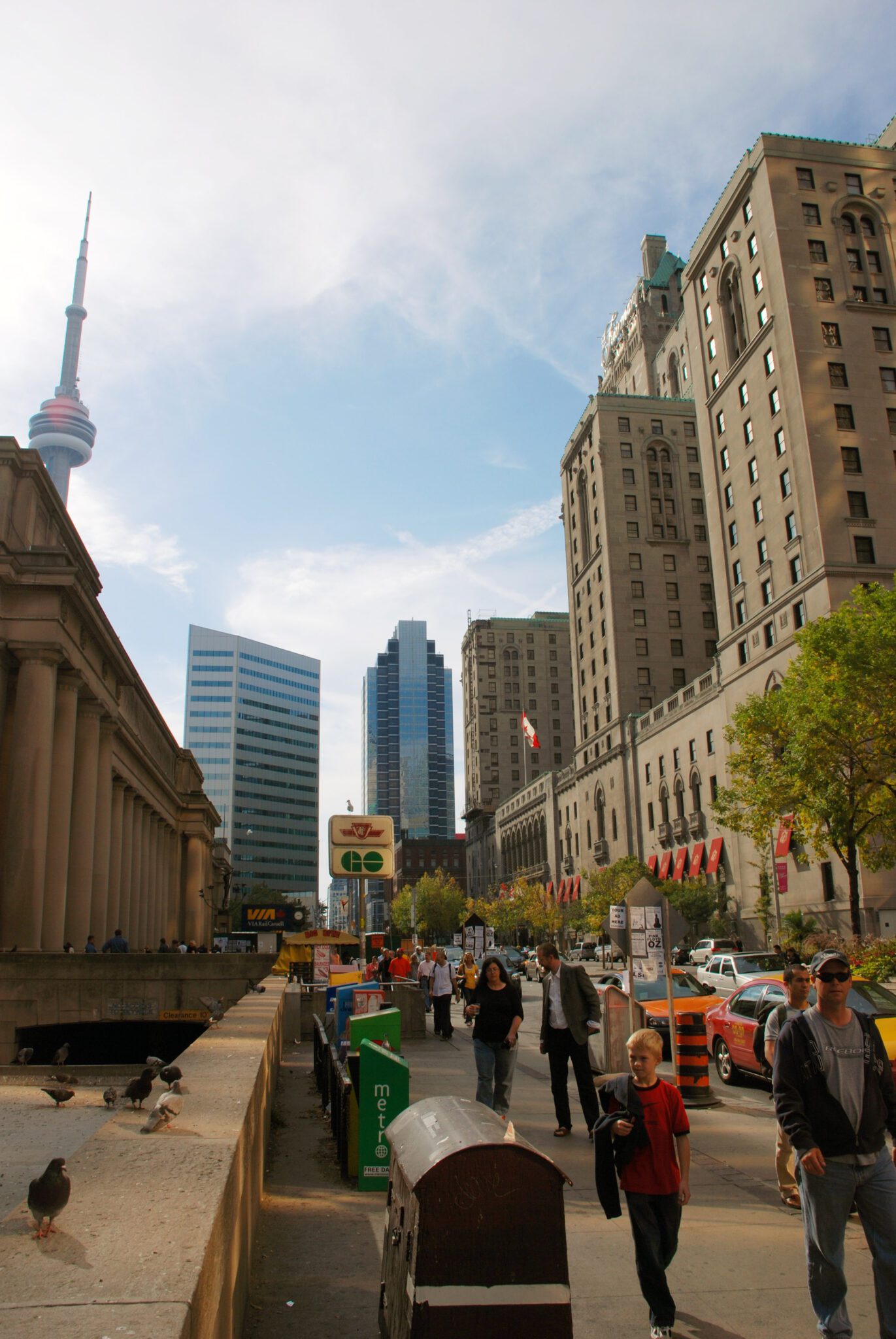
In general, the first multi-storey buildings in Toronto began to appear in the second half of the 19th century. It was during this period that the city began to grow and develop actively. It’s worth noting that some of the oldest multi-storey buildings in Toronto are brick houses in the Romanesque Revival style. For example, Campbell House and The Grange. These were the preferences of the local elite during that period. By the way, this style, popular in Upper Canada, was a symbol of British heritage.
By the end of the 19th century, the Victorian style, with its various branches—from Second Empire to Queen Anne style—had spread throughout Toronto. Such two- and three-storey houses have been preserved in neighbourhoods like Cabbagetown, the Annex, and Rosedale. In general, they are characterized by decorative elements, bay windows, gables, and a wealth of architectural detail.
The first skyscrapers
As you’ve gathered, houses with several floors appeared in Toronto in the 19th century, but they were considered unique for their time. However, the first buildings that can be considered multi-storey in the modern sense appeared in Toronto in the mid-20th century.
In 1930, the tallest structure in the British Empire was built, standing 34 storeys high. This was the Commerce Court North tower. A few decades later, the first true skyscrapers were built in Toronto. For example, the Toronto-Dominion Centre complex, designed by Mies van der Rohe. Its tallest tower was the tallest building in Canada from 1967 to 1972.
As for the residential sector, multi-storey buildings were, of course, also actively constructed here, as the city’s population was growing rapidly. Furthermore, the “towers in the park” style, inspired by the ideas of Le Corbusier, became widespread in Toronto last century. These were simple reinforced concrete high-rises with brick facades, set amidst green spaces. Such buildings can be seen in Prince Arthur Towers and Jane-Exbury Towers. By the way, these multi-storey buildings had a minimalist design with a rectangular base and virtually no decorative elements.
Then, in the 1980s, a real residential condominium boom began in the metropolis. High-rise residential buildings became popular with the middle class, which contributed to the rapid growth in the number of multi-storey buildings and the formation of the city’s modern skyline.
Why Toronto has so many multi-storey buildings
First-time visitors to Toronto are often amazed by our architecture. Some call our city a concrete jungle, as the number of skyscrapers is striking. In reality, the construction of the first multi-storey buildings in Toronto was linked to the dynamic population growth, industrialization, and urbanization of the city in the late 19th and early 20th centuries.
It’s no secret that Toronto is actively developing thanks to an influx of immigrants. And population growth requires more housing, which has spurred vertical construction. In addition, over time, the growth of the middle class and changes in the social structure led to a demand for more compact and convenient housing, especially in the city’s central areas.
So, that’s the history of multi-storey building construction in Toronto. We hope you found our material informative and learned more about your home city.