

Toronto is Canada’s largest city. This metropolis captivates with its architecture and scale. In the last century, Toronto underwent significant development that shaped its modern appearance. Today, we’ll explore the city’s development plan in the last century and how its urban space was transformed. Read more about this on toronto-future.com.
City Formation in the 20th Century
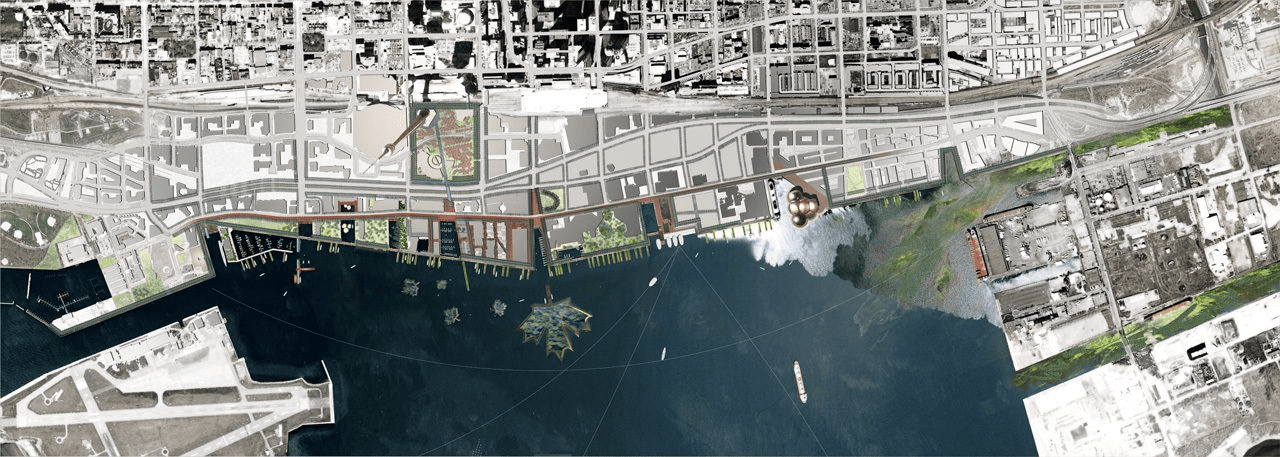
To begin, in 1904, Toronto experienced a Great Fire, which destroyed over one hundred buildings in the downtown area. Following this tragedy, a large-scale rebuilding effort began, significantly influencing the city’s subsequent development. It’s worth noting that the fire caused over 10 million Canadian dollars in damages, leaving about five thousand people jobless in a city with a population of 200,000. However, Toronto’s recovery began very quickly. As the fire predominantly destroyed industrial facilities, businesses rented temporary spaces to continue operations. This happened just a few days after the fire. Furthermore, the city authorities promptly adopted new building codes requiring fire-resistant materials and the installation of fire suppression systems, which greatly enhanced the safety of future structures. Additionally, Toronto’s reconstruction was accompanied by infrastructure modernization and changes in urban planning. The fire served as a catalyst for revising safety standards and developing urban infrastructure, contributing to Toronto’s continued dynamic growth.
Post-War Development
World War II also influenced Toronto’s development. After the war ended, Toronto underwent active redevelopment, especially in its central part. Numerous “towers in the park” style residential complexes began to be built, aligning with modernist and functionalist ideas. During this period, high-rise buildings with large surrounding green spaces were constructed, intended to improve living conditions. However, Toronto also preserved its traditional urban neighbourhoods with low-rise buildings, where facades directly faced the streets, creating vibrant commercial strips and pedestrian areas. Incidentally, this “main street” concept was characteristic of many Toronto neighbourhoods and fostered local commerce and social interaction. In the 1950s, Toronto’s population reached 1 million, and it doubled over the next two decades, triggering a massive construction boom. In 1954, Canada’s first subway opened in the city, and during the 60s and 70s, downtown Toronto was actively developed with high-rise skyscrapers that became city symbols. Notably, during this period, the famous CN Tower was built, which for many years stood as the world’s tallest freestanding structure. It is, without exaggeration, a landmark of Toronto and all of Canada. In the early 2000s, Toronto’s real estate boom continued. It’s worth mentioning that one of the largest projects of that time was CityPlace, a residential complex on former railway lands near the lake. It consisted of numerous high-rise buildings designed for thousands of residents. Anyone who has been to Toronto will understand that the city’s architecture is distinguished by a rich variety of styles. These styles reflect the city’s historical development from the 19th century to the present day. The main prevailing styles include Romanesque Revival, Victorian, Gothic Revival, and Modernism. So, that’s the story of the metropolis’s development in the last century. We hope you found this material insightful and learned more about your city.