

The introduction of electricity was one of the most groundbreaking scientific innovations of the 18th century. It revolutionized daily life, including how residents of Toronto illuminated their homes and public infrastructure. To provide power to the growing population, an energy network was established, along with companies that supplied electricity. Here’s a closer look at how electricity came to Toronto and how the energy sector has evolved over the decades, as detailed on toronto-future.
How Water Became Toronto’s Power Source
American inventor Thomas Edison revolutionized the world with his invention of the electric lightbulb, laying the foundation for modern lighting used by millions. Edison’s innovations in harnessing light inspired technological advances that led to the rise of the electricity industry in Canada and around the world. Toronto began utilizing electricity in the late 1880s.
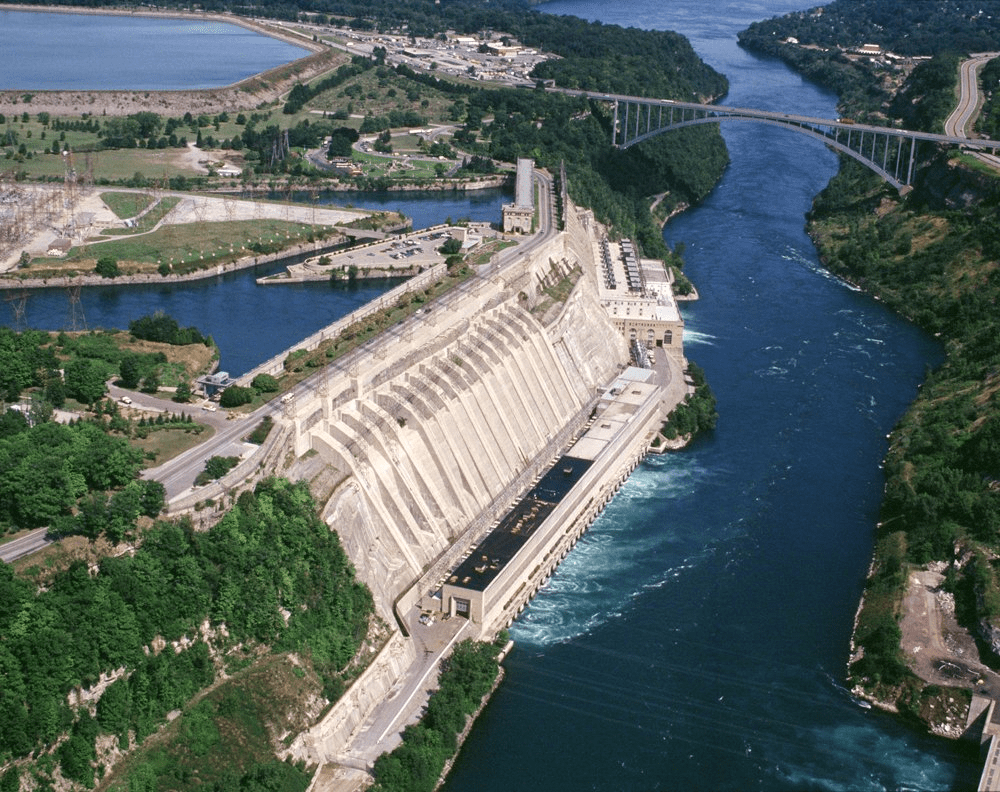
During the 19th century, engineers and scientists developed various methods to generate energy. Entrepreneur Daniel Jonkers initiated one such effort by establishing one of the world’s most powerful hydroelectric plants on the Niagara Falls escarpment, just 100 kilometers from Toronto. Jacob Schoellkopf acquired a facility to produce water-powered equipment that transformed Niagara’s torrents into electricity, which was then transmitted to Toronto.
By 1895, after the installation of advanced technical systems, the Niagara Falls hydroelectric plant was fully operational. At the plant’s opening ceremony, Premier Whitney gave a speech urging officials to press a button, ceremonially inaugurating the transmission of electricity to Toronto. The event featured dazzling lights and beams illuminating the falls, leaving the crowd in awe.
A Second Source of Light: The Rise of Power Plants in Toronto
In addition to the contributions of Edison, Jonkers, and Schoellkopf, British scientist Michael Faraday played a crucial role in advancing electricity. His invention of electric generators, capable of producing electric current, was introduced in Toronto during the 1880s after extensive testing.
Toronto’s government soon sought permission to establish a publicly owned electricity distribution system. This marked the beginning of an ambitious project to construct distribution stations across the city, led by engineer C.H. Rust.
In 1908, Toronto residents voted to establish a municipal energy company, accelerating the city’s electrification efforts. Over the following decade, the growing population and urban expansion fueled the rise of energy service providers to meet the increasing demand for lighting.
By 1920, Toronto Hydro, the city’s municipal energy company, merged with other energy providers, resulting in 95% of homes being equipped with electric meters.
During World War II, energy consumption temporarily declined. Power companies urged residents to conserve electricity, reducing street lighting by 20%. However, normal usage resumed in the post-war years.

Between 1945 and 1955, electricity consumption surged by 75% due to the significant influx of immigrants and the post-war baby boom. This unprecedented demand necessitated further innovations and expansion in Toronto’s energy infrastructure.
The 1960s marked a new phase in Toronto’s electrification journey. Efforts were made to improve the placement of power lines, focusing on aesthetics and convenience. To minimize visual clutter, electrical wires were increasingly installed underground, on rooftops, and in other less visible locations.
From 1970 to 2000, energy companies introduced programs to promote energy conservation and offer customers solutions such as insulation systems and devices for monitoring energy distribution and consumption. These initiatives paved the way for a more efficient and sustainable energy network in Toronto, ensuring the city’s energy needs were met while reducing environmental impact.
The innovations in Toronto’s hydroelectric system not only powered the city but also highlighted the enduring potential of science and engineering to transform urban life.