

Toronto offers many leisure options: parks, public squares, movie theatres, nightclubs, live theatres, concert halls, and more. All are designed for the recreation and cultural enrichment of Torontonians and visitors alike. The Four Seasons Centre for the Performing Arts is an opera house with its own unique story. Today, we decided to learn more about this cultural institution. Read more about the Four Seasons Centre for the Performing Arts on the toronto-future.com.
Crafting the Opera House: A Winding Path
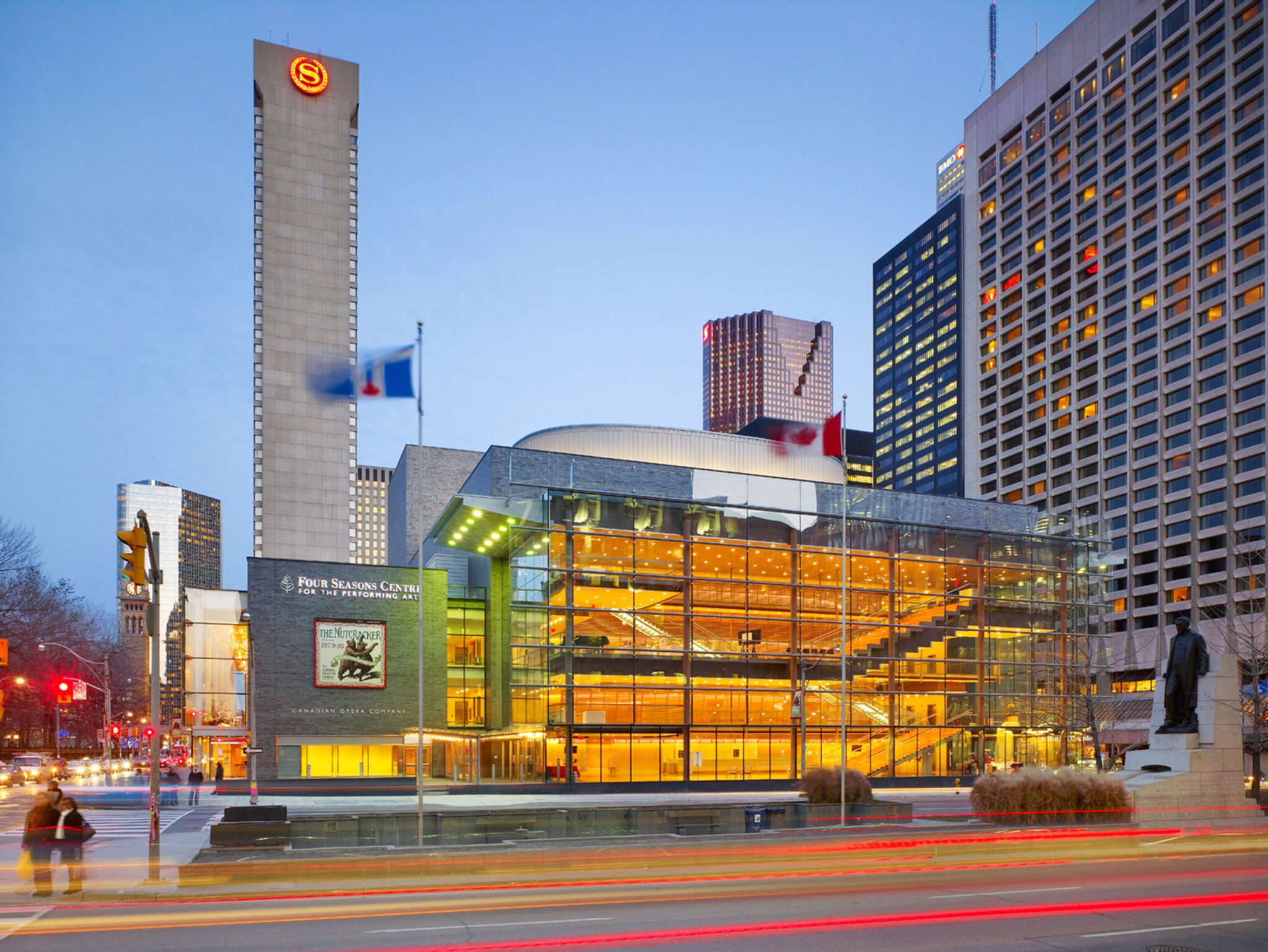
The idea for a new opera house first emerged back in 1983, spearheaded by Lottie Mansouri, then the General Director of the Canadian Opera Company. The very next year, Ontario Premier Bill Davis promised a provincially-owned piece of land at Bay and Wellesley Streets for the new opera house. The initial construction was estimated at $75 million CAD. A design competition was even held for the new opera house project, which, incidentally, was won by Moshe Safdie’s postmodern design.
By 1988, the project was approved, and the buildings and shops on the site were demolished. However, two years later, a change in government in Ontario occurred. The new administration deemed the project too expensive – by then, the estimated cost for the new opera house had risen to $311 million CAD. The opera house corporation refused to modify the project to reduce costs. In turn, the newly formed government withdrew its funding. As a result, the land was sold to developers.
It wasn’t until 2001 that the vision for a new opera house was revived. The Ontario government allocated a parcel of land valued at $31 million for the construction, and in 2003, building finally commenced. The project was managed by the architectural firm Diamond and Schmitt.
Notably, the new opera house project cost $186 million. However, $20 million towards the construction was provided by the Four Seasons Hotels and Resorts, after which the theatre was named.
In total, construction spanned three years. The opera house officially opened on September 12, 2006, with the premiere performance in the new venue being Richard Wagner’s epic tetralogy, Der Ring des Nibelungen.
Unique Architecture
The Four Seasons Centre for the Performing Arts boasts not only elegant architecture but also a unique design that ensures exceptional acoustics and audience comfort.
The auditorium, which seats 2,071, is designed in a classic European horseshoe shape, ensuring an optimal connection between the stage and the audience. It also features a large orchestra pit, allowing for performances with large orchestras.
Particularly noteworthy are the undulating back walls of the venue. These walls are designed to scatter sound throughout the auditorium, reflecting sound waves back towards the stage. This design feature is responsible for creating approximately 90% of the sound heard by the audience. This effect was engineered to ensure that patrons would not be disturbed by specific external sounds and vibrations, including traffic noise or rumbles from the nearby subway line.
The Four Seasons Centre for the Performing Arts stands as a symbol of Toronto’s and Canada’s cultural heritage. It became the first venue in the country specifically built to host opera and ballet performances. Throughout the year, the theatre stages opera and ballet productions, including those by the Canadian Opera Company and the National Ballet of Canada.
The Four Seasons Centre for the Performing Arts is a beloved destination for Torontonians and tourists alike, as it’s a place where one can truly experience the grandeur of opera.
We hope you found this article informative and that you’ve learned more about your city and the history behind the creation of this unique opera house.
How often do you attend the opera? We look forward to your comments on social media. Your opinion matters to us.