

Toronto is a bustling metropolis with a population in the millions. To comfortably accommodate all its residents and visitors, an effective public transit system is essential. Today, we’re exploring GO Transit—a system that began in the 20th century as an experimental project and has since become a cornerstone of the transportation network in the Greater Golden Horseshoe region. You can read more on toronto-future.com.
How It All Began
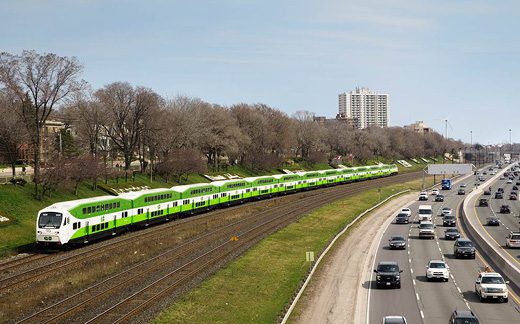
In the 1950s, Toronto was experiencing rapid growth. The city was attracting many immigrants, leading to a sharp population increase. At the time, people relied on the Canadian National Railway (CN), but with passenger numbers swelling, a new solution was needed.
The idea for GO Transit emerged from this challenge. It was launched as an experimental project, and its founders didn’t initially expect it to operate permanently. In May 1965, the Government of Ontario authorized the launch of Canada’s first specially designed commuter rail service, at a cost of $9.2 million to the public treasury.
The inaugural Lakeshore line connected Oakville and Pickering through the central Union Station, forming the foundation of the future network. Since it was a pilot project, the initial system was limited to eight diesel locomotives and 40 coaches. However, it soon became clear that GO Transit was here to stay. By 1970, bus routes were added to serve Hamilton, Oshawa, and other suburbs.
Expansion of the Transit System
The GO Transit system continued to evolve. In 1978, service expanded to Richmond Hill, and bi-level coaches were introduced to increase capacity. The 1980s saw the addition of lines to Milton, Bradford, and Stouffville. Subsequent growth was hampered by limited funding for a period.
However, 2006 brought significant changes with the creation of Metrolinx, an agency tasked with coordinating transportation planning for the entire Ontario region. GO Transit was integrated into this new structure, becoming a division of the agency.
The system’s development pressed on. By 2015, the Union Pearson Express was launched, providing a fast rail link to Toronto Pearson International Airport.
Today, GO Transit serves nearly 72 million passengers annually across its network of 7 rail lines and 39 bus routes, supported by a fleet of 752 buses. Starting in January 2025, the ONxpress consortium will take over the operation and maintenance of the GO rail system from Alstom.
Overall, GO Transit has profoundly reshaped Toronto’s transportation landscape. The project successfully connected distant communities like Hamilton, Oshawa, and Barrie with downtown Toronto, making it easier for residents to commute to work and significantly reducing the number of private cars on the road.
Toronto residents have responded positively to integrated fare programs, which allow for seamless travel between city and suburban transit systems. Furthermore, the construction of new stations has spurred the development of business districts and tourist areas.
GO Transit is also committed to sustainability, utilizing line electrification and hybrid buses to reduce its carbon footprint.
What began as a pilot project has grown into a formidable transportation system. More than that, GO Transit has transformed Toronto into a major transportation hub for Ontario, connecting the city with its suburbs and neighbouring regions.