

It happened on August 11, 1930. A silvery giant appeared silently over Southern Ontario: the British airship R100. Its flight was more than just a technical demonstration; it was an event that briefly distracted Torontonians from the grim realities of the Great Depression, offering them a dream of a magnificent future. Join toronto-future.com as we look back on how it all unfolded.
A Technological Marvel of its Time
The R100 airship was a true marvel of engineering. At 219 metres long, it was nearly as tall as the modern TD Bank Tower. This aerial giant was part of Britain’s ambitious “Imperial Airship” program, designed to strengthen ties across the vast empire and to rival the success of Germany’s “Graf Zeppelin.” Built by a private company, the R100 boasted three decks featuring luxurious cabins, a dining hall, and viewing galleries for one hundred passengers. This silver giant was intended to prove that transatlantic airship travel was not just a dream, but a reality.
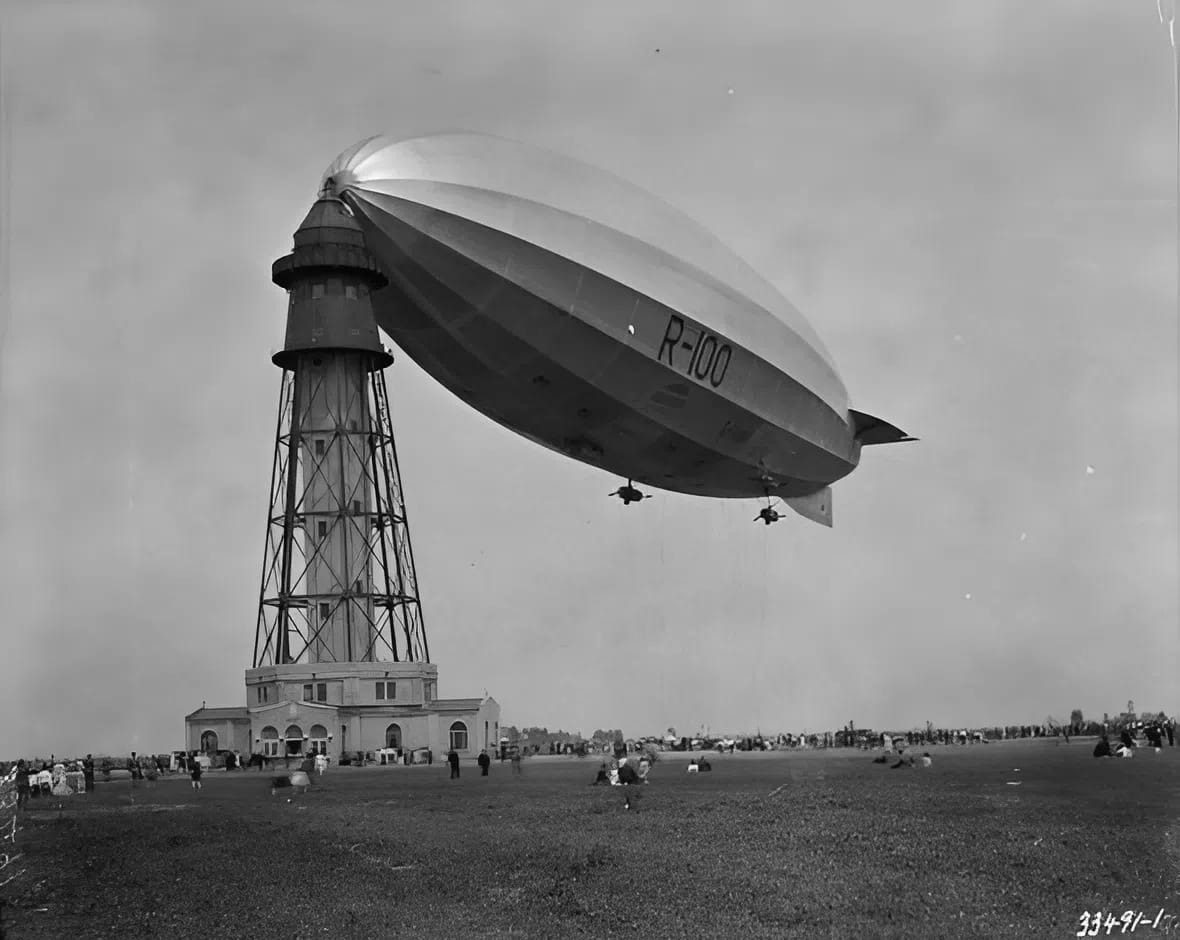
The journey to Canada began on July 29, 1930. After a 78-hour flight across the Atlantic, the R100 arrived triumphantly in Montreal. Canada was captivated. Newspapers reported that no event since the First World War had so profoundly stirred the “interests, pride, and affection of the Canadian people.” After several days in Quebec, the R100 embarked on a demonstration flight over Ontario, with the ultimate goal of showcasing the empire’s majesty to the residents of its largest city—Toronto.
The Day Toronto Stood Still
The airship’s route began over Niagara Falls. Due to strong headwinds, the crew decided to fly low, following river valleys and astonishing local residents.
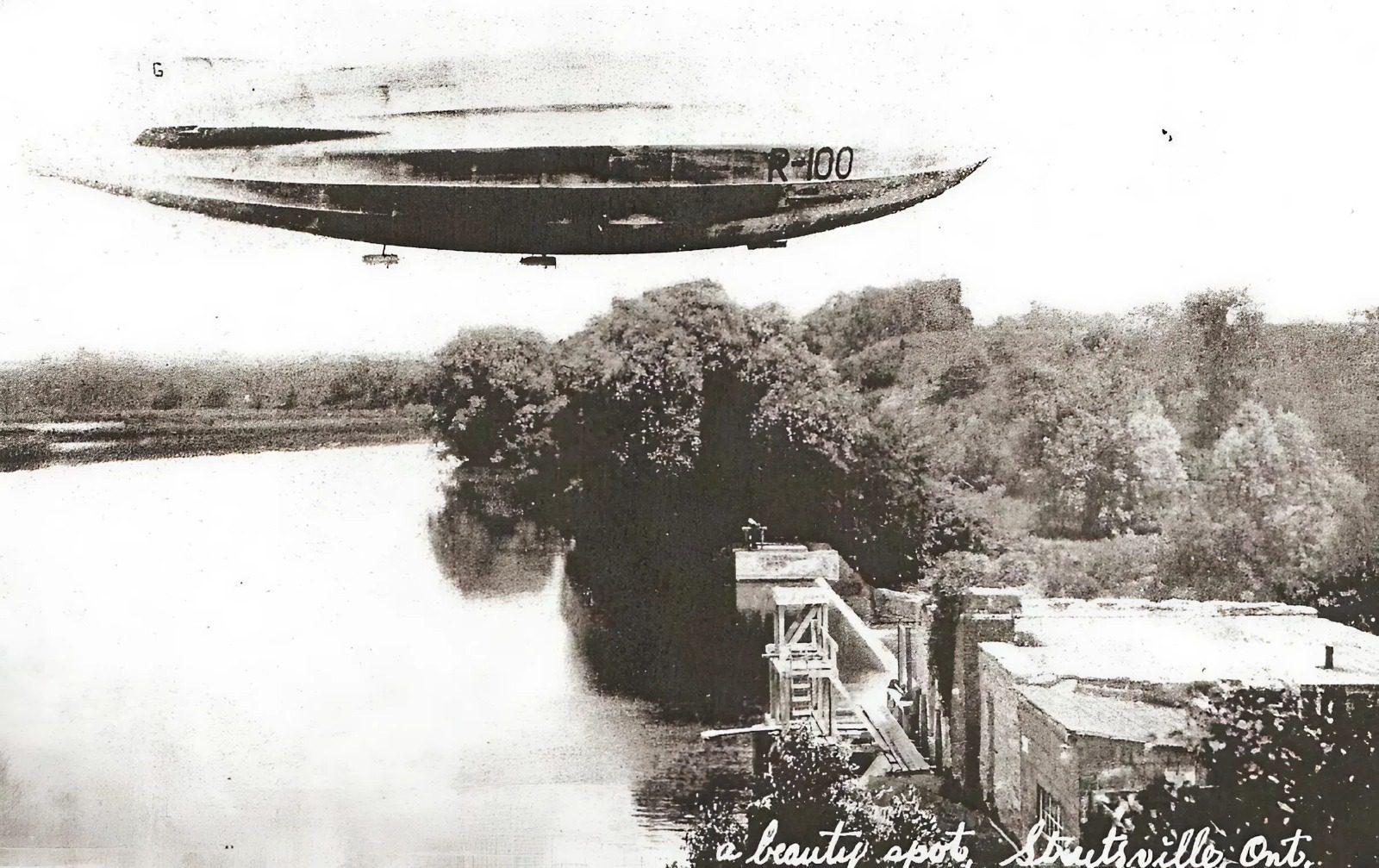
Historian Verna May Weekes described the moment: “It came suddenly and silently into view… resembling a long, thin, silvery-grey loaf of bread, with very smooth and hard-looking sides… On the underside, in large black letters, was its name—R-100.”
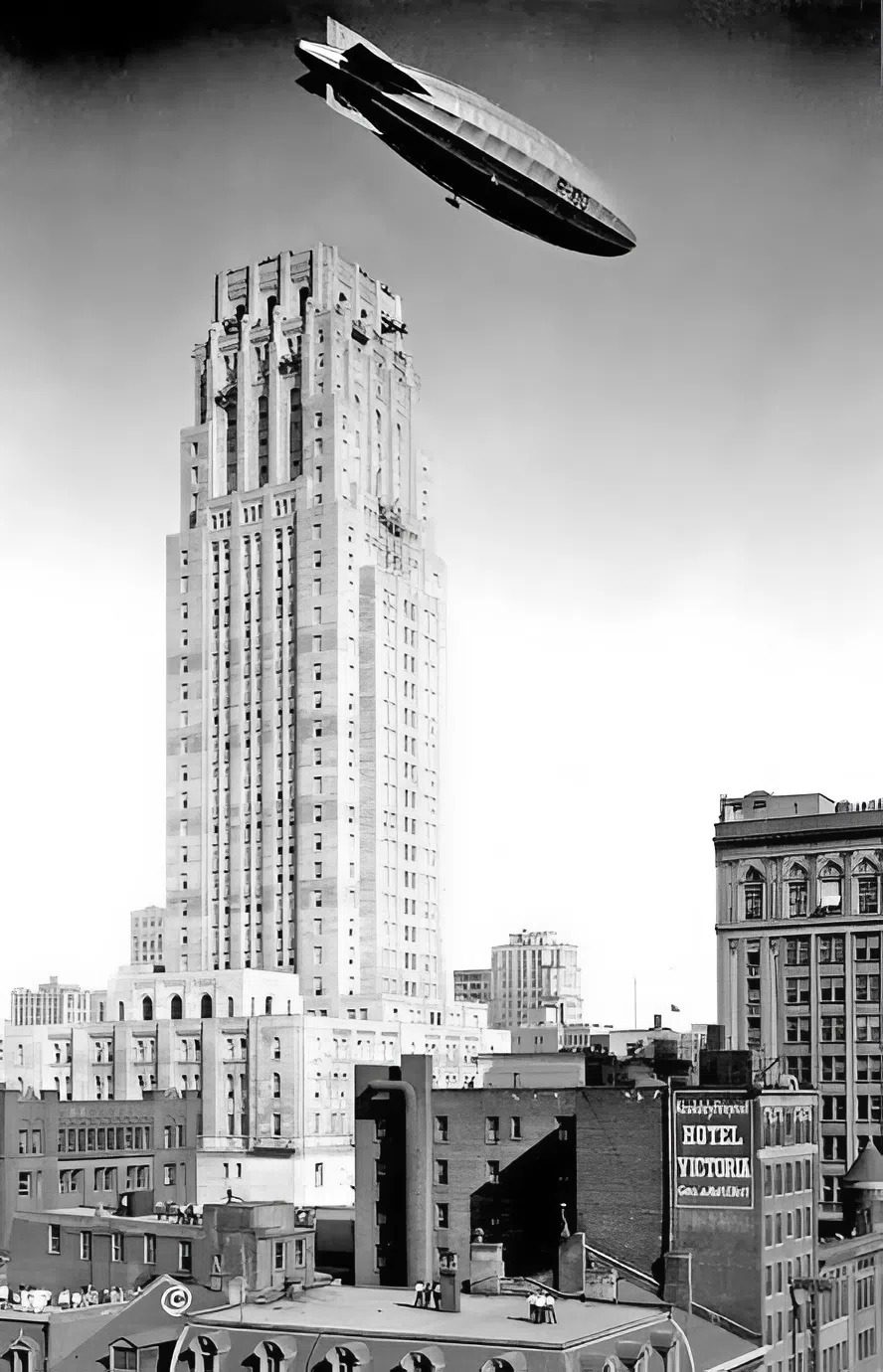
When the airship reached Toronto, the city stood still. Tens of thousands of people poured into the streets, filling rooftops and parks, all craning their necks to look up. It was an unimaginable spectacle. Enormous and silver, it floated slowly and majestically above the skyscrapers, passing over the newly constructed Canadian Bank of Commerce tower—then the tallest building in the British Empire.
The airship’s appearance over the city became a symbol of a new era, albeit a very brief one. For Torontonians living through the first years of the Great Depression, it was a spectacle that offered hope and a belief in a technological future.
The End of the Silver Era
After its flight over Toronto, the R100 returned to Montreal and then flew back to England. Its Canadian voyage was a stunning success. It seemed the era of passenger airships was about to begin. Bold forecasts predicted weekly service between London and Canada.
But those dreams were shattered just three months later. In October 1930, its sister ship, the R101, crashed in France while en route to India, killing 48 people. This tragedy brought the entire British airship program to a halt. The successful and reliable R100 was grounded, and a year later, it was broken up for scrap.
For Toronto, the R100’s flight remains a unique memory—a bright flash of wonder during grim times. The silver giant that floated silently over the city became a symbol of great but unfulfilled hopes, forever etched in collective memory as the first and last visit of the great imperial airship.