

Toronto is an incredibly beautiful and multicultural city. This metropolis boasts a unique history, and today we’ll delve a little deeper into it. Our feature is on The Annex neighbourhood. It’s one of the city’s oldest and most renowned neighbourhoods, located just north of downtown Toronto. You can read more about this on toronto-future.com.
What We Know About The Annex Neighbourhood
The name “The Annex” pretty much speaks for itself. The word “annex” means “attached” or “added.” It’s no surprise this part of the city got such a name, as this area was one of the first to be annexed to the City of Toronto in the mid-19th century.
The neighbourhood’s history dates back to the 1790s, with the founding of the Town of York. The area east of Brunswick Avenue became part of the Village of Yorkville, while the region west of Brunswick was part of Seaton Village.
By the 1880s, this territory began to develop as an elite residential district. The city’s well-to-do started to live here. Land was purchased by developer Simeon Janes, who used the term “Toronto Annexed” for his housing projects. The neighbourhood rapidly expanded westward to Bathurst Street, forming what is now the Bloor Annex area. In 1887, this territory officially became part of Toronto.
It’s worth mentioning that early residents included Timothy Eaton, head of Eaton’s department store, and George Gooderham Sr., president of the Gooderham & Worts distillery. In the 1900s, affluent residents of the area began to migrate to more fashionable suburbs like Forest Hill and Lawrence Park.
Unique Architecture
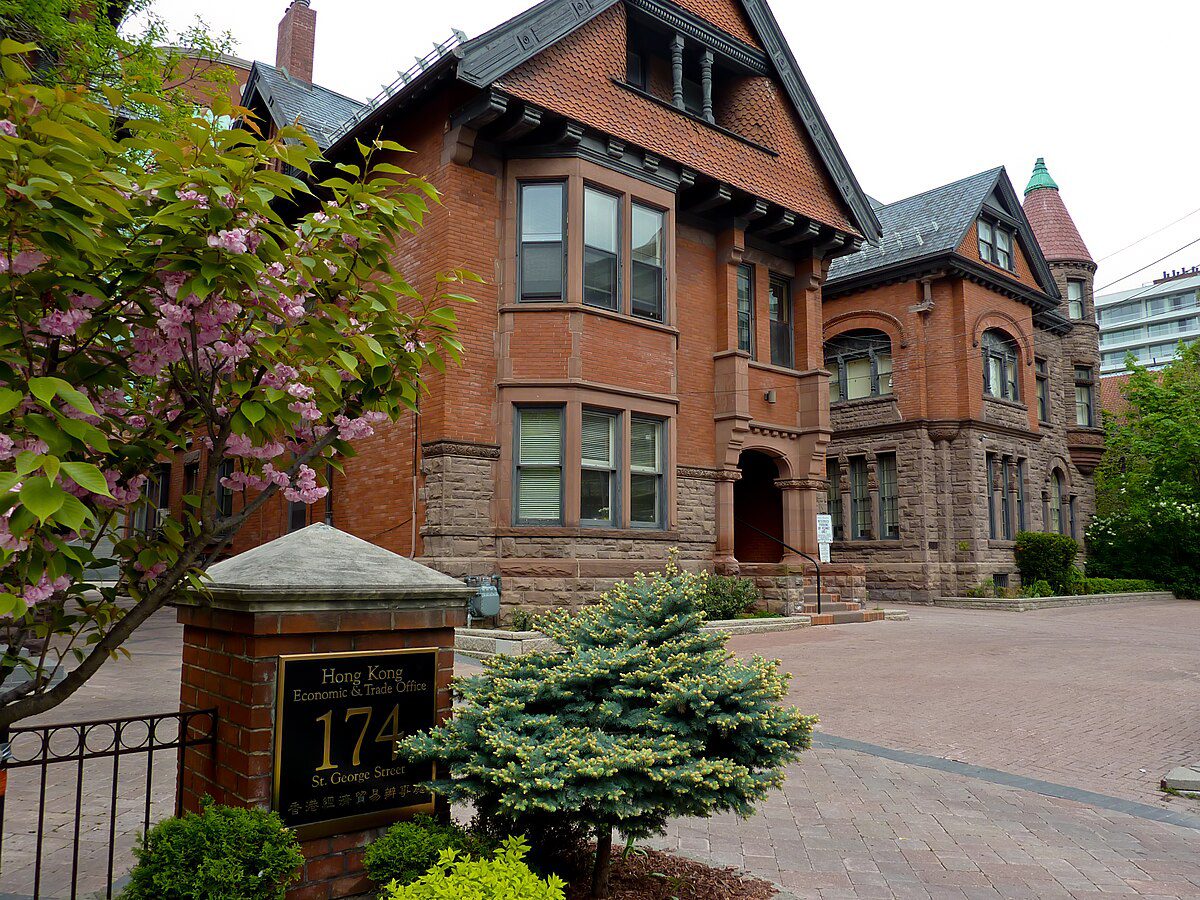
The Annex is famous for its unique Victorian and Edwardian-style houses. As mentioned earlier, this part of the city was initially home to wealthy individuals. It was these affluent people who built homes with beautiful architecture in the late 19th and early 20th centuries. All these structures feature a variety of decorative elements, such as turrets, domes, and verandas. The neighbourhood’s architecture is characterized by a blend of brick and sandstone, making it one of North America’s most interesting examples of historical urban development.
In the 1950s and 60s, some original structures were replaced by mid-rise apartment buildings in the International Style. However, many Victorian-style homes still grace the neighbourhood. Today, The Annex has over 500 buildings protected by Heritage Toronto.
From Aristocrats to Students
In the latter half of the 20th century, the neighbourhood underwent significant changes. After the Second World War, many large homes were converted into rooming houses or multi-unit dwellings for veterans and immigrants.
In the 1960s, the area became popular with students and young families. This was largely because the neighbourhood borders the University of Toronto. Consequently, young people sought housing closer to the institution.
The neighbourhood is also known for its considerable immigrant population. As of 2011, Statistics Canada reported that approximately 4,665 immigrants resided in the area. These were predominantly migrants from the United Kingdom and the United States.
Today, The Annex continues to evolve. It skilfully blends historical heritage with modern living. Many old houses have been restored and converted into upscale residences. The neighbourhood has become a hub of cultural activity and education, situated right next to the University of Toronto.
It’s important to note that The Annex is a unique place in Toronto, combining historic architecture with a contemporary lifestyle. This very combination makes it an attractive destination for both residents and tourists.
So, that’s our informative piece for you. We hope you’ve learned a bit more about the city of Toronto today.