

In the fall of 1897, George Weston opened Weston’s Model Bakery in Toronto, an event that generated significant excitement. As the largest and most modern bread factory in Canada, it received extensive press coverage and marked the start of a price war among Toronto bakers. Read more on toronto-future.com.
A Boom in Baking
Toronto’s local press praised George Weston for sparing no expense in building Weston’s Model Bakery. They marveled at the factory’s capacity to produce thousands of loaves of bread daily. While Toronto had many bakeries at the turn of the century, most were small operations producing only a few hundred loaves each day. Weston’s Model Bakery began by baking approximately 3,200 loaves daily, quickly surpassing this to over 6,000 within months of opening.
The Evening Star highlighted George Weston’s rise from a humble apprentice to a pioneering entrepreneur. His persistence and ambition stood out in an industry that often operated with lower standards. The bakery set a new benchmark for cleanliness and organization, ensuring that the reputation of his “true home-style bread” would never be tarnished by unsanitary conditions. Weston personally oversaw the operations to maintain these standards.
Beyond the spotless facilities, Weston also prioritized the well-being of his employees, enforcing strict personal hygiene rules. Separate bathing and changing rooms were provided, and workers were required to wash thoroughly before and after their shifts. Weston’s travels to study modern baking equipment and methods in other countries enabled him to integrate the best practices into his bakery, resulting in a highly efficient and meticulously organized production process.
How the Bread Was Made
The two-story factory housed eight enameled brick ovens on the ground floor, while the dough preparation took place upstairs. Large mixing tubs rolled on tracks, combining flour, water, and yeast. The dough was then sent to a mechanical mixer equipped with two flanged paddles that spun to mix it thoroughly. Once ready, the dough was funneled through chutes to a large table on the lower floor. From there, it was shaped and placed into baking pans, which were then loaded into the ovens. After baking, the trays were transferred to cooling racks in a separate room.
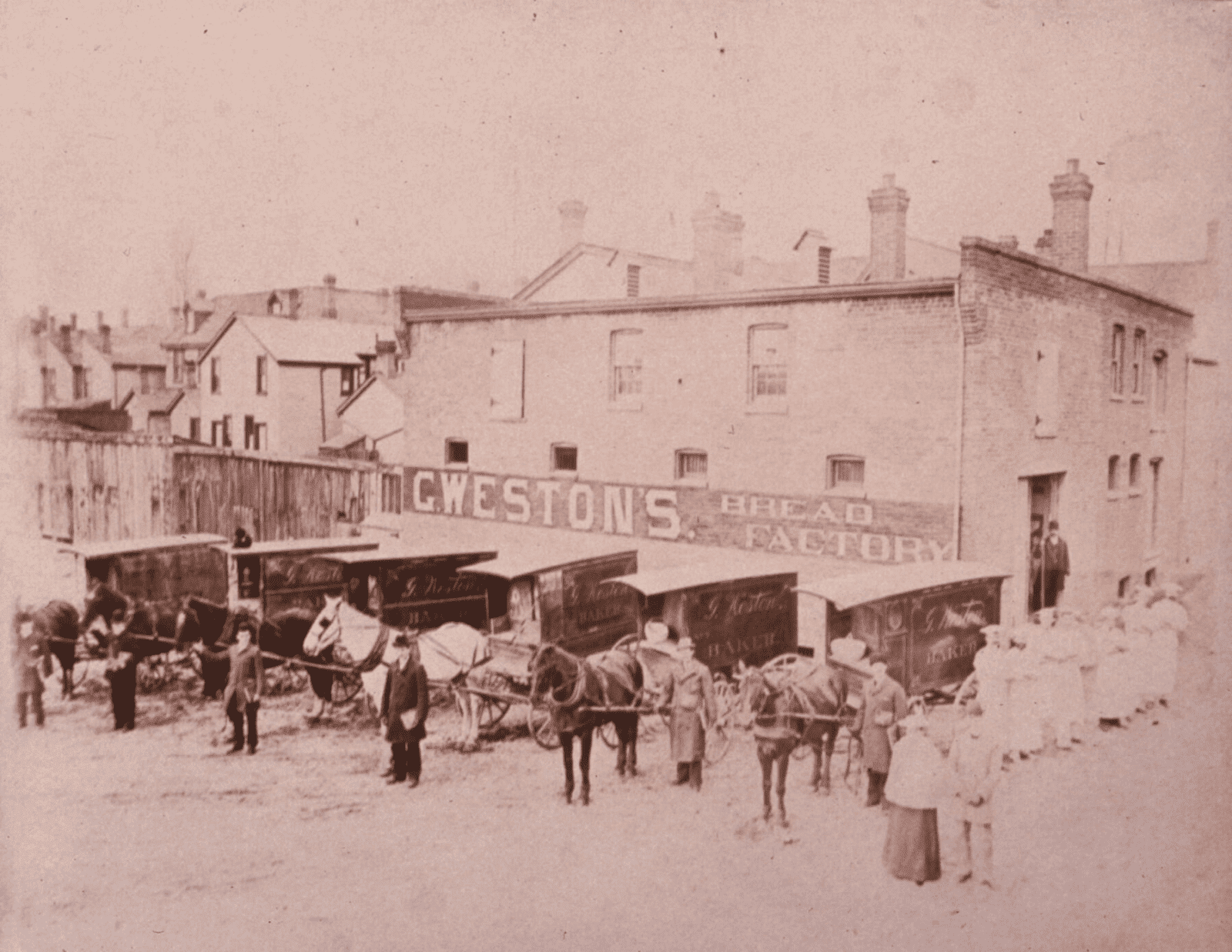
Demand for Weston’s bread was high. Bakers worked tirelessly to fulfill orders, while delivery vans lined up at the factory’s loading dock to distribute fresh bread across the city.
Customers and Competitors
Weston’s customers frequently asked if they could purchase his bread at reduced prices similar to those offered by other bakers. Weston’s concern was not about competition but about maintaining fair pricing, as agreed upon by the local bakers’ association.
When the pricing agreement broke down, Weston reduced his large loaf price from 12 cents to 10 cents, triggering a price war among Toronto’s bakers. The fallout led to discord within the association, benefitting consumers. Weston’s competitors retaliated by slashing wholesale prices from 11 cents to 6 cents per loaf in an effort to dominate the market. Weston remained steadfast, thanking his loyal customers for their continued support and predicting that unsustainable price cuts would eventually harm his rivals.
Within two years, Weston tripled his sales and began supplying bread to 38 cities and towns across Ontario. While prices fluctuated with the cost of wheat, the bakery thrived, solidifying Weston’s reputation in Toronto.
Model Bakery: The Weston Family Home
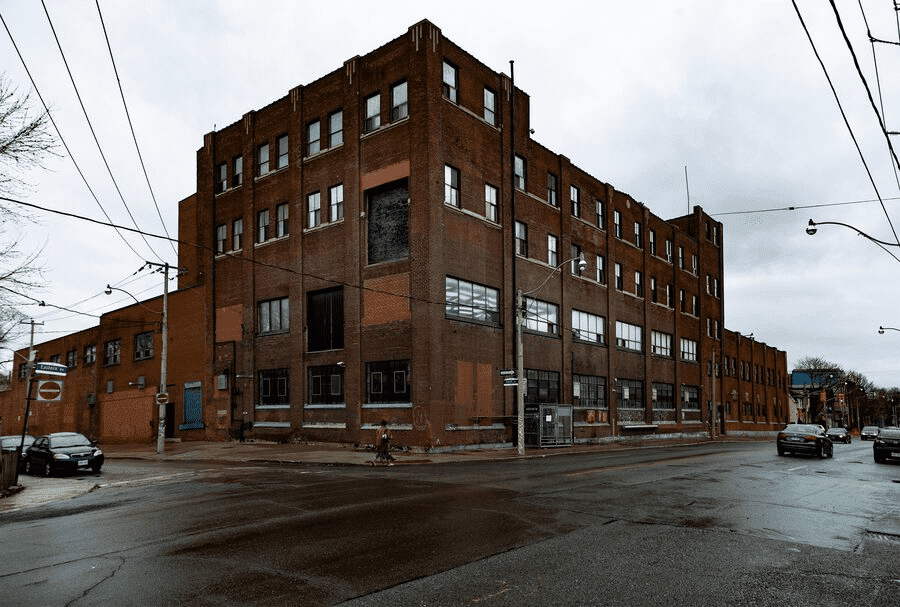
Model Bakery was not just Canada’s largest bread factory; it was also home to George, his wife Emma Maud, and their daughter Pearl. During an era when many business owners lived above their shops, residing in the factory’s corner tower apartment was not unusual. This arrangement allowed Weston to remain closely connected to his business at all times.
In 1898, the couple’s first son, Willard Garfield Weston, was born in the apartment. George proudly hung the Union Jack and the American flag over the crib to symbolize their family’s heritage. Shortly after Willard’s birth, George brought him to the bakery floor to introduce his son to the business.
In 1911, George Weston sold Weston’s Model Bakery and shifted his focus from bread to biscuit production, which offered higher profit margins. He joined forces with bakers from Toronto, Montreal, and Winnipeg to form the Canada Bread Company, Limited, aiming to consolidate operations and reduce costs. The iconic Weston’s Model Bakery became an asset of the new company, and George served as its director. For a decade, George Weston Limited and its partners in Canada Bread were restricted from producing bread. Instead, Weston concentrated on establishing Weston’s Biscuit Factory on Peter and Richmond Streets in Toronto.
Despite this shift, consumer demand for George Weston’s bread persisted. Customers criticized the quality of other bread available, prompting George to return to his roots and resume baking his beloved home-style loaves.
George Weston passed away unexpectedly in 1924. His son, Willard Garfield Weston, took over the family business, leading Weston’s to become England’s largest biscuit factory in the 1930s. Under Willard’s guidance, the company expanded further by acquiring Loblaw Groceterias Co. Ltd., a prominent Canadian grocery chain, and diversifying its portfolio of food brands and retailers.
Today, George Weston Limited is valued at over $40 billion, with the Weston family maintaining majority ownership, ensuring the enduring legacy of George Weston and his pioneering bakery.
Sources: