

Ferries in Toronto play a vital role in transporting passengers and goods between the mainland and the islands. Over the decades, the city has undergone rapid development and technological advancements, with innovative solutions often replacing older methods. Among Toronto’s ferries, the legendary Trillium, which dates back to the Edwardian era, stands out. After a period of neglect and near destruction, the ferry was given a second chance, restored, and returned to service. Read more about its remarkable journey on toronto-future.
Trillium: The Early Years
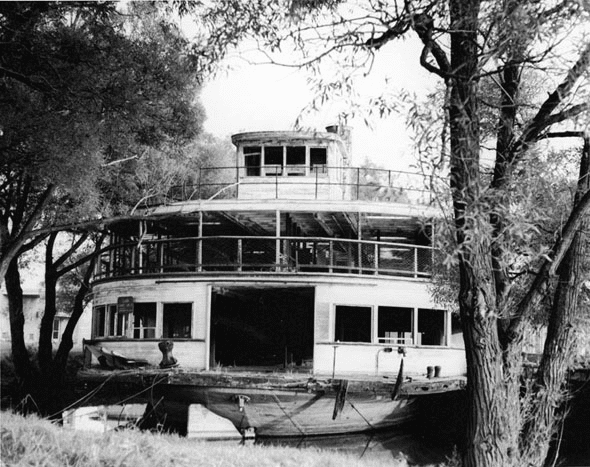
Toronto’s fleet consists of five ferries: Sam McBride, Thomas Rennie, Wm. Inglis, Ongiara, and Trillium. Of these, Trillium is the heaviest, the oldest, and boasts a uniquely storied past.
Built at the Polson Iron Works shipyard, Trillium was named after the trillium flower, which later became the official floral emblem of Ontario. The ferry weighs approximately 611 tonnes and measures 150 feet in length and 45 feet in width. Despite its size, the ferry was remarkably easy to maneuver. According to Toronto Star journalists, it was so agile that it could be steered with a finger. Its maiden voyage took place in 1910 alongside other vessels like Bluebell, Primrose, and Mayflower. However, none of these ships could rival the eventful life of the iconic Trillium.
Trillium is the only vessel in Toronto’s fleet powered by steam and equipped with paddle wheels on its sides. Initially operated by the Toronto Ferry Company, the ferry came under city ownership in 1926. Over time, steam-powered vessels became obsolete, and Trillium met a similar fate. The ferry ceased operations in 1956 and was docked near a filtration plant on one of Toronto’s islands, left to deteriorate.
Trillium’s Second Chance
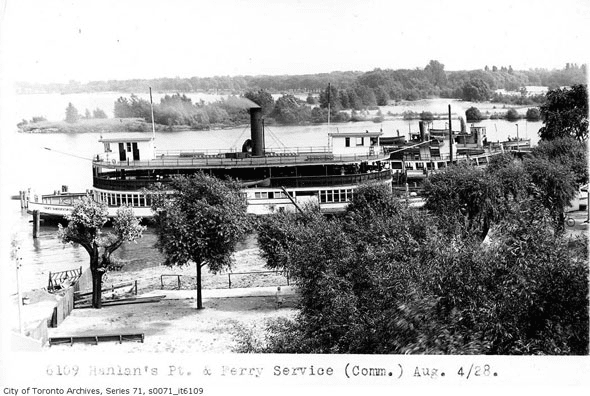
In 1963, Toronto Star published a report stating that Bluebell and Trillium were slated to be sold and repurposed for sewage transportation. During a test run, Bluebell sank, and to prevent a similar fate for Trillium, the city decided to restore the vessel in 1973. The restoration aimed to return the ferry to passenger and cargo service. This initiative received public support, as Trillium was both a comfortable vessel and a piece of the city’s history.
The ferry had been idle for nearly two decades, accumulating rust and damage. Lack of maintenance had taken a toll, and many wooden components had rotted. Restoration work began in 1974 and lasted two years, requiring a substantial investment of approximately $1 million. After the renovation, Trillium, complete with its original steam engine, resumed operations. It became a popular venue for local residents, hosting events like parties and nighttime jazz cruises.
In 1981, a mechanical failure caused the ferry to veer off course, sending it to an unintended location. Passengers were terrified as the ferry shook violently, the lights went out, and sparks flew. Fortunately, there were no serious injuries, and Trillium was repaired and returned to service once again.
The legacy of Trillium is commemorated with two memorial plaques. One is located at the ferry terminal, installed by an organization dedicated to preserving Toronto’s cultural and historical heritage. In 1985, the Toronto Historical Board added a second plaque directly on the ferry itself.
Trillium remains an enduring symbol of Toronto’s maritime history, showcasing resilience and the city’s commitment to preserving its heritage while adapting to modern demands.