

Toronto’s architecture is as diverse and vibrant as its cultural fabric. While Indigenous peoples have lived in the area for thousands of years, the city’s urban community dates back to 1793, when British officials founded York, which was later renamed Toronto. Since then, Toronto has become Canada’s most populous city and one of the most multicultural in the world—half of its residents were born outside the country. Remarkably, Toronto is now rivaling Vancouver for Canada’s hottest real estate market. Read more on toronto-future.
On the shores of Lake Ontario, glass skyscrapers stand alongside historic buildings. By the 1990s, many of Toronto’s key historic buildings had been demolished to make way for redevelopment. However, the early 2000s saw a shift in mindset, valuing both the preservation of history and cutting-edge design. Here’s a look at 11 of Toronto’s most striking and treasured landmarks.
Gooderham Building
The Gooderham Building is one of North America’s earliest examples of metal-framed architecture, located near Toronto’s financial district. This five-story structure, built with red brick in 1892, was designed by David Roberts Jr. in the Romanesque Revival style with elements of French Gothic architecture. Originally constructed for George Gooderham, a former president of the Bank of Toronto and owner of the Gooderham and Worts distillery, the building features a passageway vault on every floor and houses Toronto’s first manually operated elevator.

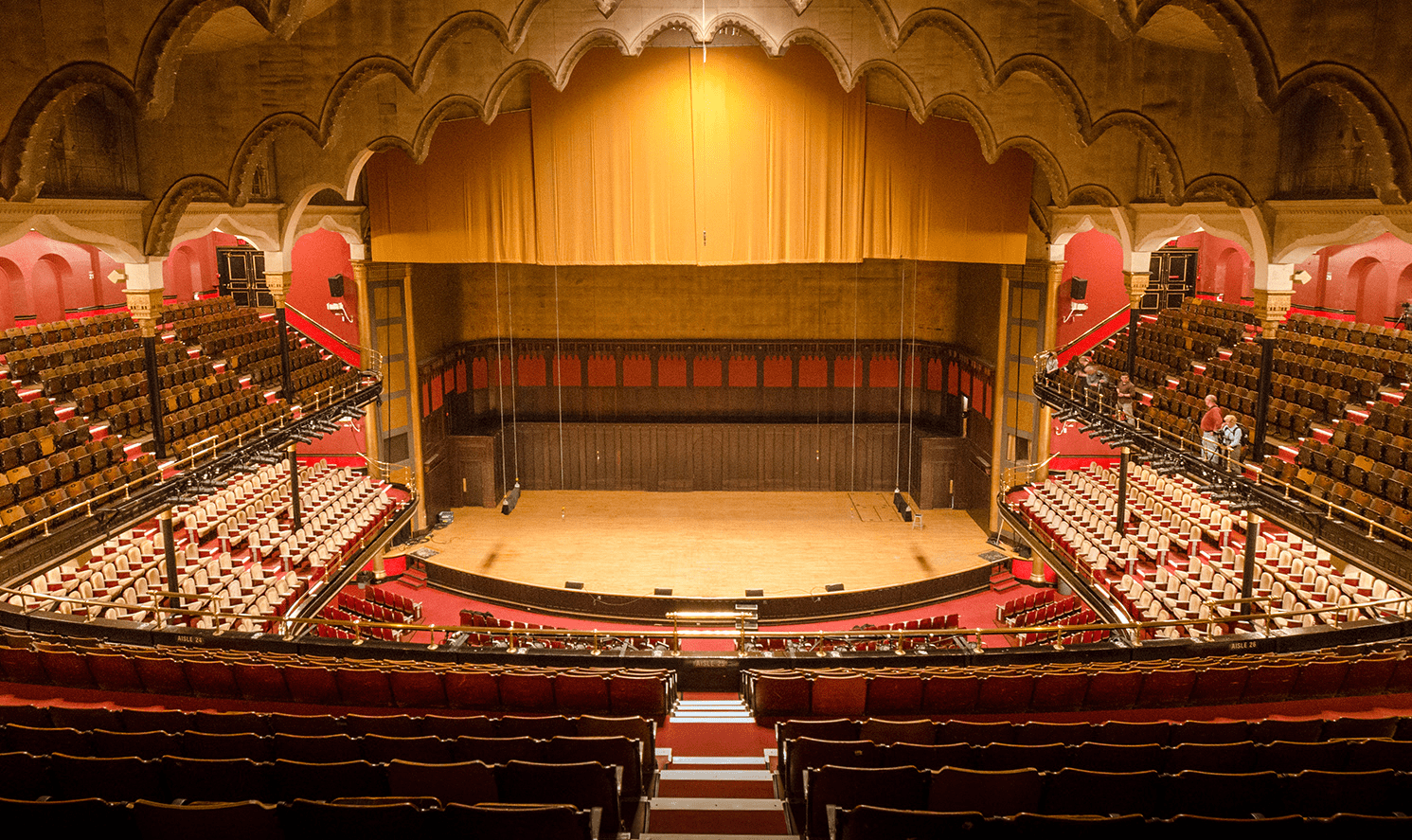
Massey Hall
Massey Hall is one of Toronto’s oldest concert venues, having opened in 1894. Architect Sidney R. Badgley designed the theatre with a neoclassical façade and Moorish-style interiors, including intricate festooned ceiling pendants and balcony arches shaped like ogees. Originally built to accommodate 3,500 seats, renovations in the 1940s reduced the hall’s capacity to 2,765.
Royal Ontario Museum
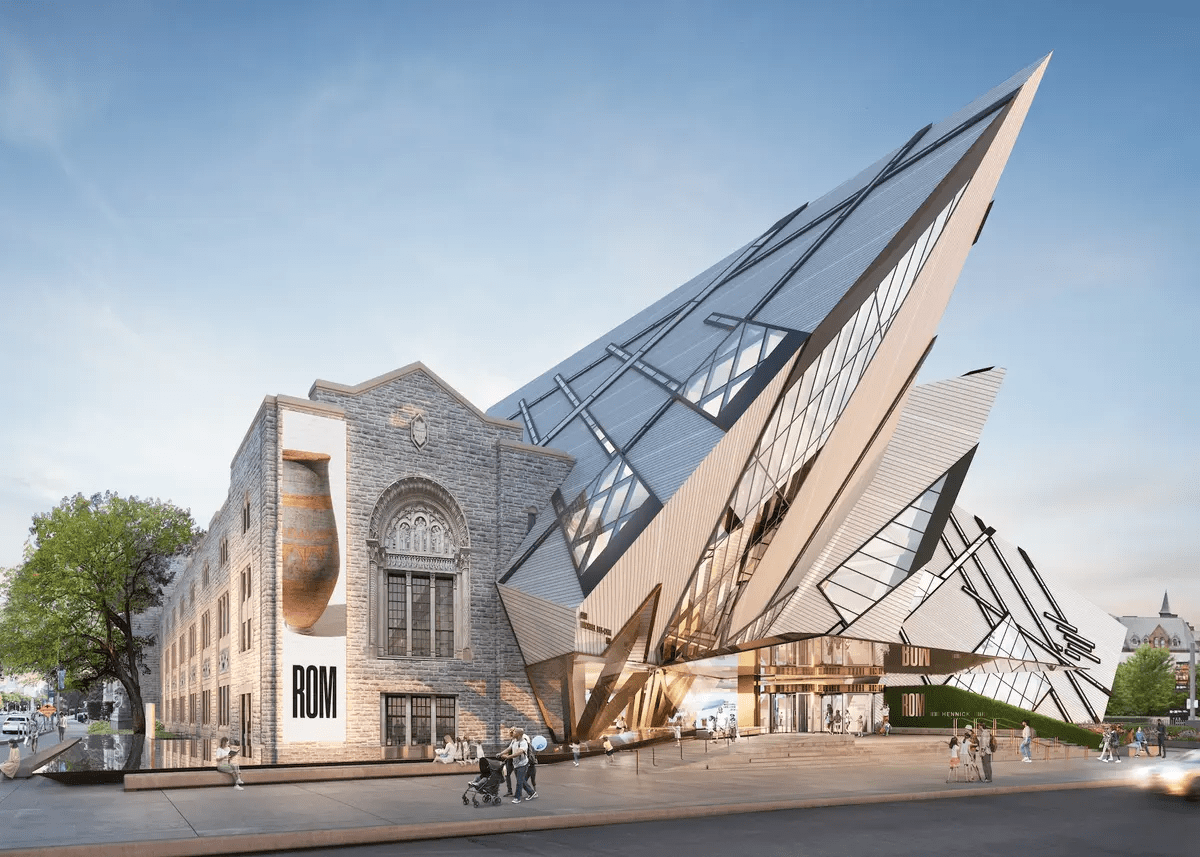
Many buildings in Toronto are a blend of old and new styles, and the Royal Ontario Museum (ROM) is a prime example. As Canada’s largest museum, it officially opened in 1914. Initially designed in the Romanesque Revival style, the ROM underwent a bold expansion in 2007, led by architect Daniel Libeskind. Today, one of its standout features is the striking Lee-Chin Crystal, a prism-like structure near the main entrance inspired by the museum’s mineral collection.
Art Gallery of Ontario
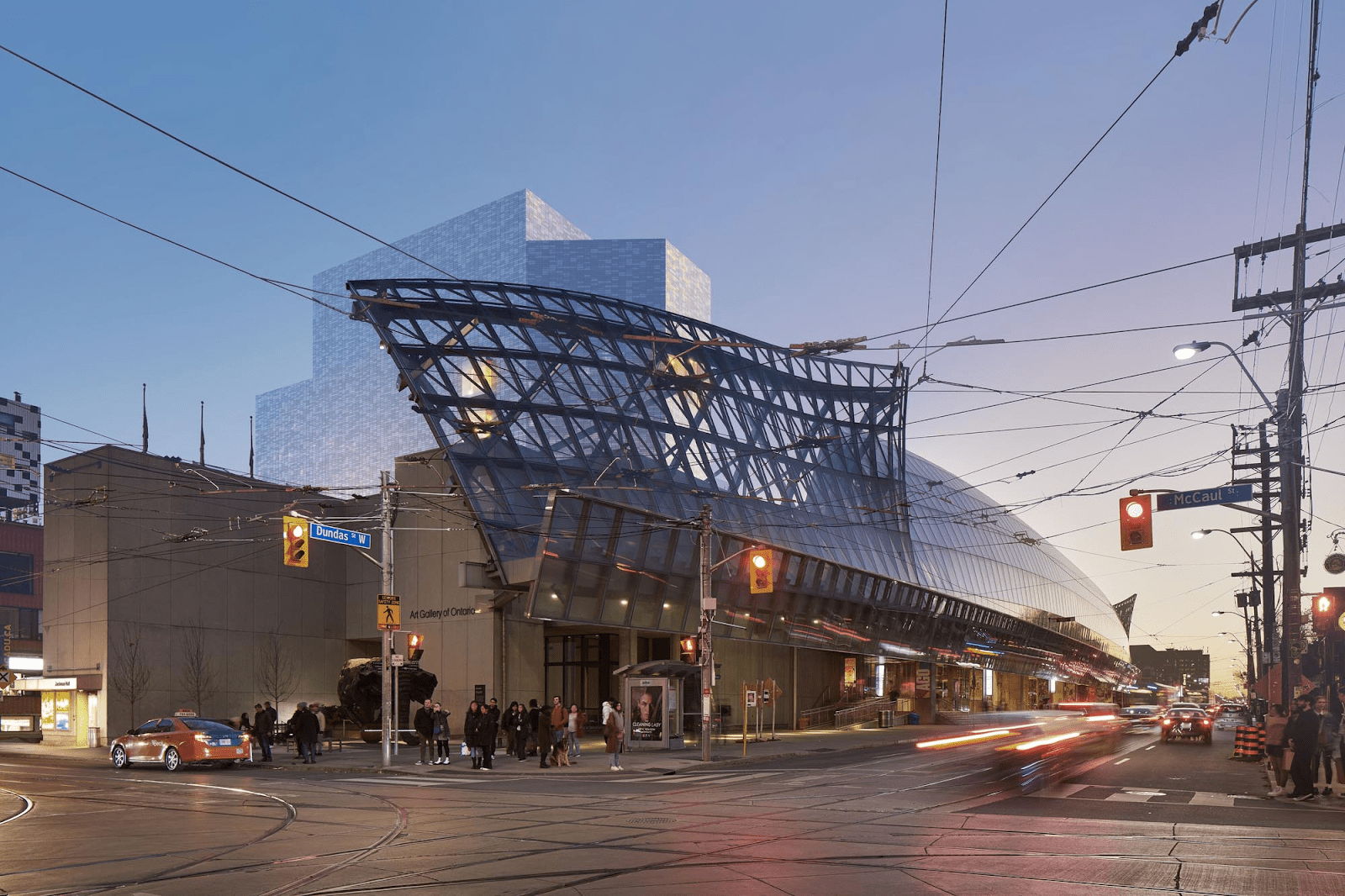
Another example of a historic building enhanced by bold modern architecture is the Art Gallery of Ontario (AGO). Originally built in the Beaux-Arts style, the AGO underwent significant expansion nearly a century later. In 2008, Frank Gehry redesigned the space, introducing a sweeping curved façade of glass and wood spanning 600 feet, a long sculpture gallery, ribbon-like staircases, and a southern wing made of tinted titanium and glass.
Toronto City Hall
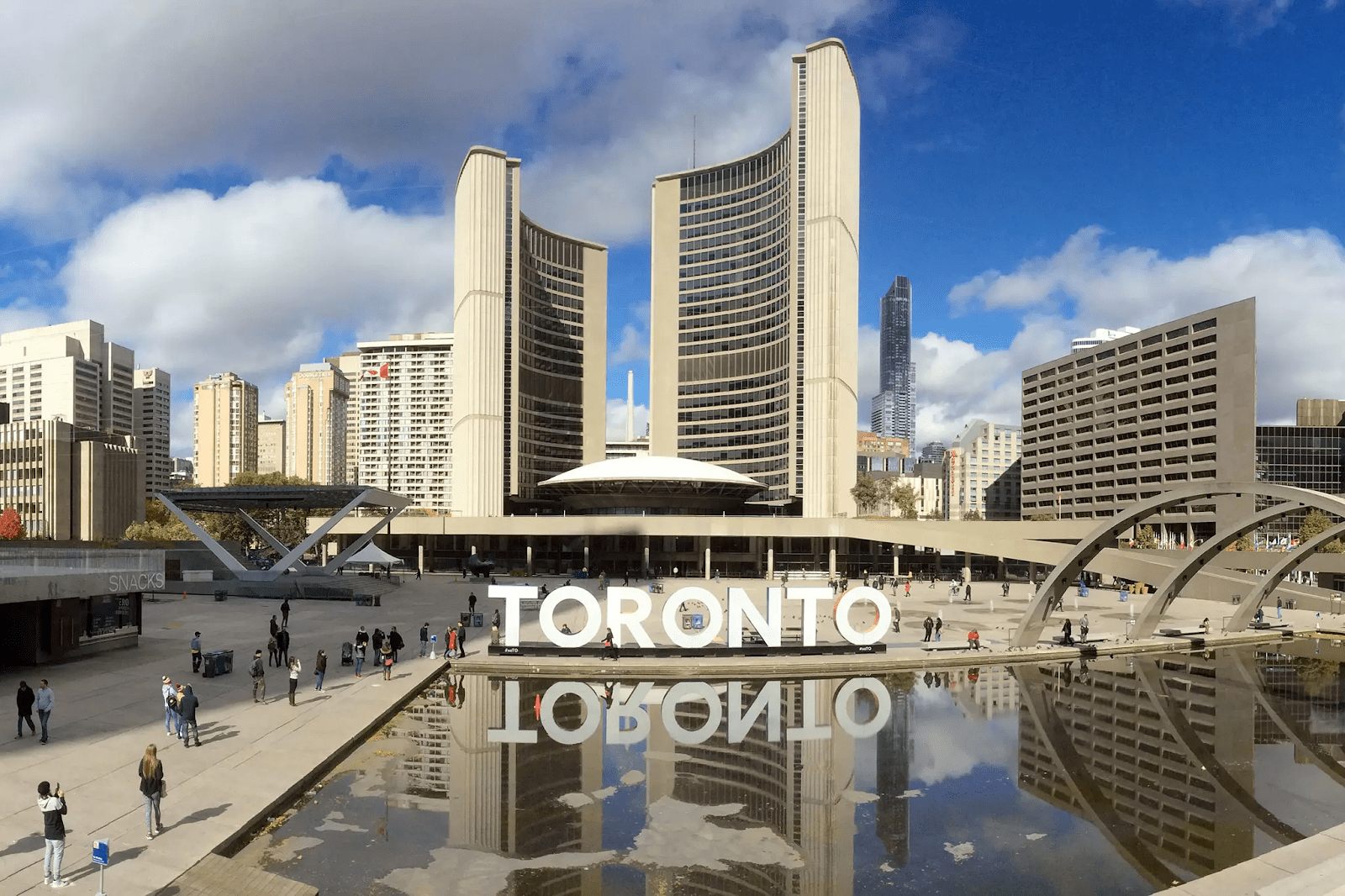
With its two curved concrete towers of differing heights, Toronto City Hall is one of the city’s most iconic landmarks. Designed by Finnish architect Viljo Revell, who won an international competition overseen by the then-mayor, the building opened in 1965, marking Toronto’s transition to modernist architecture.
Toronto-Dominion Centre
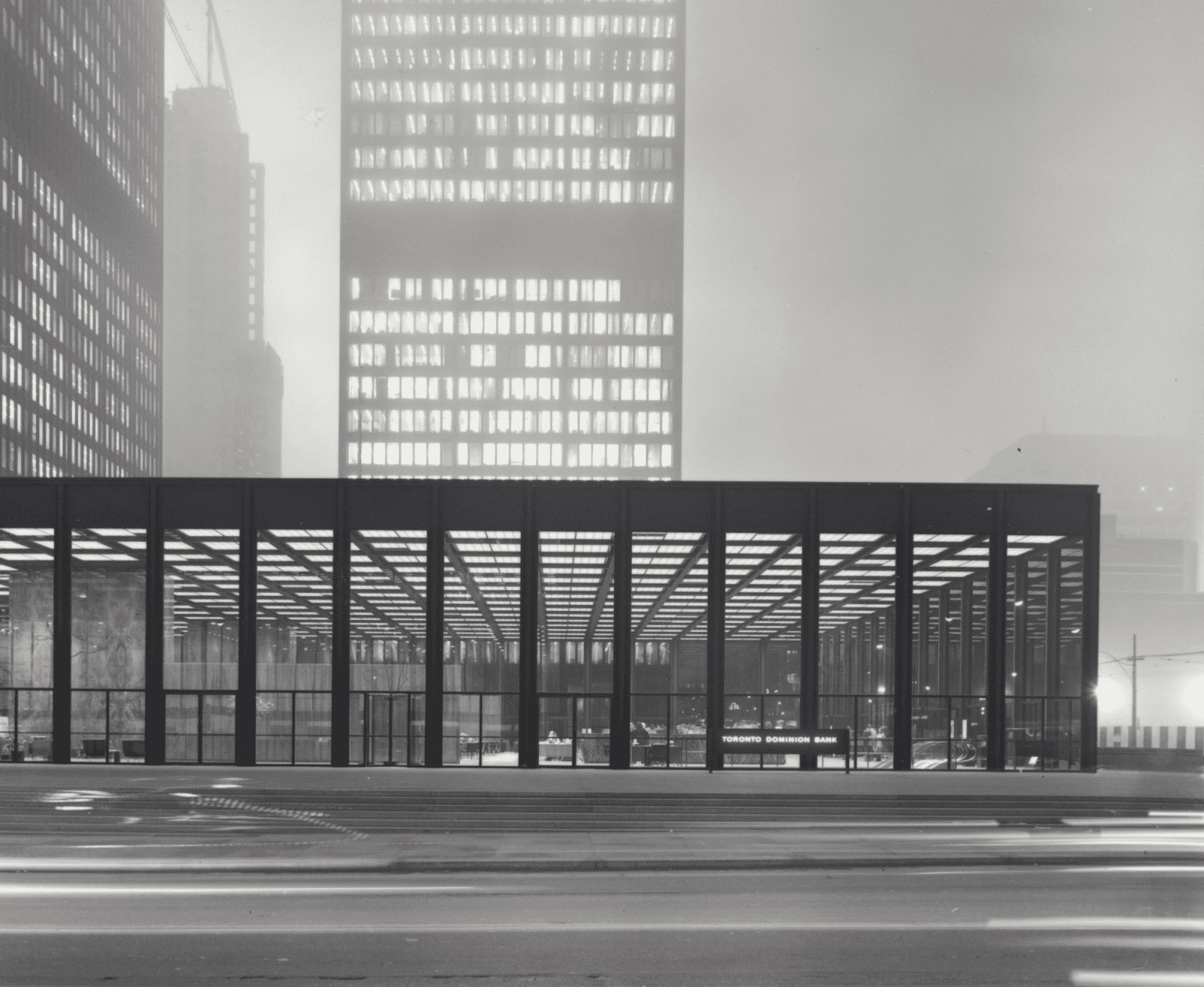
The towering structures of the Toronto-Dominion Centre, designed by Ludwig Mies van der Rohe, have made a lasting impression on the city’s skyline. Opened in 1969 as the headquarters for the Toronto-Dominion Bank, the centre stands out from other buildings in Toronto’s financial district with its black steel and glass construction. Its sleek yet understated design set the standard for other International Style institutions in the area.
Robarts Library
The Robarts Library is not only the largest library at the University of Toronto but also one of the most significant examples of Brutalist architecture in North America. Opened in 1973, this complex of three towers was designed by Mathers & Haldenby Architects with input from Warner, Burns, Toan & Lund. Known for its triangular geometry and minimal windows, the library covers 1,036,000 square feet and houses nearly three million volumes, providing space for 4,100 users.
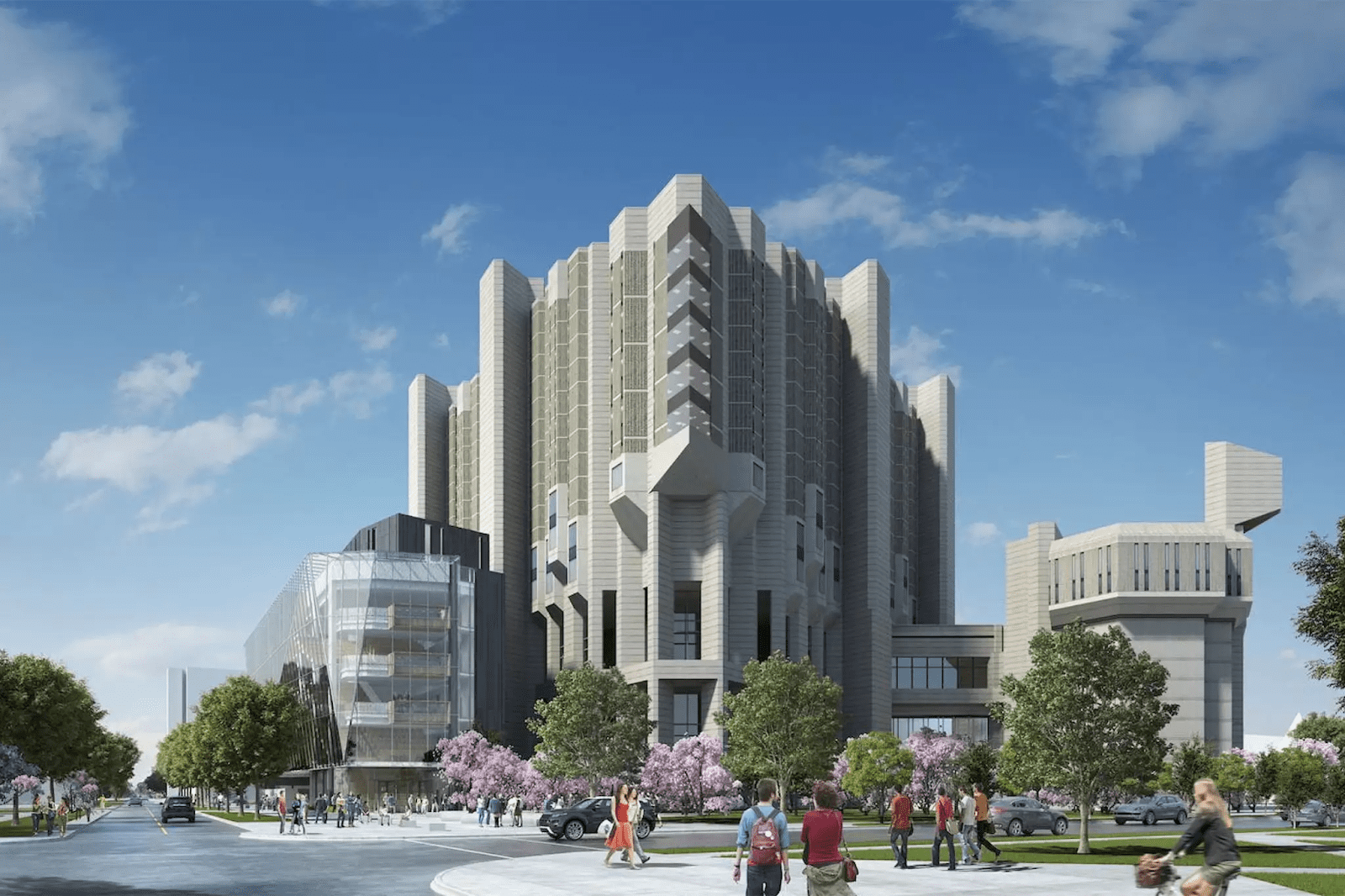
While the library’s massive size and unconventional triangular design were controversial when it first opened, earning it the nickname “Fort Book,” public perception has evolved over time. In 2019, however, readers of the Toronto Star controversially dubbed it the city’s ugliest building, sparking heated discussions.
CN Tower
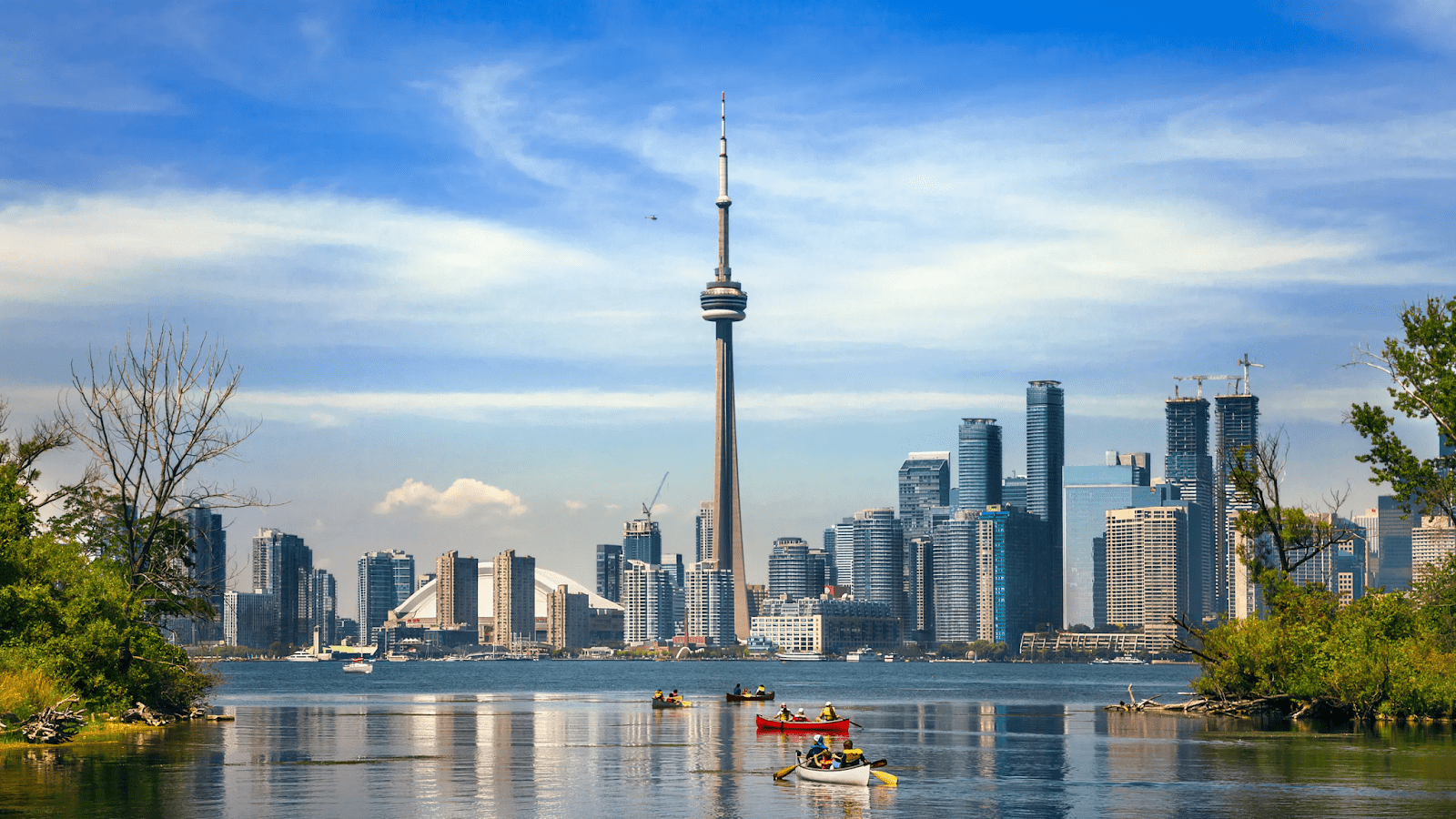
Long before Drake featured it on the cover of his album Views, the CN Tower was one of Toronto’s most recognizable landmarks. Opened in 1976, the 553-metre telecommunications tower was built by the Canadian National Railway, for which it was named. Designed by prominent architects WZMH, John Hamilton Andrews, Webb Zerafa, and Menkes Housden with assistance from E.R. Baldwin, the CN Tower was the world’s tallest freestanding structure until 2010.
The Aga Khan Museum
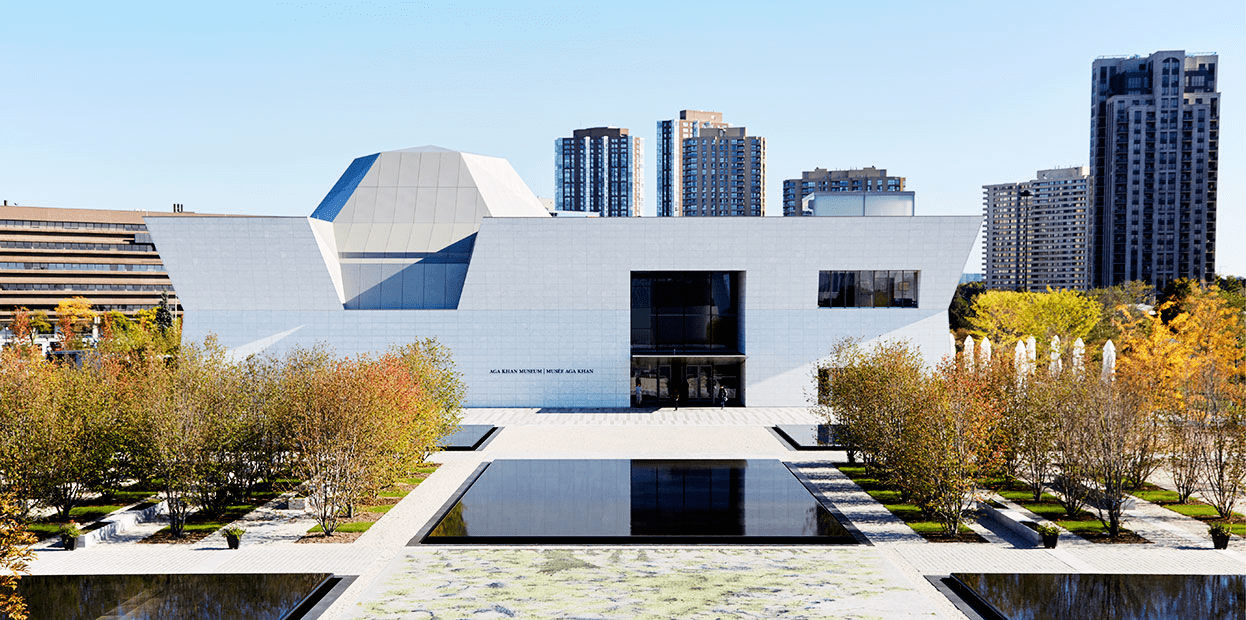
Designed by Pritzker Prize-winning architect Fumihiko Maki, the Aga Khan Museum has become one of Toronto’s most renowned buildings since its opening in 2014. Spanning 10,000 square metres, the museum showcases Islamic civilizations and features a white angular granite exterior with intricate historical elements reflecting Islamic communities.
Home to a growing collection of over 1,200 masterpieces, including manuscripts, paintings, ceramics, and textiles from the 9th to the 21st century, the Aga Khan Museum bridges cultures through its innovative exhibitions and engaging programs, from performances to lectures and film screenings. It aims to inspire curiosity and understanding while fostering inclusivity and peace.
Rogers Centre
Originally named SkyDome, the Rogers Centre was the world’s first multipurpose stadium with a retractable roof when it opened in 1989. Designed by architect Rod Robbie, the dome features four panels, three of which are motorized and can open or close in about 20 minutes. This innovative design has since become a model for stadiums worldwide.

Ryerson University Student Learning Centre
The Ryerson University Student Learning Centre (SLC) is an eight-story complex resembling an iceberg, designed by Snøhetta in collaboration with Zeidler Partnership Architects. Opened in 2015 and located near one of Toronto’s busiest intersections, the SLC draws inspiration from ancient Greek gathering spaces. Today, it stands as the most iconic building on the Ryerson University campus.
Toronto’s architectural landscape reflects its rich history and multicultural identity. From preserving historic landmarks to embracing modern designs, the city offers a unique blend of the past and future.