

The city of Toronto is renowned for its incredible architecture. Its unique blend of modernity and history impresses both locals and tourists alike. Toronto is also a well-known hub for economic and financial markets. That’s why today we’ll delve into the history of the creation and development of Toronto-Dominion Bank (TD Bank). In this piece, we’ll also touch upon the bank’s architecture. Read more about this on toronto-future.com.
History of the Financial Institution
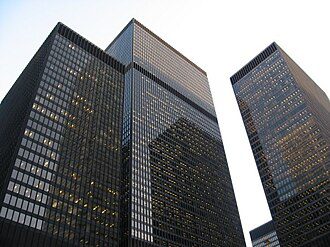
Toronto-Dominion Bank has a unique history that began in the mid-19th century. This financial institution was the result of a merger between two banks with rich legacies: the Bank of Toronto and the Dominion Bank.
In 1855, a group of flour millers and grain merchants in the province of Ontario founded the Bank of Toronto. The bank was established to support the growing grain industry by providing essential financial services. Five years later, the bank opened its first branch in Montreal.
The second bank, the Dominion Bank, was established in Toronto in 1869. Its founders aimed to serve a broader range of agricultural and commercial enterprises. It’s worth noting that both financial institutions operated in parallel, were similar in scale and influence, and maintained close ties.
The Toronto Bank Merger
The two banks operated independently for several decades until 1955, when the Bank of Toronto and the Dominion Bank merged. This event marked the beginning of Toronto-Dominion Bank. At the time of the merger, the new bank had approximately 499 branches and a staff of around 5,500 employees. Furthermore, the bank’s assets exceeded $1 billion, with about $479 million in loans issued.
Twelve years later, TD Bank’s headquarters moved to the new 56-storey Toronto-Dominion Bank Tower in downtown Toronto. This move became a symbol of the bank’s ambitions and growth.
Notably, the bank began to actively expand its international presence, opening branches in Bangkok, Frankfurt, and Beirut.
In 1987, Canada passed legislation allowing banks to own investment firms. TD Bank established TD Securities Inc. and began developing mutual funds. In 1995, the bank also entered the insurance sector. In 2000, the bank acquired the financial company Canada Trust for $8 billion. Following this acquisition, Toronto-Dominion Bank became the third-largest Canadian bank by asset size.
Architectural Highlights of the Bank
A key feature of Toronto-Dominion Bank is its headquarters, the Toronto-Dominion Centre, located in downtown Toronto at the intersection of Bay and King Streets. This complex consists of six office towers designed in the International Style. They have become symbols of modernism and minimalism in the city’s architecture.
The main building of the bank’s complex is one of the most famous works by the renowned architect Ludwig Mies van der Rohe. The tower is distinguished by its understated design, featuring black painted steel and tinted glass, creating an appearance that is both elegant and simple. Notably, this building was the tallest in Toronto and Canada for a long time. Moreover, the Toronto-Dominion Centre was one of the first in Toronto to introduce the concept of a business centre with multiple high-rise buildings united by a common architectural vision.
But that’s not all. The complex also includes:
- Royal Trust Tower: A 46-storey tower completed in 1969, which is part of the complex and complements the architectural ensemble.
- Banking Pavilion: A single-storey building located at the corner of King and Bay Streets, serving as the bank’s pavilion.
Additionally, the Toronto-Dominion Centre is arranged around a granite-paved pedestrian plaza and includes an underground shopping concourse and parking.
This outlines the history of the creation and development of one of Canada’s largest banks.