

The city of Toronto is made up of many streets. Each has its own unique history, collectively forming a world-renowned metropolis. Bloor Street is one of Toronto’s most prominent streets, running east-west across the city. This major thoroughfare stretches for 25 kilometres and is notable for its diverse locations. Learn more about the history of Bloor Street’s creation and development on toronto-future.com.
The Street’s Origins
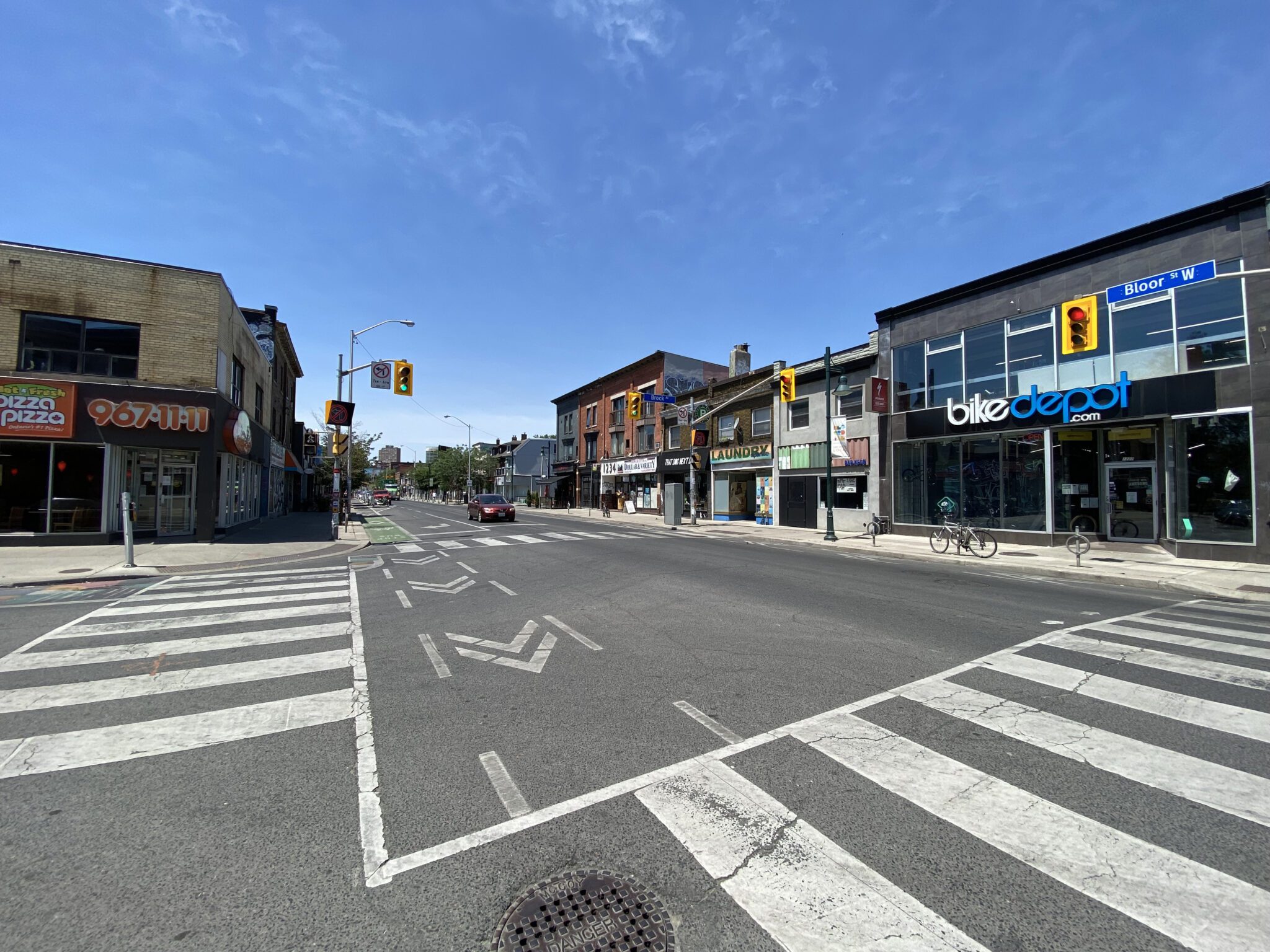
Today, Bloor Street is considered one of the city’s largest streets, but centuries ago, it was originally planned as the first concession road. This thoroughfare went by several names: Tollgate Road, St. Paul’s Road, and Sydenham Road. Its current name comes from Joseph Bloor, a local brewer who founded the village of Yorkville in 1830. It’s worth noting that sections of Bloor Street near High Park remained undeveloped in the early 20th century due to deep natural ravines. Only after this section of the thoroughfare was developed was Bloor Street fully laid out. In the 1960s, the street was extended westward, leading to the development of the Markland Wood neighbourhood. Incidentally, the portion of the street in Mississauga was also built in the 1960s. However, a bridge over the Etobicoke Creek wasn’t constructed until 1971. Interestingly, until 1998, the street was designated as Highway 5 from Kipling Avenue eastward to the Don River. In that same year, it was officially decommissioned as a connecting link.
Bike Lanes on Bloor Street
Bike lanes are a distinct feature of the thoroughfare, but their history isn’t straightforward. Plans to install them date back to the 1970s. However, it wasn’t until 2016 that City Council voted in favour of constructing bike lanes in this part of the city. This decision was supported by then-Mayor John Tory. A pilot project was launched in August 2016, which involved removing 136 parking spots to create the bike lanes. As a result, the bike lanes increased cycling trips by 50%. In 2020, the bike lanes were extended westward to Runnymede Avenue. However, in 2024, legislation was passed to remove the bike lanes on Bloor Street, University Avenue, and Yonge Street, replacing them with vehicle traffic lanes.
What to See on Bloor Street
Today, Bloor Street serves as a vital artery connecting various Toronto neighbourhoods. This beautiful street boasts many historical landmarks and provides access to numerous cultural sites. On Bloor Street, you’ll find the St. Volodymyr Institute and an art gallery. There are also several museums, notably the unique Bata Shoe Museum. Here, locals and tourists alike can explore history and culture through the lens of footwear. Bloor Street is also home to the Shevchenko Museum. It’s not just a place to learn about the life and work of the famous Ukrainian poet, but also a centre for Ukrainian culture and history in Toronto. The Royal Ontario Museum (ROM) is another must-visit museum on Bloor Street. It is one of the world’s most renowned museums and Canada’s largest museum of culture and natural history. Notably, it features over six million artifacts in more than 40 galleries, including collections of dinosaurs, and art from the Middle East, Africa, and East Asia. Additionally, several well-known parks are located near the street, such as High Park and Riverdale Park East.
Bloor Street remains one of Toronto’s most crucial transportation arteries, facilitating convenient movement throughout the city and supporting its economic and cultural development. Bloor Street is a significant Toronto thoroughfare with a unique history, delighting residents and visitors with its wonderful locations. We hope this material was informative and that you learned more about your city.