
A modern metropolis is a complex living organism, and its road network is the circulatory system, which increasingly suffers from chronic “blood clots.” Toronto, one of North America’s most dynamic cities and Canada’s economic hub, has long faced traffic gridlock. Reliance on personal cars, rapid population growth, massive construction, and numerous public events meant drivers lost dozens of hours in traffic every year, costing the region’s economy billions of dollars.
The traditional approach to this problem—widening roads—has long proven ineffective due to the phenomenon of “induced demand” (where new lanes simply attract more cars). Realizing this, Toronto officials bet on digital transformation. The city has become a massive testing ground for implementing artificial intelligence (AI) and machine learning algorithms in transportation.
How exactly does artificial intelligence help optimize Toronto’s traffic? Why are traffic lights getting “smarter,” and what economic benefits does this bring to the city? Let’s dive in with toronto-future.
The Anatomy of a Traffic Jam: Why Old Methods No Longer Work
Traditional traffic management systems relied on hard-coded timers. Traffic lights changed according to a pre-set schedule: one phase for the morning rush hour, another for the evening, and a third for the night. However, real-world traffic doesn’t follow static rules. Weather conditions, accidents, sudden road repairs, or holiday weekends create chaotic fluctuations in traffic flow.
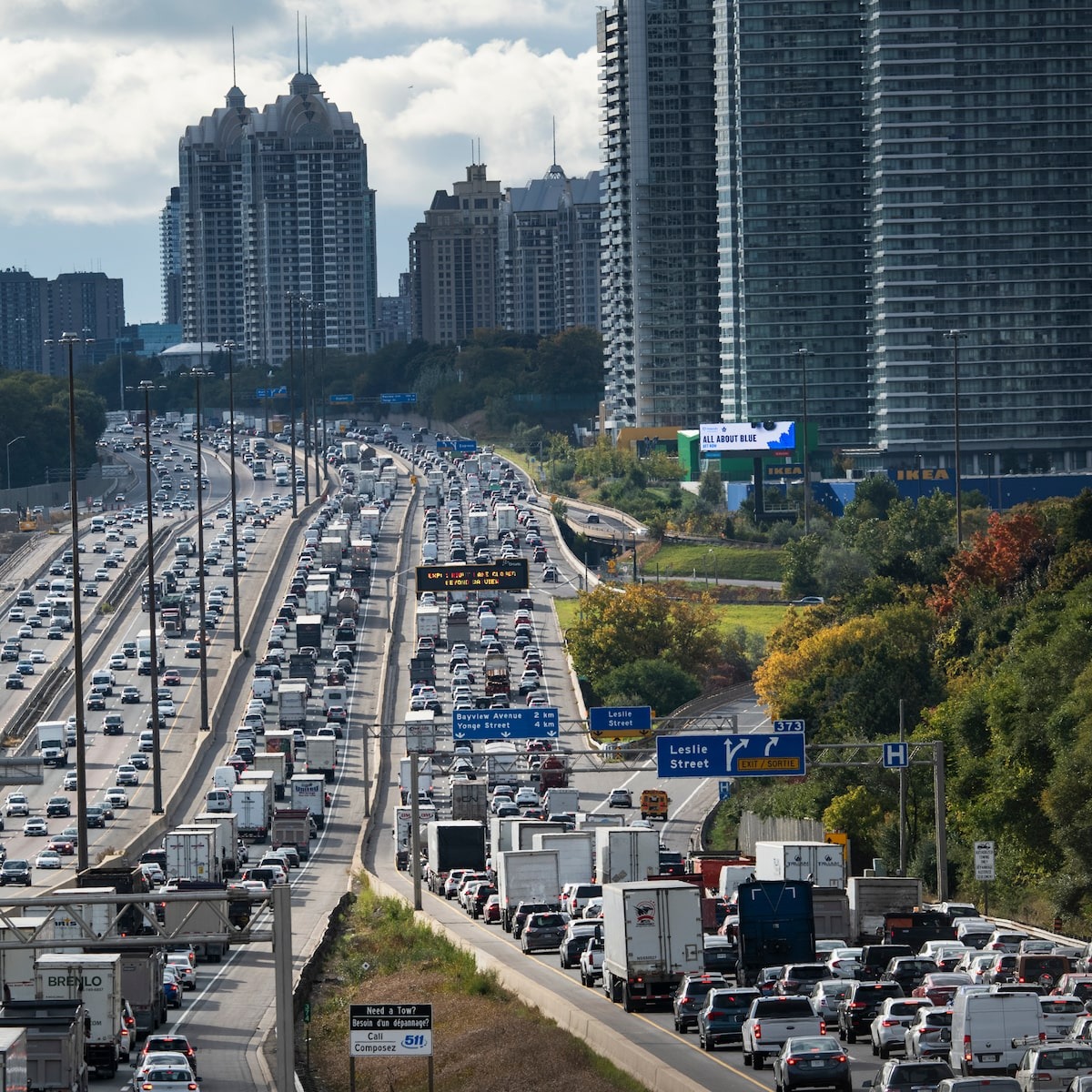
In Toronto, the situation is complicated by several factors:
- High construction density. Dozens of active cranes in the downtown core regularly require temporary lane closures.
- Mass events. Sports matches, festivals, and concerts generate localized traffic spikes.
- Economic toll. Direct and indirect losses from regional traffic jams are estimated at about $10 billion annually.
To reverse this trend, Toronto authorities approved a long-term Congestion Management Plan. Its main priorities are prioritizing public transportation, strictly controlling construction work, and integrating smart technologies.
Smart Traffic Signals and Deep Reinforcement Learning
The key element of the digital revolution on Toronto’s streets is the shift from static regulation to adaptive, AI-driven traffic light control systems.
How Does the Algorithm Work?
Unlike regular traffic lights, adaptive systems use sensors, cameras, and radars to continuously collect data on vehicle volume, speed, and intersection queue lengths. This data is fed into machine learning algorithms in real time.
These systems are often based on Deep Reinforcement Learning (DRL). The AI acts as an “agent” that constantly makes decisions: whether to extend the green light for a congested route or switch it to clear cross-traffic. The AI earns a “reward” (a digital performance metric) for every decision that reduces overall wait times and queue lengths.
The Multi-Hop Effect and the Sheppard Avenue Experience
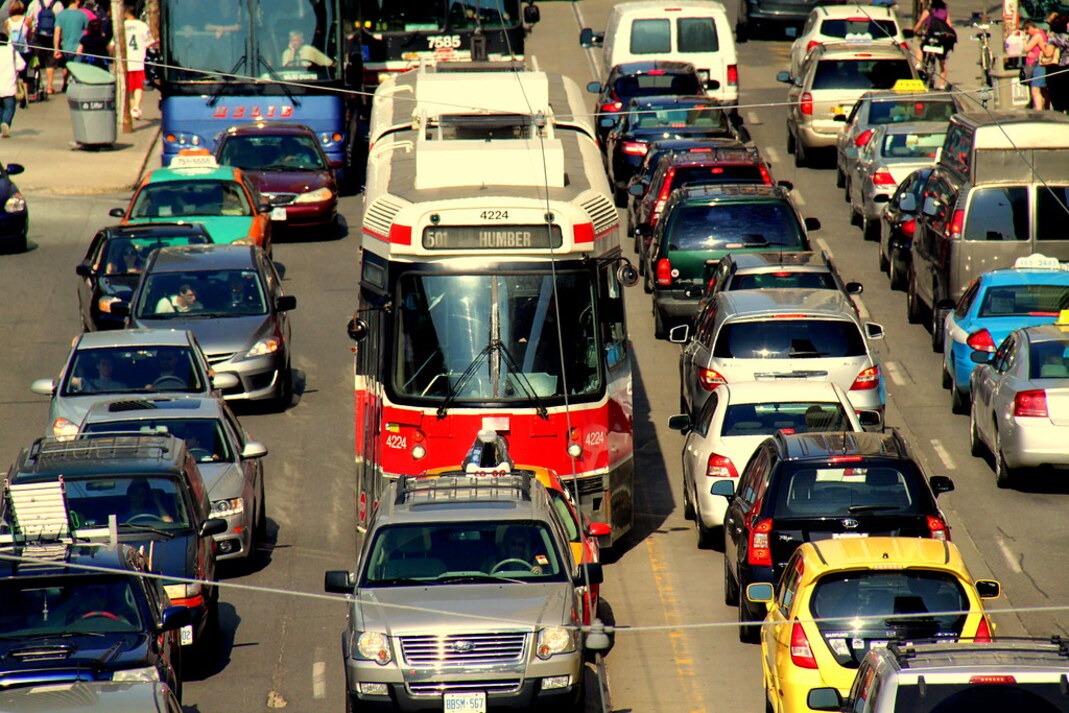
One major flaw of early smart traffic lights was their “nearsightedness.” They only optimized traffic at their own intersection, which sometimes caused bottlenecks on adjacent streets.
Research and simulations conducted by scientists on a real stretch of Sheppard Avenue in Toronto (using Multi-Hop Upstream Anticipatory Traffic Signal Control models) showed striking results. When AI considers not just the immediate intersection, but the traffic conditions 2–3 intersections ahead, the outcomes improve dramatically:
- Total Time Spent by vehicles in transit drops by nearly 19%.
- Overall queue wait times decrease by more than 20%.
- Virtual queues (cars that haven’t reached the intersection yet but are already slowing down) practically disappear.
Thanks to this, the AI acts proactively. It “sees” a traffic jam forming three blocks away and adjusts traffic light phases on relief routes in advance.
Intelligent Intersections and Multimodality
Toronto’s modern approach to traffic doesn’t stop at cars. The city is rolling out the “Intelligent Intersections” concept, where AI analyzes a multimodal flow: pedestrians, cyclists, buses, streetcars, and private vehicles.
Powered by Computer Vision and neural networks, cameras at these intersections can categorize objects:
- If a large group of pedestrians approaches a crosswalk (for instance, exiting the subway), the AI can safely extend the pedestrian phase.
- If heavy bike traffic is detected on a cycle track, the system factors this in when calculating right and left turns for cars.
- The system automatically detects potential hazards and provides analytics to city engineers to improve safety under the Vision Zero program.
Public Transit Priority: Enhanced Transit Signal Priority (eTSP)
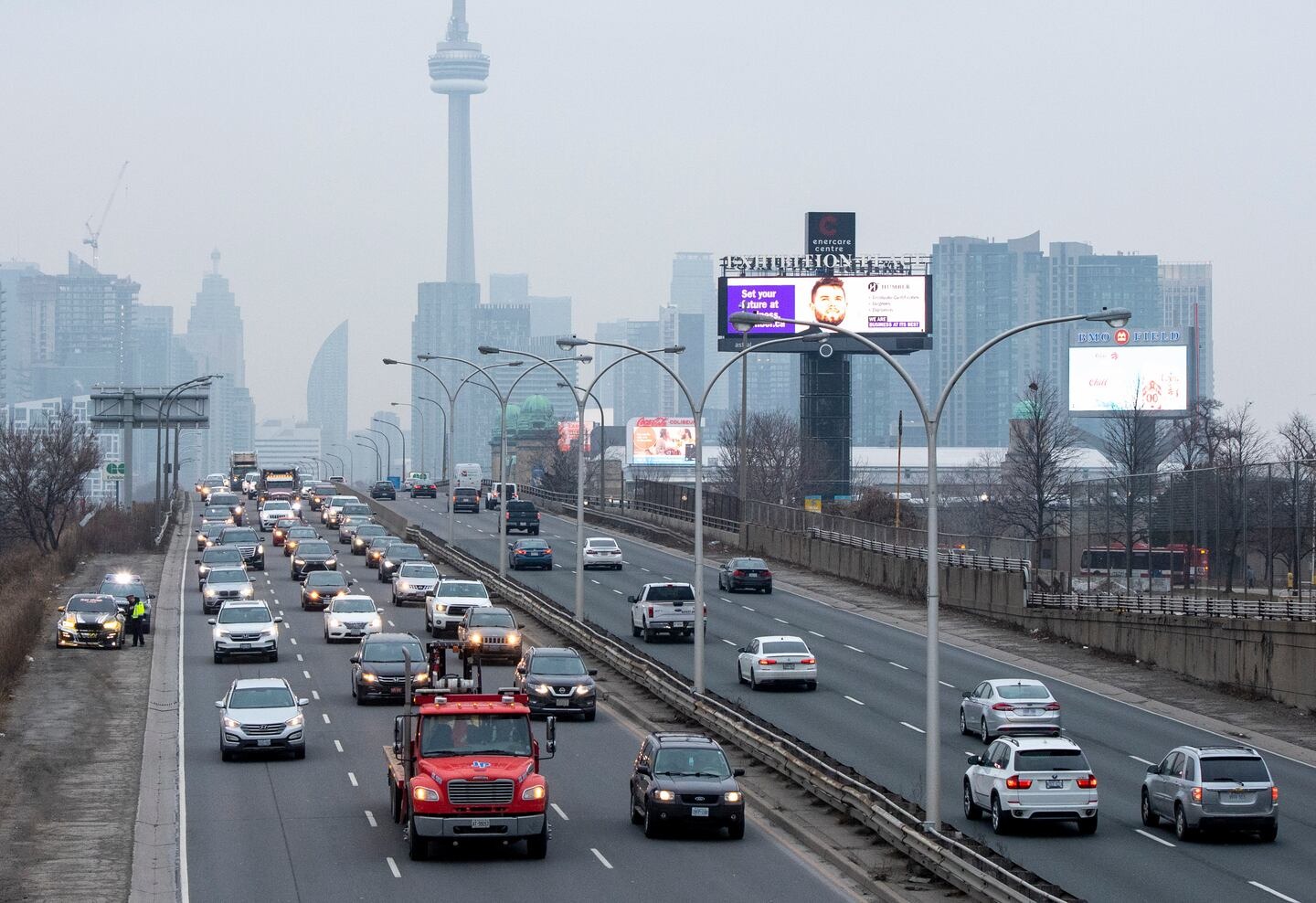
Public transit is the most efficient way to move large numbers of people. However, streetcars and buses are often forced to idle at red lights alongside private cars.
To tackle this problem, Toronto established the Surface Transit Reliability Task Force. This interagency group is rolling out the Enhanced Transit Signal Priority (eTSP) system.
How Does AI Help Streetcars and Buses?
When a streetcar (e.g., on the popular Spadina or King routes, or the new Finch West and Eglinton LRT lines) approaches an intersection, an onboard sensor or smart intersection camera sends a signal to the traffic controller. The AI algorithm then takes one of several actions:
- Green Extension. The green light is prolonged by a few seconds so the streetcar can cross without stopping.
- Red Truncation. The red light for cross-traffic ends faster than usual.
- Phase Insertion or Rotation. The AI dynamically changes signal sequences, allowing public transit to make a left turn without delaying the main flow.
Crucially, the smart algorithm evaluates transit punctuality. If a streetcar is on schedule or running early, the system won’t cause unnecessary delays for other drivers. But if it’s running late, the AI gives it a maximum “green corridor.” This prevents the dreaded “bunching” effect, where several streetcars arrive at once followed by a long gap in service.
The “Central Brain”: From Traffic Control to the Congestion Management Centre (CMC)
All technological data streams in Toronto flow into a single analytical core. The city is upgrading its historic RESCU dispatch center into a state-of-the-art Congestion Management Centre (CMC).
This isn’t just a room with a massive video wall; it’s a high-tech hub integrated with AI engines:
- Predictive Modeling. Based on historical data, weather conditions, and current events, AI forecasts traffic conditions several hours ahead.
- Automatic Incident Detection. Neural networks analyze video feeds from hundreds of city cameras, instantly alerting operators to a stalled car, an accident, or debris on the road. This cuts emergency response times from dozens of minutes to mere seconds.
- Coordination with Traffic Agents. Traffic Agents stationed at the most complex intersections receive direct instructions and real-time updates from CMC algorithms, maximizing their on-the-ground efficiency.
Digital Twins and Big Data Analytics During Mass Events
Managing a modern city is impossible without Big Data. To optimize traffic during major events (like FIFA World Cup matches, massive festivals, or arena concerts), Toronto uses anonymized mobile network data.
The AI processes aggregated movement data from millions of mobile devices (without compromising user privacy) to build a digital Modal Split model:
- How many people arrive via GO Transit commuter trains and the TTC subway?
- What percentage of drivers use the highways?
- How many attendees opt for multimodal routes (e.g., park-and-ride, or cycling/walking)?
This analytics allows officials to precisely measure the effectiveness of Travel Demand Management (TDM) strategies. For example, targeted messaging and AI-driven transit optimization during Pride or the Caribbean Carnival significantly reduce the share of attendees using personal cars while boosting public transit ridership.
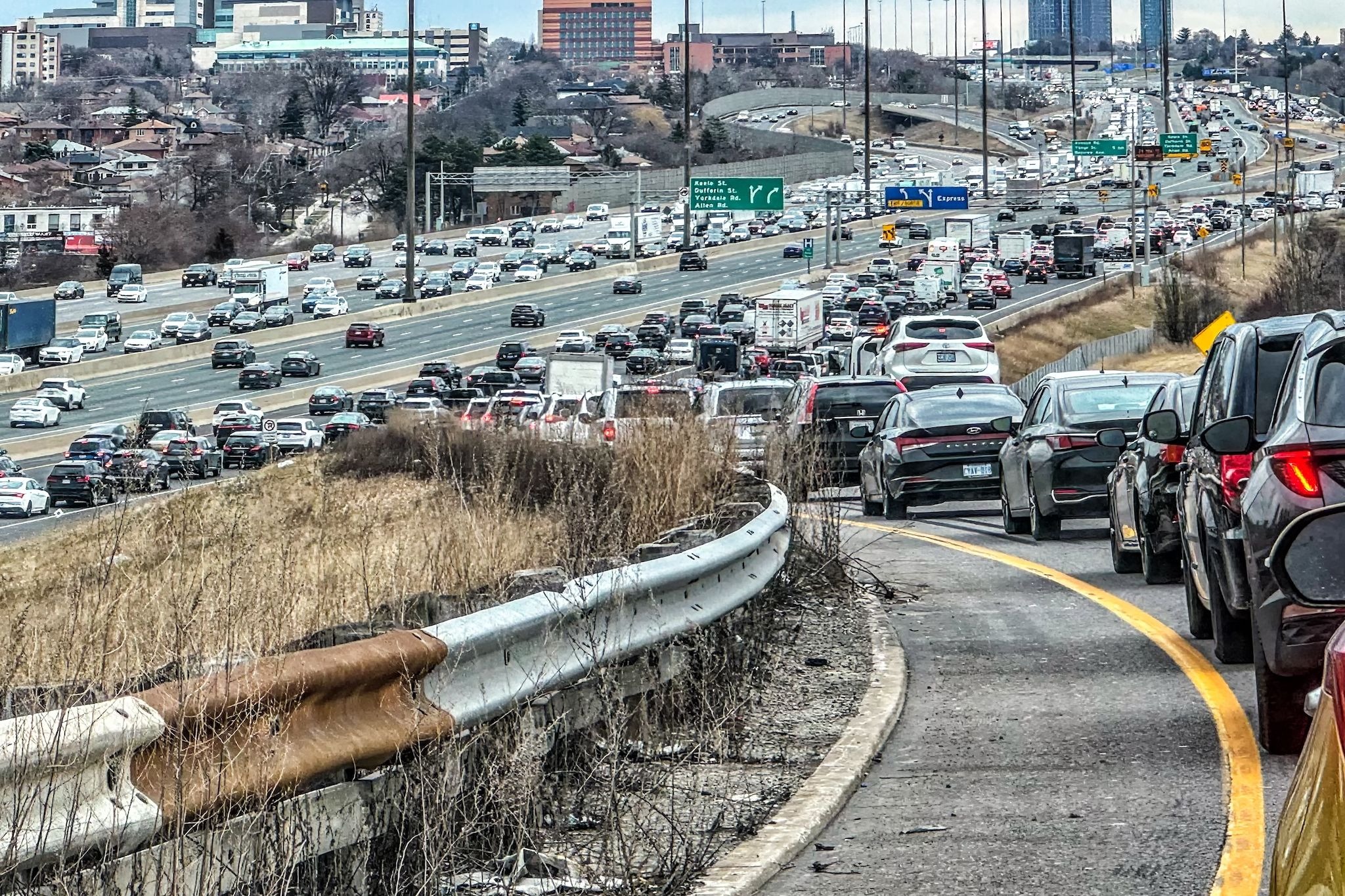
Furthermore, AI data feeds into digital platforms like RoDARS (a roadwork reporting system). Algorithms coordinate roadwork permits to ensure lane closures don’t overlap on parallel streets. There is also an economic incentive: introducing lane-closure fees paired with automated monitoring has reduced average roadwork duration by about 2.4 days.
Economic and Social Impact: The Numbers Speak for Themselves
Thanks to the synergy of AI technologies, an expanded roster of Traffic Agents, and public transit prioritization, Toronto is already seeing consistent positive results:
| Metric / Area | Impact of AI & Smart Tech Integration |
| Downtown Core Travel Time | An 8–12% reduction in peak-hour travel times (depending on the season), saving drivers 5 to 10 minutes on an average commute. |
| Traffic Light Network Optimization (based on simulations) | A 19% reduction in total network travel time, and a 20% decrease in queues. |
| Smart Signal Expansion | Scaled from a few dozen to hundreds of strategic locations (aiming for over 300 smart signals and 400 intelligent intersections). |
| Public Transit Reliability | Up to a 20% speed increase for streetcars on key arteries due to the expanded eTSP system. |
| Roadwork Closure Duration | Average temporary lane closure duration cut by ~11.3% (nearly 2.5 days per project) thanks to digitization and monitoring. |
Beyond sheer time savings, traffic optimization offers a massive environmental benefit. A car traveling at a steady speed on an AI-managed “green wave” emits significantly less CO₂ and fine particulate matter (PM2.5) compared to a vehicle constantly accelerating and braking in stop-and-go traffic.
How AI is Reshaping Toronto’s Traffic: Lessons for Future Smart Cities
Toronto’s experience highlights a crucial paradigm shift in urban planning. Artificial intelligence is not a magic wand that instantly eradicates traffic in a city of over 3 million people; rather, it is a powerful amplifier for systemic solutions.
Key takeaways from Toronto’s case for other global megacities:
- Integration over fragmentation. AI is most effective when it bridges traffic light control, mobile data analysis, public transit priority, and construction monitoring into a single ecosystem.
- Data over assumptions. Machine learning enables real-time decision-making based on objective metrics, rather than relying on outdated statistical reports.
- Multimodal balance. AI should optimize the movement of people, not just cars. Prioritizing streetcars, pedestrians, and cyclists builds a more resilient transportation model.
In the future, as autonomous vehicles advance, AI’s role in managing Toronto’s traffic will become even more foundational. Tomorrow’s traffic lights will communicate directly with vehicle onboard computers (V2X — Vehicle-to-Everything technology), entirely eliminating the need for visual signals and reducing travel delays to a physical minimum.
Toronto is already paving the way to this future, proving in practice that even the most congested metropolis can “breathe freely” again by entrusting its transport arteries to artificial intelligence.

