

If you look closely at a Canadian five-dollar bill, you won’t just see the portrait of Sir Wilfrid Laurier. You’ll also spot a curious mechanical device stamped with the word “Canada.” This is the Canadarm, arguably the nation’s most iconic technological achievement. But for Torontonians, this symbol holds a special place in their hearts. It was right here, in the industrial zones of our city at the Spar Aerospace facilities, that this groundbreaking technology was born. As reported by toronto-future.com, this invention made Canada the third country in the world—behind only the USSR and the US—to develop space exploration technology of this calibre.

The Avro Arrow Legacy: Where Did the Talent Come From?
The story of the Canadarm is inextricably linked to another Toronto legend: the Avro Arrow fighter jet. When the Arrow program was abruptly cancelled in 1959, thousands of top-tier engineers found themselves out of a job. However, their expertise didn’t just vanish. Many of these brilliant minds transitioned to Spar Aerospace, a company headquartered right in Toronto. By the late 1960s, when NASA started hunting for partners to help build the Space Shuttle, these Canadian engineers already boasted ahead-of-their-time experience.
In 1969, NASA officially invited Canada to join the shuttle program. The Americans needed a “space crane”—a robotic arm capable of plucking satellites from the shuttle’s cargo bay and releasing them into the vacuum of space. The Canadians pitched a concept inspired by the robots used to load fuel into CANDU nuclear reactors. And just like that, the era of the Canadarm began.
Toronto’s “Arm”
Developing the Canadarm was a massive undertaking for Toronto’s engineering community. The Spar Aerospace headquarters in Weston—a neighbourhood in Toronto—became the epicentre of this development. The challenge was monumental: create a 15-metre-long device light enough for spaceflight, yet rugged enough to manoeuvre payloads weighing up to 30 tonnes.
The Canadarm’s design bears a striking resemblance to a human arm. It features a “shoulder” with two joints, an “elbow” with one, and a “wrist” with three, giving it a total of six degrees of freedom. The materials chosen were strictly space-grade: titanium, stainless steel, and a graphite-epoxy composite. This composite material was absolutely crucial because it resists expanding or contracting during the extreme temperature swings of space, which can range from -160°C to +120°C.
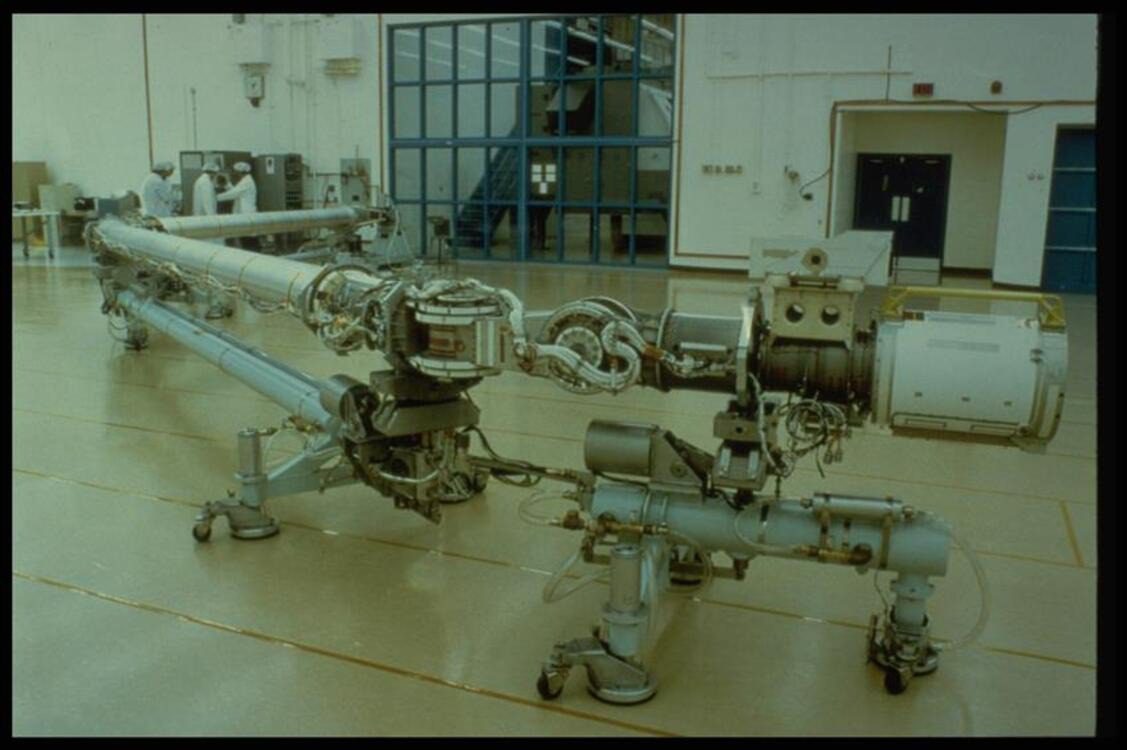
Here’s a fascinating fact: the Canadarm is so highly specialized that it can’t even lift its own weight here on Earth! Its structural integrity is designed exclusively for a zero-gravity environment. To test it in Toronto, engineers had to construct special clean rooms with perfectly level floors. Here, the arm could “glide” on air pads, effectively simulating microgravity.
Inventing the “Hand”: Inspired by a Rubber Band
One of the most intriguing components of the Canadarm is its “hand,” known technically as the end effector. Traditional claw-like grippers simply wouldn’t cut it in space. They carried the risk of damaging delicate satellites or failing to secure a solid grip.
The solution came from a rather unexpected place. Anthony “Tony” Zubrzycki, a design engineer working in Toronto, pitched a concept inspired by a simple rubber band wrapped around his fingers. He envisioned a system of crisscrossing wires that would snare a grapple fixture on the satellite, tightening much like a camera’s iris. This design was so elegant and foolproof that NASA green-lit it almost immediately. Frank Mee, head of the Spar lab, brought this vision to life in metal. Ever since, this Canadian “hand” has been the gold standard for robotic grappling in space.
February 11, 1981: A Day of Celebration in Toronto
This date is forever etched into the city’s history. The Spar Aerospace facility in Toronto hosted the official handover ceremony, presenting the first Canadarm to NASA. It was during this very event that Larkin Kerwin, the head of the National Research Council, publicly coined the name “Canadarm” for the first time.
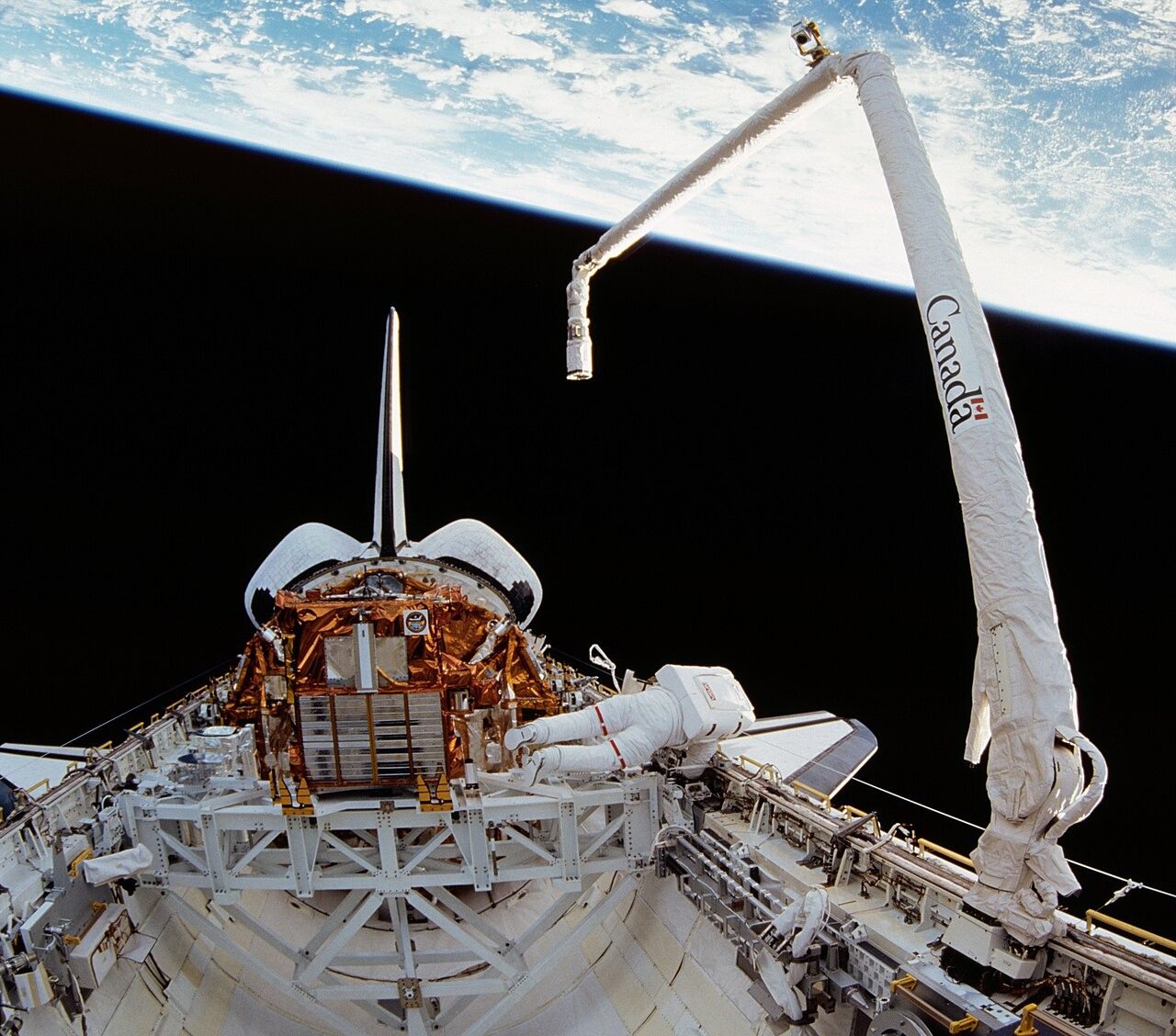
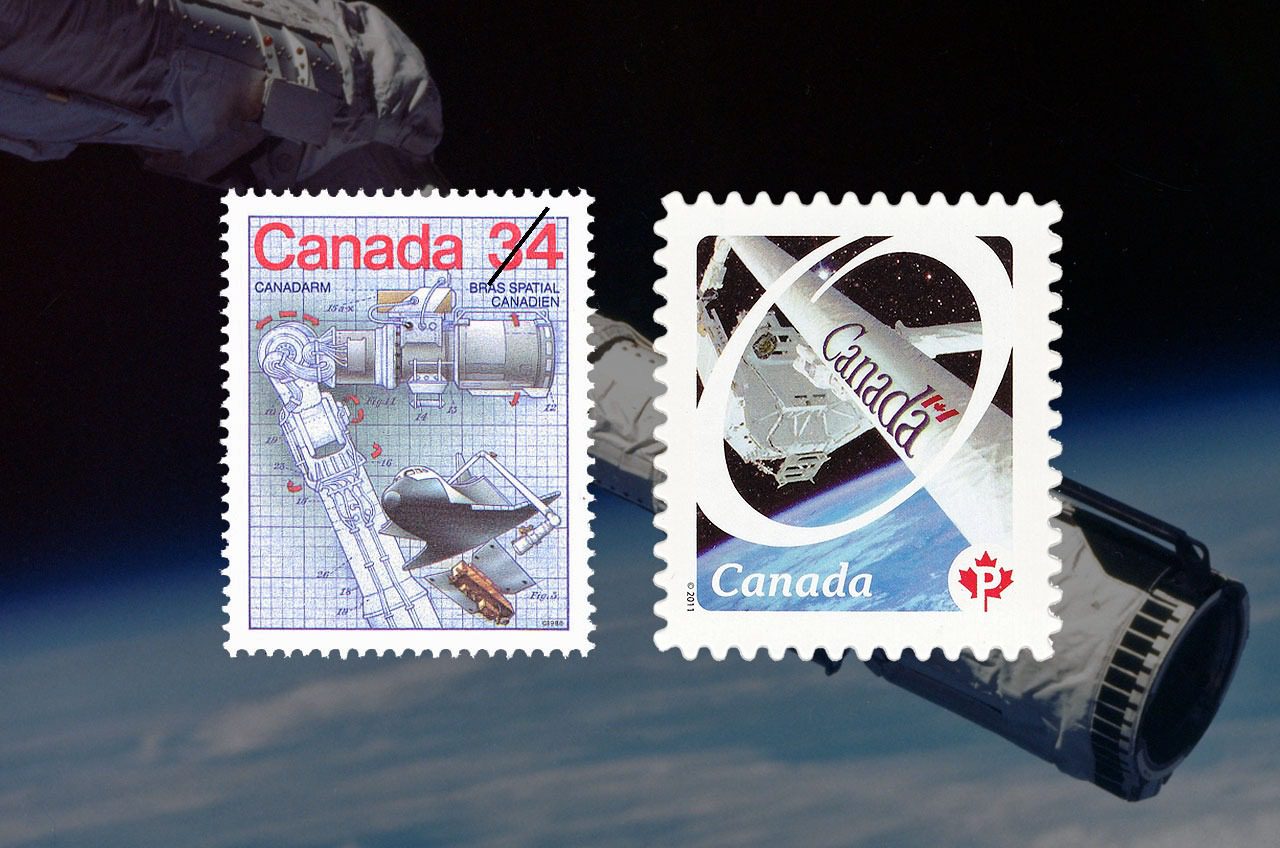
Canadians were so fiercely proud of their creation that they insisted on slapping a large “Canada” wordmark and the national flag right on the arm’s shoulder. Initially, the Americans pushed back, arguing it disrupted the shuttle’s design aesthetics. However, the Canadian team stood their ground: the world needed to know exactly whose arm was doing the heavy lifting in orbit.
30 Years of Service and the “Canadian Handshake”
The Canadarm took its maiden flight on November 13, 1981, aboard the Space Shuttle Columbia. The results shattered all expectations—the arm performed flawlessly. Over its 30-year operational lifespan, Canadarm1 took part in 90 space shuttle missions.
Rescuing the Hubble
One of the most dramatic chapters in the Canadarm’s career was the Hubble Space Telescope servicing mission. When the telescope was deployed in 1990, scientists quickly discovered a flaw in its primary mirror. Humanity’s most expensive scientific instrument was suddenly at risk of becoming a very pricey piece of space junk.
During the STS-61 mission in 1993, the “Canadian Arm” played a starring role. It delicately grappled the massive telescope and eased it into the cargo bay of the Space Shuttle Endeavour. For several days, the robotic arm held the Hubble steady while astronauts performed intricate spacewalks to install corrective optics. Without the rock-solid stability and reliability of the Canadarm, this rescue mission would have been impossible. We would have never seen those breathtaking images of distant galaxies that fundamentally changed our understanding of the universe.
Building the ISS: Space LEGO
If the Hubble mission was a test of precision, building the International Space Station (ISS) was the ultimate trial of strength and endurance. The Canadarm acted as the primary “crane operator” for the largest construction project in human history.
The manipulator hoisted massive modules out of the shuttles and seamlessly docked them together. It was akin to snapping together a giant LEGO set while hurtling through space at 28,000 km/h. The resounding success of the first Canadarm convinced international partners that Canada was the undisputed global leader in space robotics. This stellar reputation paved the way for Canadarm2, an even more sophisticated system now permanently attached to the ISS. This next-generation arm can actually “walk” end-over-end along the exterior of the station, moving from one anchor point to another.
The system was later upgraded with Dextre (the Special Purpose Dexterous Manipulator)—a two-armed “space mechanic” also designed by the successors of Spar Aerospace in Toronto. Dextre handles fine, delicate tasks like swapping out batteries and scientific instruments. This keeps astronauts safer by reducing the need for risky spacewalks.
In 2001, a historic event unfolded that journalists dubbed the “Canadian Handshake.” Canadarm1 (on the shuttle) smoothly handed off a massive payload directly to Canadarm2 (on the ISS). It was a moment of absolute triumph for Canadian robotics.
Technological Legacy: From Orbit to the Operating Room
The Canadarm’s impact didn’t stop at the edge of space. The innovations born in Toronto’s labs eventually made their way back down to Earth to save lives. The remote control and micro-robotics technologies perfected on the space arm laid the groundwork for NeuroArm. This became the world’s first robot capable of performing incredibly complex brain surgeries while inside an MRI machine.
Furthermore, Spar Aerospace’s pioneering experience accelerated the development of industrial robots designed for hazardous environments, such as nuclear power plants, deep underwater exploration, and landmine clearance. Thanks to its hard-earned reputation in orbit, Toronto has evolved into a global robotics hub, attracting top-tier investment and talent from around the world.
A National Symbol
For Canada, the Canadarm became much more than just a piece of hardware. It was irrefutable proof that the country wasn’t merely a supplier of natural resources, but a powerhouse capable of creating the world’s most sophisticated intellectual products. When the Space Shuttle program was finally retired in 2011, one of the robotic arms came home. Today, it sits proudly on display at the Canada Aviation and Space Museum in Ottawa (with a replica and memorial plaques located in Toronto). It serves as a constant reminder to the next generation of engineers that the only limits to what is possible are in our imagination.
Right now, in Brampton (Greater Toronto Area), MDA Space is hard at work on Canadarm3. This next-gen system will be a critical component of the upcoming Lunar Gateway space station. Canadarm3 will be vastly smarter than its predecessors. It will rely heavily on artificial intelligence to operate completely autonomously, simply because the station will orbit too far from Earth for real-time manual control.
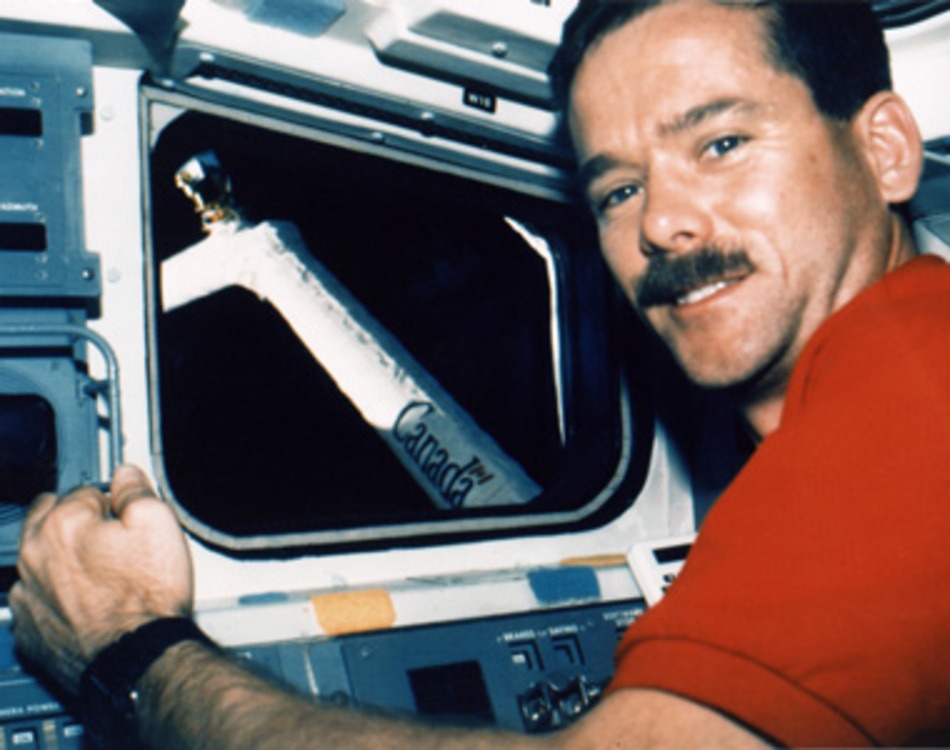
Canada has already secured its seat on the next mission to the Moon (Artemis II). Canadian astronaut Jeremy Hansen will make history as the first non-American to fly around Earth’s natural satellite. And all of this was made possible by an “arm” that was dreamed up and assembled right here in Toronto.
Conclusion
The “Canadian Arm” is a testament to how a small group of Toronto engineers enabled humanity to literally “reach for the stars.” It represents the perfect synergy of mechanics, electronics, and software, operating seamlessly in the most hostile environment known to humanity. The Canadarm revolutionized spaceflight, transforming the space shuttles from simple cargo haulers into incredibly powerful research platforms, and permanently etched Canada’s name among the leaders of the space race.