

Throughout history, humanity has sought various ways to transmit information across distances. Sailors who couldn’t reach their destinations would light fires to signal their location, while soldiers used smoke signals to warn commanders of approaching enemies. Different cultures employed drums and other instruments to alert their communities of danger.
The story of telegraph communication began in the 18th century, revolutionizing the transmission of information through wires, radio lines, and other channels. These groundbreaking technologies were successfully adopted in Toronto, easing communication across industries. Read more on toronto-future.
The Origins of Telegraph Communication Worldwide
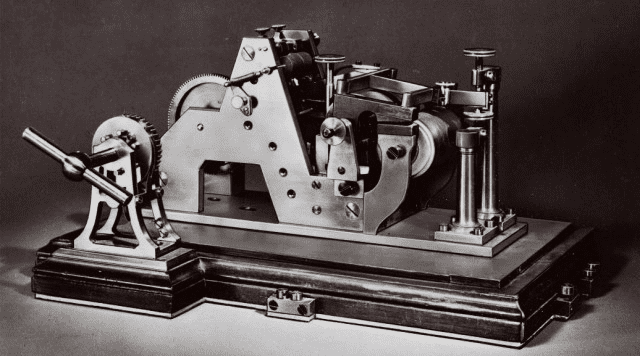
Many are familiar with Morse code and the telegraph developed based on it. Renowned inventor Samuel Morse became intrigued by electromagnetism during a trip to the United States. He envisioned a device capable of transmitting messages over distances and began working on a machine to transfer data onto paper.
Morse faced numerous challenges in bringing his vision to life. Despite setbacks, he persevered, learning from his mistakes, studying scientific literature, and conducting experiments. His persistence paid off in 1844 when the first telegram using Morse code was sent. Over the following years, telegraph poles began to appear across the United States and other countries, revolutionizing communication.
The Development of Telegraph Communication in Toronto

Telephone communication was invented in the 20th century, but the advent of the telegraph, as its precursor, was a groundbreaking technological achievement. It laid the foundation for real-time communication across cities and continents.
Toronto, as one of Canada’s most progressive and populous cities, quickly embraced this global innovation. The city was home to numerous scientists who contributed significantly to new technologies, furthering and adapting contemporary inventions.
Telegraph lines connected Canada’s largest cities, enabling rapid dissemination of news. Journalists benefited immensely, as updates from one part of Toronto could now swiftly reach residents in another.
On December 19, 1846, Canada saw its first successful exchange of messages via telegraph. The country’s first telegraph company was established through the collaborative efforts of T.D. Harris and the law firm Gamble and Boulton, whose partner William Henry Boulton was the mayor of Toronto. In October 1846, representatives from the construction firm Livingston and Wells met with Harris, Gamble, and Boulton to discuss the possibility of laying a telegraph line from Buffalo to Toronto via St. Catharines and Hamilton. These talks culminated in the registration of the Toronto, Hamilton, St. Catharines and Niagara Electromagnetic Telegraph Company on July 28, 1847. Clarke Gamble was appointed director, and T.D. Harris became president.
The first successful transmission occurred when a group of Toronto entrepreneurs at their office on Front Street East received a question from a telegraph operator in Hamilton: “Who is in your office?” This message traveled 70 kilometers, marking a pivotal moment in Canadian communication.
The operator transmitted the message using a combination of dots and dashes via a telegraph key. This encoded signal traveled along telegraph lines to its destination, where it was decoded by a specialized device that translated Morse code into a readable message printed on paper tape.
In 1847, the Montreal Telegraph Company established a connection between Toronto and Montreal. Its office was located near the Toronto, Hamilton, St. Catharines and Niagara Electromagnetic Telegraph Company. In 1852, the two companies merged, expanding their reach. From that point onward, Torontonians began sending telegrams across the city and, eventually, to other countries and continents.
The introduction of telegraph communication marked a transformative period in Toronto’s history, bridging distances and laying the groundwork for future advancements in global connectivity.