

Toronto is home to hundreds of historic buildings that contribute to its unique atmosphere. Both locals and tourists have the opportunity to visit architectural landmarks throughout the sprawling metropolis. Today, we want to tell you about a truly unique structure – Gladstone House, one of Toronto’s oldest and most renowned hotel buildings. It is located on Queen Street West in the Parkdale neighbourhood. You can learn more about the hotel on our website, toronto-future.com.
The Beginning of the Hotel’s History
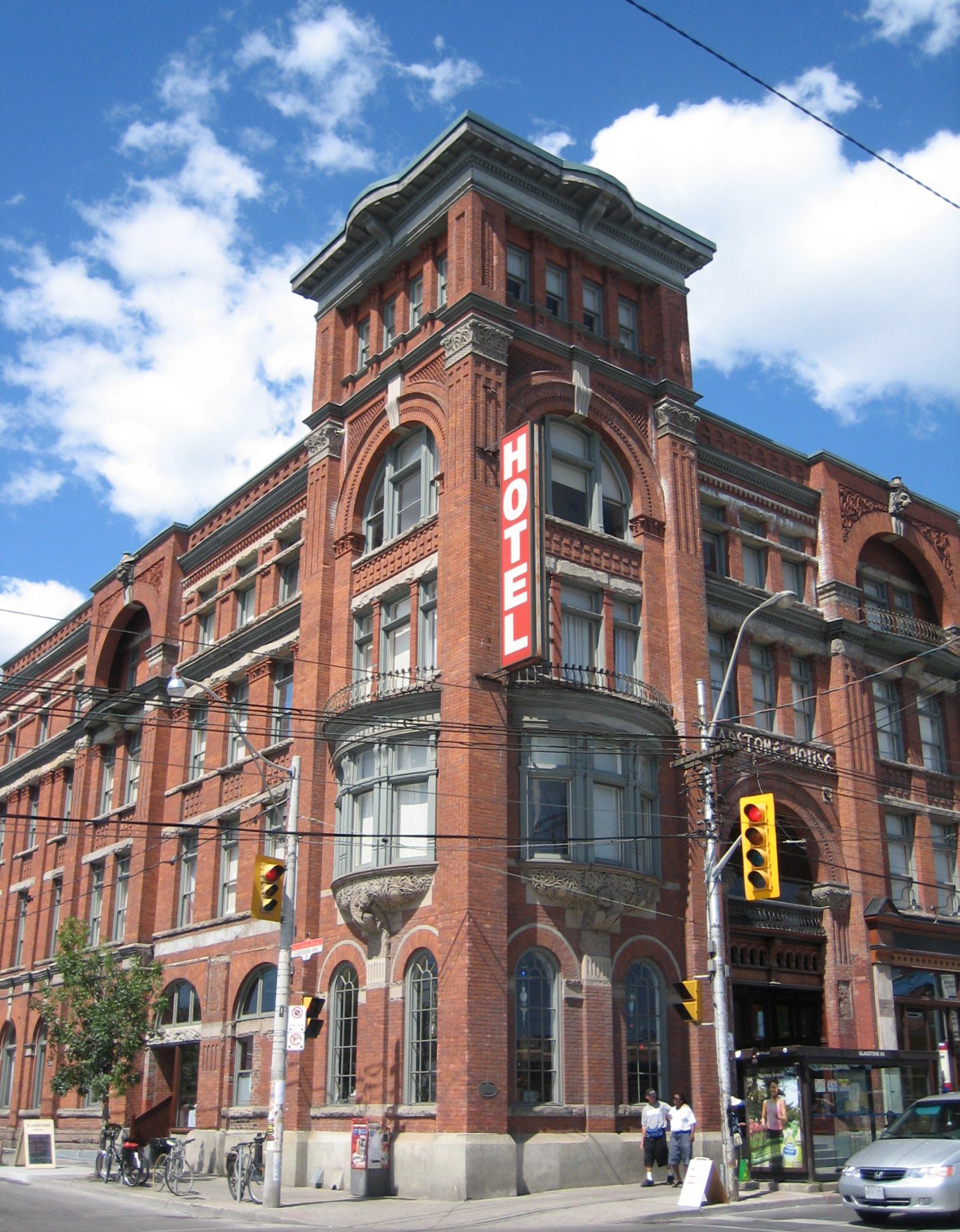
The hotel first opened its doors way back in 1889. Gladstone House was designed by the esteemed local architect George Martell Miller in the Richardsonian Romanesque style. It’s worth noting that this architectural style was incredibly popular for public buildings in the late 19th century. Locals were immediately struck by the building’s architecture. Indeed, the hotel is distinguished by its massive arches, rough-cut stone and brick, and a characteristic corner tower. The construction, however, came with a price tag of 30,000 Canadian dollars. As for its name, the hotel was called Gladstone House in honour of the nearby Gladstone Avenue. The first owner of Gladstone House was Susanna Robinson, a widow with 13 children. It’s important to mention that the hotel quickly became a popular destination for travellers. This was largely due to its prime location – directly across from the Parkdale railway station. The hotel also frequently welcomed guests attending the Canadian National Exhibition (CNE).
The Hotel’s Evolving Story
Throughout the 20th century, the hotel saw frequent changes in ownership. Consequently, each new owner brought alterations to the building’s interior and exterior. In the 1950s, the structure was updated with metal panelling, and its bar, Bronco’s, became a famous hotspot for country music. In 1973, the hotel was designated a historic landmark by the City of Toronto. However, Gladstone House subsequently began to fall into disrepair, transforming from a popular hotel into low-cost apartment units. The 2000s brought a new chance for revival for Gladstone House. The hotel was purchased by the Zeidler and Tippin families. Starting in 2003, an extensive renovation of the building commenced. As a result, original architectural details were meticulously restored, and the historic 1903 manually operated elevator was preserved. Furthermore, local artists were commissioned to design each guest room as an individual art project. Following this major refurbishment, the hotel re-emerged as a vibrant venue for art events, exhibitions, concerts, and festivals, notably including the acclaimed “Come Up To My Room” exhibition.
Gladstone House: One of Toronto’s Arts Centres
Today, Gladstone House is celebrated as a boutique hotel featuring 55 unique rooms, a restaurant, bars, art spaces, and distinctive interiors. The new owners have masterfully managed to blend history with contemporary style. The hotel is a frequent host to a diverse array of cultural events. The main ones include:
- The “Come Up To My Room” Exhibition: Since the early 2000s, the hotel has hosted this annual alternative design exhibition, which brings together designers, artists, and architects. During this event, hotel rooms are transformed into captivating interactive installations. The exhibition has become one of Toronto’s most prominent art events, attracting both local and international participants.
- Musical and Literary Evenings: The hotel often comes alive with live concerts, literary gatherings, book launches, and similar events.
- Contemporary Art Festivals: It also regularly hosts engaging festivals dedicated to contemporary art, design, and culture.
Thanks to these initiatives, Gladstone House has evolved from merely a historic hotel into an influential hub of Toronto’s cultural life.
So, that’s the story of the creation and transformation of this historic Toronto hotel. We hope this article was informative and that you learned more about your city.