

The First World War was a horrific chapter in the history of most nations, and Canada was no exception. Fortunately, no battles were fought on our city’s soil. However, as Canada’s largest city and a vital economic and administrative hub, Toronto played a pivotal role in supporting the country’s war effort. The city quickly mobilized to provide the army with personnel, materials, and funding. Today, we’ll explore the years of the First World War and the city’s aviation during this challenging time. You can read more on toronto-future.com.
Aviation in Toronto During the First World War
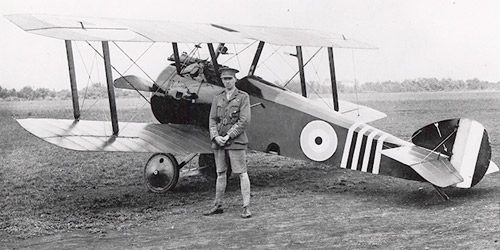
It’s important to note that during the First World War, aviation in Toronto and the surrounding region was still in its infancy. To begin with, Canada did not have its own air force at the outset of the war. This led to the creation of the Canadian Aviation Corps (CAC) on September 16, 1914, as part of the Canadian Expeditionary Force. This unit was incredibly small, initially consisting of just two officers, one mechanic, and not a single aircraft.
In Toronto, aviation was primarily used for training pilots and supporting the war effort as part of the British Empire. Scientific and technical developments also played a crucial role. Notably, the first flight of the Silver Dart, achieved by Alexander Graham Bell’s team in Canada in 1909, had laid the groundwork for aviation in the region.
Canada established training bases across the country to prepare pilots and observers for service in the British air services. Over two years, these bases trained more than 3,000 pilots and over 130 aerial observers, the majority of whom went on to see combat in Europe.
Throughout the First World War, Toronto became a major recruitment centre for volunteers, many of whom joined Canadian military formations operating under British command. The city was also a vital logistics hub, channeling supplies of weapons, equipment, and food to the Western Front. Many of the city’s businesses were repurposed for military production. While this spurred economic growth, it also created social challenges, such as labour shortages and shifts in the employment landscape.
Aviation Development During the Second World War
By the Second World War, Toronto had evolved into a critical hub for pilot training, aircraft manufacturing, and the organization of air operations. At the start of the war, the Royal Canadian Air Force (RCAF) had approximately 23 squadrons and a small fleet of aircraft. However, the country dramatically scaled up its capabilities during the war, growing to 78 squadrons and over 215,000 personnel.
A significant number of training bases and flight schools, part of the British Commonwealth Air Training Plan, were located in Ontario, including the areas around Toronto. It was here that thousands of pilots and technical personnel were prepared for service in both Canadian and other Commonwealth air forces. Furthermore, Toronto was a centre for manufacturing aircraft components and equipment, directly supporting the needs of the front lines.
Canadian aviation played a part in many key operations of the Second World War, including the Battle of the Atlantic against German U-boats, the landings in Sicily and Normandy, and providing air support for ground troops in Europe.
This is the story of Toronto’s aviation during the First and Second World Wars. We hope you’ve learned something new about our city’s history and have drawn your own conclusions.