

Today, as our fingers glide effortlessly across touchscreens or silent laptop keyboards, it’s hard to imagine that every printed character used to be the result of a complex mechanical choreography. The keyboard has become the ultimate tool for global communication, but the road to its modern form was paved with thousands of patents, mistakes, and brilliant insights. One of the most important—yet unfairly forgotten—chapters of this history is the invention of the “visible” typewriter by Canadian journalist and stenographer Edward Elijah Horton, as reported by toronto-future.com.
The Era of “Blind” Typing
To understand the magnitude of Horton’s invention, we need to peek into the offices of the 1870s. The first mass-produced typewriter to capture the market was the Sholes & Glidden, released by Remington in 1874. It was an elegant device, decorated with hand-painted flowers, and looked remarkably like a sewing machine (which makes sense, given that Remington specialized in those and firearms at the time).
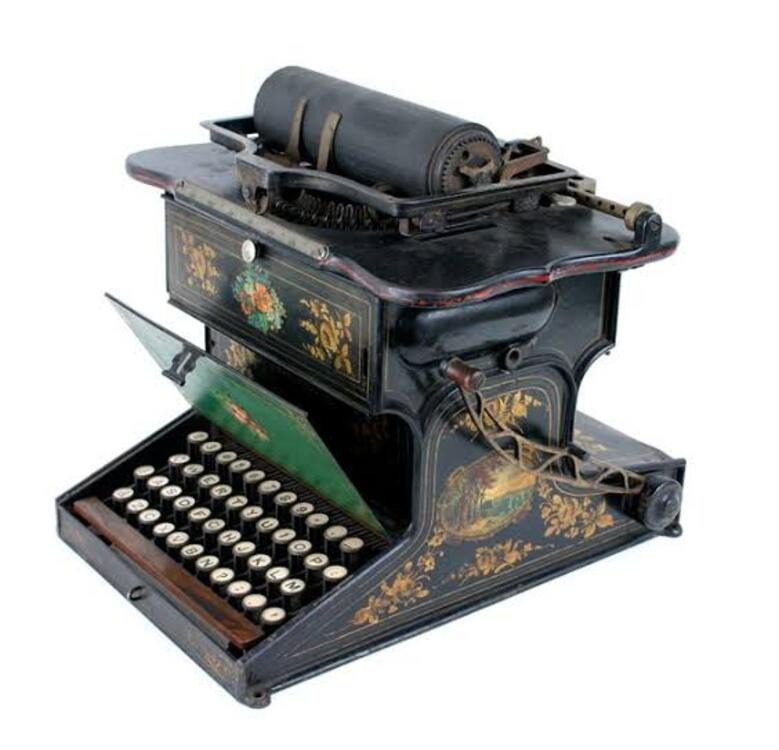
This machine was a technological marvel that introduced the QWERTY layout, but it had one colossal, fundamental flaw: it was “blind.”
How did it work?
- The metal typebars (the “typebasket”) were housed deep inside the mechanism, underneath the paper carriage.
- When a key was pressed, the typebar struck the paper from the bottom up.
- The paper itself was hidden by a massive platen and the carriage mechanism.
The result? Typists couldn’t see a single word they had just typed. To check the text, spot a typo, make sure a line didn’t end mid-word, or simply reread the last sentence to catch their train of thought, the operator had to physically lift the heavy carriage every single time. It was incredibly exhausting, drastically slowed down work, and turned editing into an absolute nightmare. Mark Twain, one of the first to buy a “blind” typewriter, constantly complained that it was ruining his nerves.
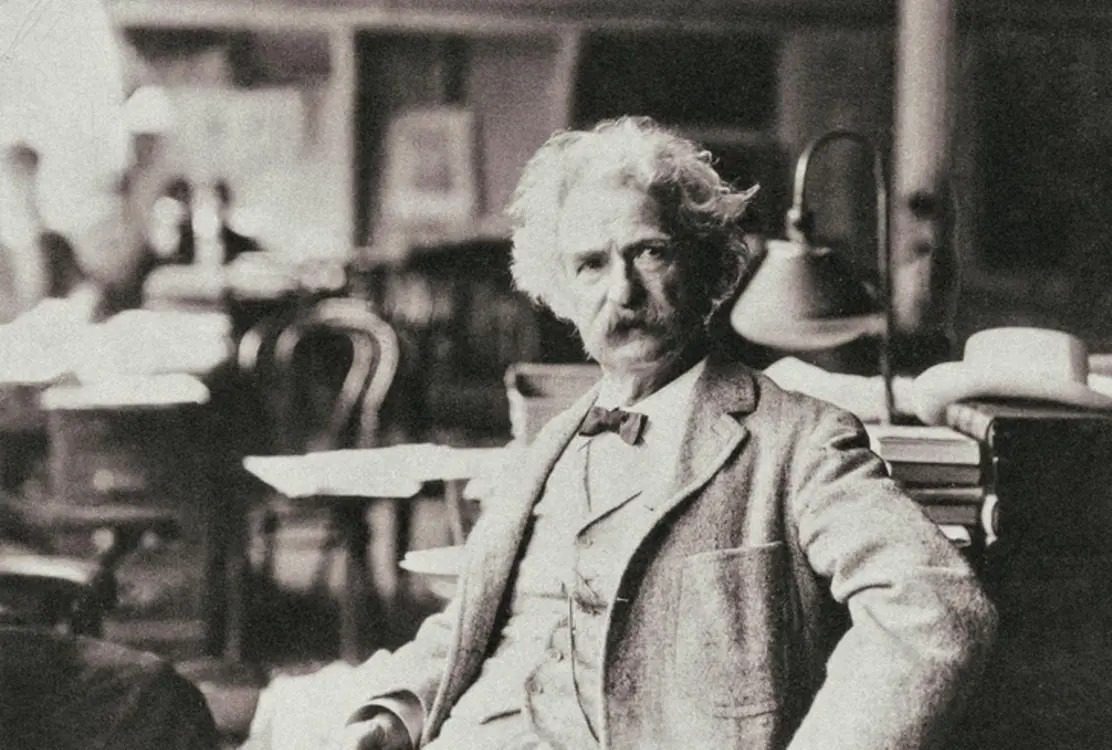
The industry accepted this as a necessary evil. It was widely believed that mechanically, there was no other way to arrange the keys without them jamming. But in Toronto, someone strongly disagreed.
The Court Reporter Who Challenged the Engineers
Edward Elijah Horton wasn’t your typical grease-stained engineer or mechanic. Born in 1847 on Wolfe Island (near Kingston), he moved to Toronto in his youth. He was a man of words and text: he worked as a reporter for The Globe and, by 1879, had become a highly skilled court reporter (stenographer) at the Ontario Court of Appeal in Toronto.
A court stenographer’s job back then demanded superhuman focus. Horton had to record every word spoken in the courtroom using Pitman shorthand, and then spend hours in the dim light of kerosene lamps transcribing those scribbles into coherent legal documents. When the first “blind” Remington typewriters hit Toronto, Horton immediately saw their potential for his profession. However, the inability to see what he was typing drove him crazy.
“Horton was a tinkerer, not a trained engineer. He was simply so intrigued by the possibilities of typewriting for his profession that he set out to design a mechanism allowing the operator to constantly see the fruits of their labour,” Canadian historians note.
The Anatomy of Innovation: How Horton Brought Text into View
In his spare time between court sessions, Horton experimented with levers, springs, and wood. His main goal was to move the typebars out from under the carriage and place them up front, so they would strike the paper directly in front of the typist’s eyes.
This required a completely new architecture for the device:
- Front-stroke action. Instead of striking from below, the typebars on Horton’s machine were angled from the front, hitting the visible side of the platen.
- Radial keyboard. The typewriter boasted a remarkably bold, open design. The mechanics weren’t hidden inside a heavy metal box. The levers were arranged radially, looking like a complex, almost living metal fan.
- Ribbon control. Horton also designed a mechanism that raised the ink ribbon only at the exact moment the key struck, dropping it instantly afterward to leave the typed character fully visible.
On October 16, 1883, while still working at the Toronto courthouse, Edward Horton secured a US patent for his invention, soon followed by a Canadian patent. It was an absolute breakthrough. The world had its first visible-typing machine.
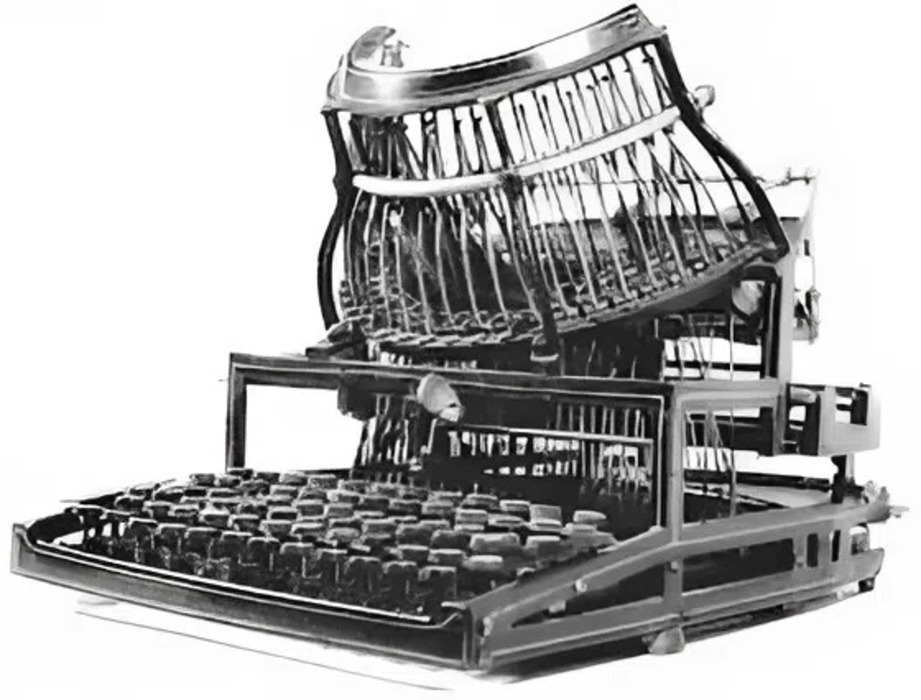
Canadian Pride: The Horton Typewriter Company
Realizing he held a technology capable of revolutionizing a multimillion-dollar industry, Edward teamed up with his brother Albert, who was also a reporter. In 1885, they founded The Horton Typewriter Company.
It was a historic milestone: the first—and, as it turned out, the only—typewriter manufacturing company in history to be entirely Canadian from concept to production. The headquarters and factory were based in Toronto. To tap into the American market, the brothers opened an additional plant in Buffalo, New York.
Promotional brochures of the era, distributed in Toronto and Boston (including in the Cosmopolitan Shorthander), spared no praise. The Horton was dubbed “the most perfect writing machine in the world.” And in terms of user ergonomics, that was absolutely true.
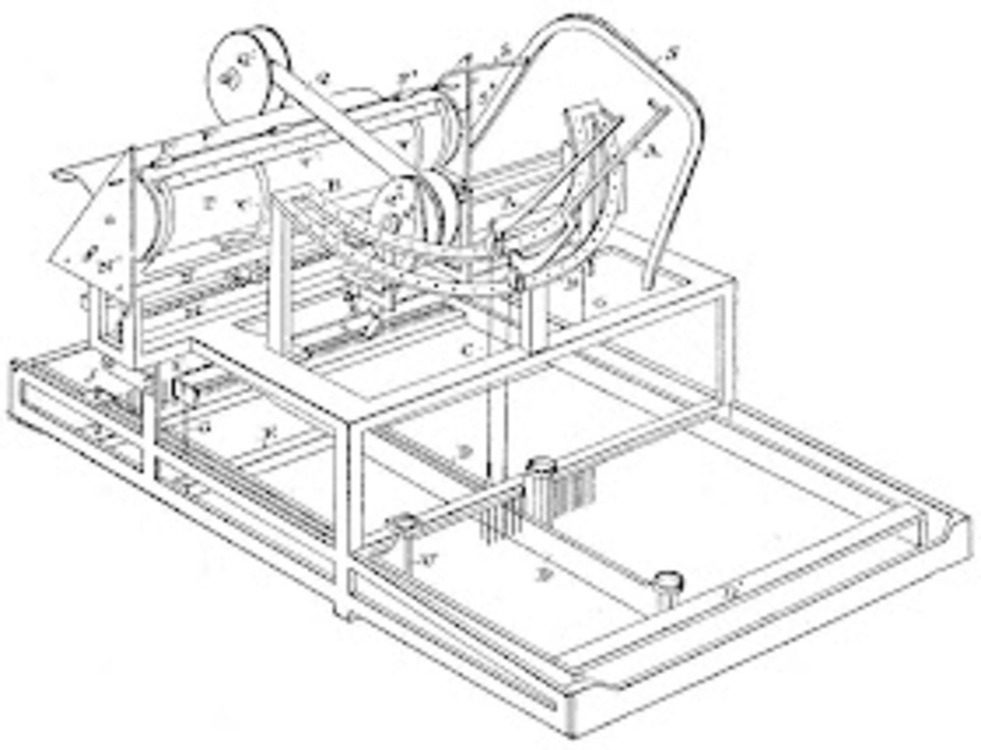
Horton’s invention hit the market at the perfect time. By the mid-1880s, typewriters had become a business staple. Interestingly, Horton’s sister, Elizabeth, was already working as a “typewriter” (typist) at a Toronto law firm in 1884. The role of the female secretary was just taking shape, and the typewriter became a key driver for women entering the workforce.
Why Didn’t the Toronto Invention Conquer the World?
It begs a logical question: if Horton’s machine was so superior to its contemporaries, why do we remember brands like Remington, Underwood, and Smith Corona today, while Horton is almost entirely forgotten? The answer lies in the ruthless business landscape of the late 19th century.
- Capital deficit. Manufacturing precision mechanics required massive financial backing. Setting up smooth, mass production of thousands of perfectly interlocking parts was incredibly difficult. The Horton brothers were talented reporters, but they weren’t financial tycoons.
- Pushback from monopolies. Companies like Remington, having already sunk millions into their “blind” typewriters, launched aggressive smear campaigns against visible typing. They tried to convince the public it was an “unnecessary fad” that made the machines fragile.
- Technical growing pains. While the front-stroke concept was pure genius, Horton’s early prototypes struggled with type alignment. Because of the complex striking angles, the text sometimes came out uneven.
In May 1887, the company had to reorganize, moving its registration to New Jersey in pursuit of American investors. The machine was redesigned, but the momentum was lost, and they never secured the necessary funding. Ultimately, after producing only a small batch of machines, The Horton Typewriter Company folded.
Later Inventions and Legacy
Edward Horton didn’t give up on inventing, even after his company’s commercial failure. In 1891, he received a patent in England for a mechanism that lifted the ink ribbon right at the moment of impact so it wouldn’t obscure the newly typed character—another step toward perfect text visibility. His interests were remarkably broad; in 1895, he even patented a steel-reinforced radial pneumatic tire.
His final major contribution to typewriter evolution was an 1898 patent for an end-of-page warning bell. This small mechanism, which alerted the typist that they were running out of paper, became the gold standard for all subsequent generations of mechanical typewriters.
Edward Horton passed away in Toronto in 1916, remembered by his peers as a respected court stenographer and a devout Anglican. He didn’t die a millionaire, but his ideas fundamentally changed an industry.
How Horton’s Invention Changed the Course of History
The commercial failure of the Horton brothers’ company didn’t mean their idea was dead. On the contrary, by introducing his machine to the market, Horton let the genie out of the bottle.
Secretaries, writers, and businessmen who experienced visible typing flat-out refused to go back to the “blind” Remingtons. The market felt the shift. In 1895, the highly successful Underwood typewriter debuted, utilizing (and mechanically perfecting) the front-stroke idea. By the 1910s, virtually every manufacturer in the world was forced to adopt the visible typing system. The architecture first patented by a Toronto reporter became the absolute, unshakeable global standard until the dawn of computers.
A Fun Fact for Collectors
Today, the Horton typewriter is a true Holy Grail for antique collectors. Their unique, open technical design makes every discovery an auction sensation. To date, only six of these machines are known to exist: three are housed in museums, and three are in private collections.
A Takeaway for Posterity
The story of the Horton typewriter teaches us that innovation is often born out of frustration.
Edward Horton was simply tired of constantly lifting a heavy metal carriage to check his court transcripts in Toronto. In solving his own routine problem, he forever changed the way humanity recorded information for the next century. He allowed millions of people to see their words the very second they were brought into the world.