

Toronto and the province of Ontario have been the birthplace of many talented and successful individuals. One such person is Roberta Lynn Bondar, a true pioneer. She is not only the first Canadian woman to travel to space but also the world’s first neurologist to do so. Today, we’re taking a closer look at the life of this remarkable astronaut. For more details, visit toronto-future.com.
Childhood and Education
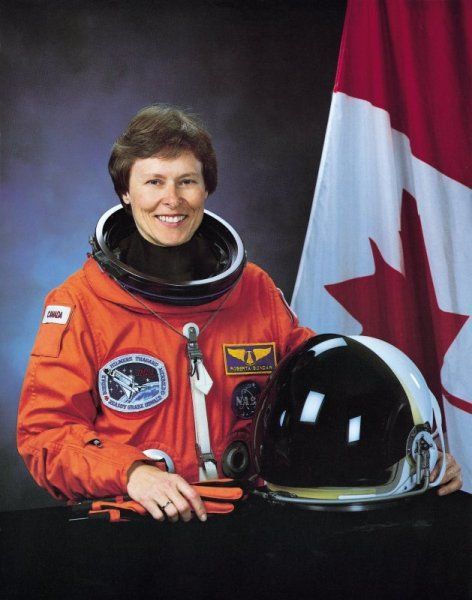
Roberta was born in 1945 in Sault Ste. Marie, Ontario. Her father was of Ukrainian descent, with roots in the Ivano-Frankivsk region.
From a young age, the future scientist was captivated by the world of science. Her father encouraged her curiosity by setting up a home laboratory where she could conduct biology experiments. Alongside her twin sister, Barbara, Roberta built model airplanes and developed a passion for astronomy. It was during her school years that she first began to dream of flying to space.
For her post-secondary education, Bondar attended the University of Guelph and later completed her doctorate at the University of Toronto, where she earned a PhD in neuroscience. Specializing in neurology, she went on to work in military medical institutions in both Canada and the United States.
The Journey to Space
In 1984, Bondar was selected to join NASA’s astronaut corps and began her training. Eight years later, that dream became a reality when she flew her sole space mission aboard the Space Shuttle Discovery (STS-42). The mission lasted from January 22 to 30, 1992.
Roberta Bondar spent 8 days, 1 hour, 14 minutes, and 44 seconds in space, securing her place in history as Canada’s first female astronaut. During her time in orbit, she conducted over forty scientific experiments. Her research focused on the effects of microgravity on the nervous system, eye movement, inner ear function, and the body’s sense of balance. This work played a crucial role in advancing the field of space medicine.
Her research provided critical analysis of how microgravity affects physiological processes, helping scientists understand how to prevent potential genetic changes during long-duration space flights. She also studied plant growth, discovering that seeds germinate faster in space than on Earth. Bondar examined the impact of cosmic radiation on biological systems, including bacteria and shrimp eggs. Additionally, her mission included experiments on heating fluids, processing materials, and growing mercury iodide crystals in a weightless environment.
Upon her return to Earth, Roberta Bondar continued her scientific career and was asked to lead NASA’s space medicine division. She has remained an active participant in international research projects and conferences. Bondar’s work has not only helped improve the safety and effectiveness of space missions but has also significantly advanced medical knowledge in the field of neurophysiology in microgravity.
Awards and Recognition
For her immense contributions to science and space exploration, Roberta Lynn Bondar has received numerous accolades. These include being appointed as an Officer of the Order of Canada and a member of the Order of Ontario, receiving the NASA Space Medal, and being inducted as a Fellow of the Royal Society of Canada. She also has a star on Canada’s Walk of Fame.
Bondar holds honorary doctorates from more than 20 universities in Canada and the United States. In her honour, Asteroid 13693 was named after her in 1997. In 2017, the Royal Canadian Mint released a special commemorative coin to celebrate the 25th anniversary of her historic space flight.
This is the story of an outstanding Canadian astronaut from Ontario who broke barriers and became the first woman from her country to reach for the stars. We hope this look into her life and achievements has been insightful.