
If you step onto the observation deck of Toronto’s iconic CN Tower, you are greeted by a breathtaking panorama of a modern metropolis. But a keen observer will spot a fascinating detail beyond the ribbons of highways and glass facades: the roofs of hundreds of skyscrapers are painted green. These aren’t just decorative touches. They are real, living green roofs that have become a hallmark of Canada’s largest city.
Today, Toronto is undergoing a new phase of environmental evolution. Armed with some of the world’s most progressive legislation on building landscaping, the city is looking to go even further. The ultimate goal is to transform these passive green spaces into high-tech farms capable of feeding thousands of urbanites, reports toronto-future.
A Success Story: How the Law Reshaped the City
Toronto made history in 2010 by becoming the first city in North America to adopt a mandatory Green Roof Bylaw. This milestone was preceded by years of research and grassroots activism. Back in 2001, the organization Green Roofs for Healthy Cities partnered with the municipality to set up the first demonstration plots on the roof of City Hall. The goal was to prove the technology’s effectiveness in practice. The results exceeded expectations, revealing massive potential for cutting energy costs and improving the urban microclimate.
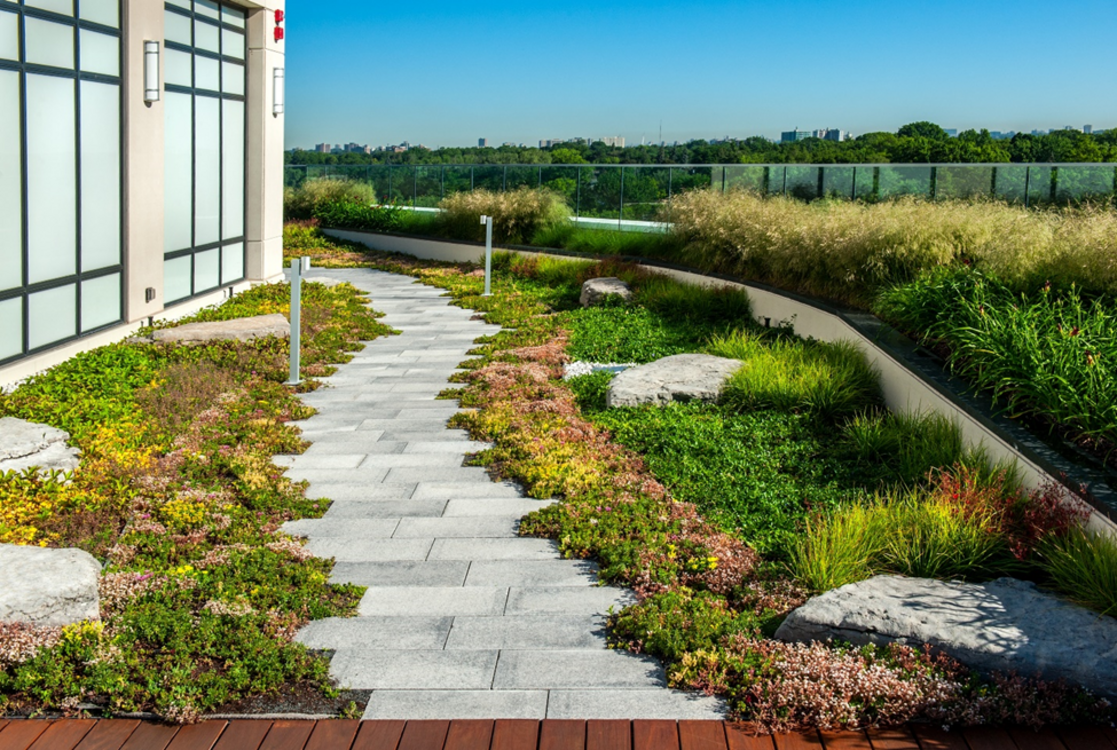
In 2006, the Province of Ontario made a landmark amendment to the City of Toronto Act (COTA). The municipality was granted the unique authority to mandate the construction of green roofs, bypassing standard building codes. It was an unprecedented move.
Under current legislation, all new residential, commercial, and institutional buildings with a roof footprint exceeding 2,000 square meters must feature a green roof. The requirements vary based on size:
- For buildings between 2,000 and 4,999 square meters, at least 20% of the available roof space must be vegetated.
- For giant structures over 20,000 square meters, this figure jumps to 60%.
If technical constraints prevent a developer from meeting this requirement, they can apply for an exemption. However, this comes with a fee: $200 for every square meter of green space not built. These funds are channeled directly into the Eco-Roof Incentive Program, which finances voluntary landscaping on older buildings.
Over the program’s 15-year run, Toronto has developed more than 1,200 green roofs covering over one million square meters. To put that in perspective, it’s roughly the size of 140 football fields. This initiative sparked a booming $50-million industry. Specialized nurseries, material warehouses, and an army of certified high-altitude landscaping professionals have sprung up within a 200-kilometer radius of the city.
The Metropolis’s Environmental Shield
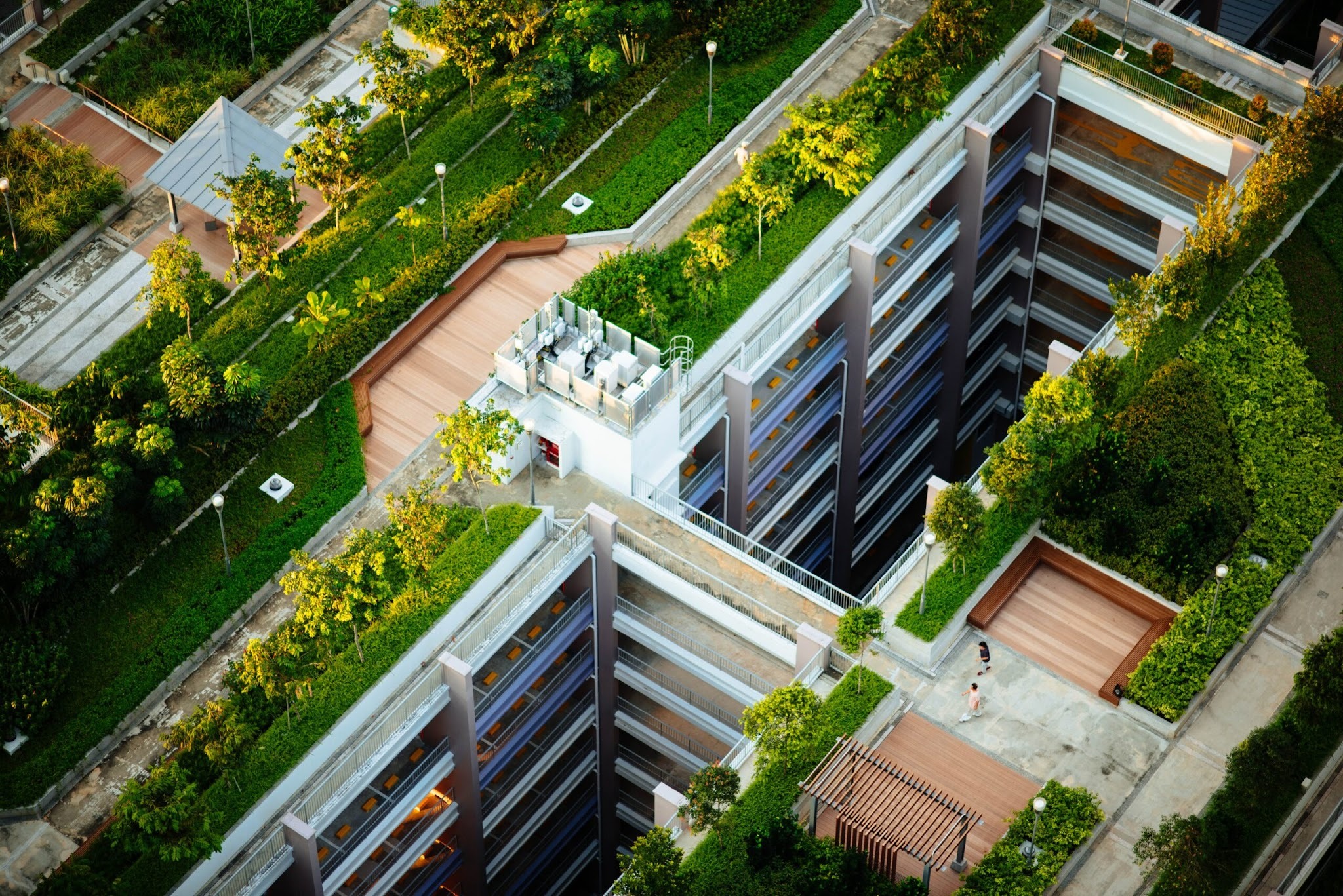
Toronto’s green roofs perform several critical environmental functions, making life in the metropolis significantly more comfortable and secure.
- Fighting the “Urban Heat Island” Effect
In summer, concrete and asphalt-bound cities turn into thermal traps where temperatures run several degrees higher than in the suburbs. Dark surfaces absorb solar energy, baking the air. Green spaces, however, do the exact opposite. Through evapotranspiration—where plants and soil release moisture—they actively cool the surrounding environment. Studies show that greening just 6% of Toronto’s roofs could drop citywide summer temperatures by 1–2 °C. This alone could save around $1 million annually in air conditioning costs.
- Stormwater Management
During heavy downpours, municipal sewer systems often struggle to handle the sheer volume of water. Modern green roofs act as giant sponges. In summer, they retain 70% to 80% of rainfall, and about 25% to 40% in winter. The water is absorbed by plants and the growing medium, eventually evaporating back into the atmosphere. The excess drains off much slower, reliably preventing flash floods.
- Air Purification and Noise Insulation
A single square meter of uncut roof grass can absorb up to 0.2 kg of dust and airborne particulates in a year, all while producing enough oxygen to support one person for the entire year. Moreover, the thick layer of soil is an excellent sound insulator. A prime example is the green roof of the Australasia Pavilion at the Toronto Zoo (covering 111.5 m²). It reduces indoor noise levels by 40–45 decibels, creating a comfortably quiet environment for both animals and visitors.
From Simple Landscaping to Sky-High Farming: A Challenge for Scientists
Despite these massive successes, most of Toronto’s 1,200 green roofs are of the “extensive” type. They feature a very thin layer of soil (about 8–10 cm), lack irrigation systems, and are planted almost exclusively with sedum. This remarkably hardy succulent thrives in extreme heat and drought. While sedum is fantastic at retaining water and insulating buildings against the heat, it offers little practical value when it comes to food security.
Researchers at the University of Toronto Scarborough decided it was time to change the game. Their goal? To figure out how to transform these passive green mats into productive urban farms yielding fresh vegetables and herbs.
The project is spearheaded by Professor Marney Isaac (an expert in plant-soil interactions) and Assistant Professor Scott MacIvor (a biodiversity specialist). The scientists firmly believe that urban agriculture is the key to making megacities resilient against climate change and potential food supply disruptions.
As Marney Isaac explains, while new green roofs are popping up across the city at an impressive rate, they are not yet designed for growing food. Their ambitious project aims to bridge the gap between these two vital trends.
An Experiment in the Clouds: Sedum as a “Nurse Plant” for Vegetables
The biggest hurdle to growing vegetables on skyscraper roofs is the extreme environment. Blistering sun, gale-force winds, a lack of natural shade, and critically shallow soil all work against the farmers. If you simply plant beans or parsley in a dry sand-and-gravel mix on the 20th floor, they will die almost instantly.
PhD candidate Adriano Roberto and master’s student Andrew Nichols came up with an elegant solution. Instead of viewing sedum as a competing weed, they proposed using it as a caring “nurse plant.”
To put their theory to the test, they installed 400 experimental modules (60×40 cm containers) on the roofs of the university’s Highland Hall and Science Wing. They planted three popular crops: beans, parsley, and kale. Half the vegetables were planted traditionally in bare soil, while the other half were intercropped with sedum.
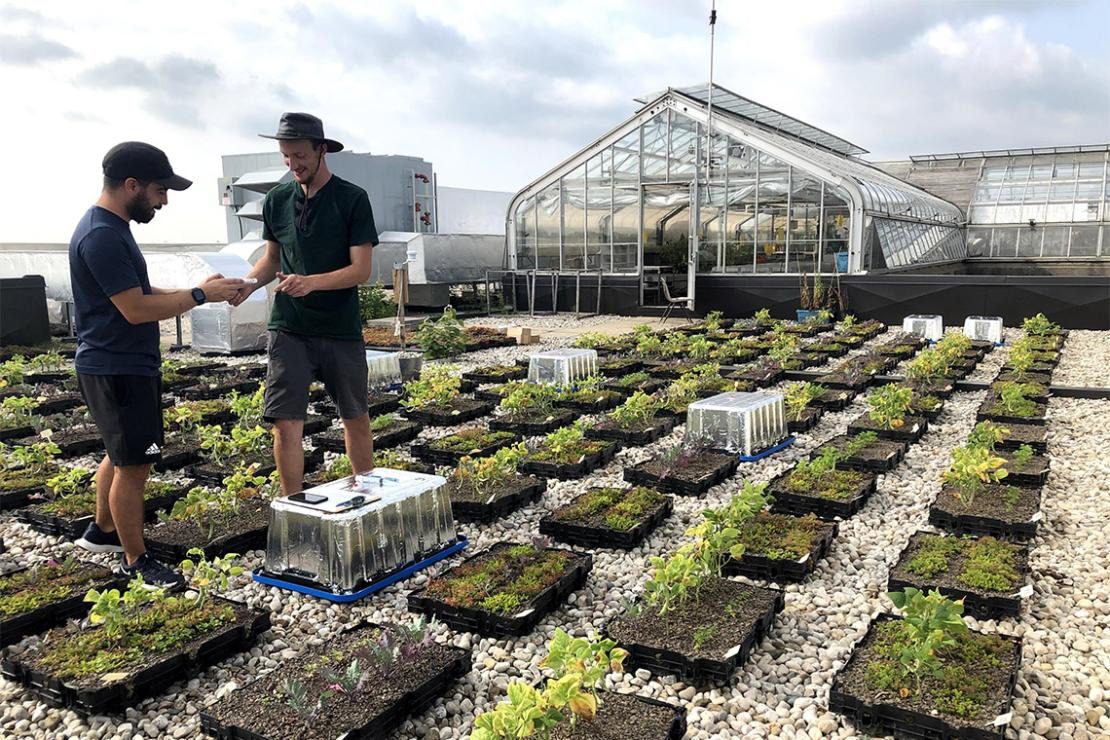
Their scientific hypothesis is straightforward: the drought-resistant sedum rapidly spreads to form a dense carpet, helping delicate vegetable crops survive by:
- Shading the soil and lowering its temperature on scorching days.
- Trapping precious moisture in the growing medium, preventing it from instantly evaporating in the wind.
- Reliably protecting the neighboring root systems from both frost and overheating.
In agronomy, this technique is known as companion planting or polyculture. The researchers carefully selected plant partners with one main rule: their root systems shouldn’t compete. Instead, they must work in tandem to improve the microclimate within the module.
Using aggressive synthetic fertilizers on roofs is out of the question—rainwater would inevitably wash the chemicals directly into the city’s sewer system. So, the researchers turned to organics. They are currently testing vermicompost (worm castings). This 100% eco-friendly fertilizer supplies the plants with essential nitrogen, phosphorus, and trace elements without harming the urban ecosystem.
This crucial project received substantial funding through a $1.6 million grant from the Natural Sciences and Engineering Research Council of Canada (NSERC) for the DesignLIFES network, which focuses on engineering “living infrastructure” for the cities of tomorrow.
Types of Green Roofs: What Works for Farming?
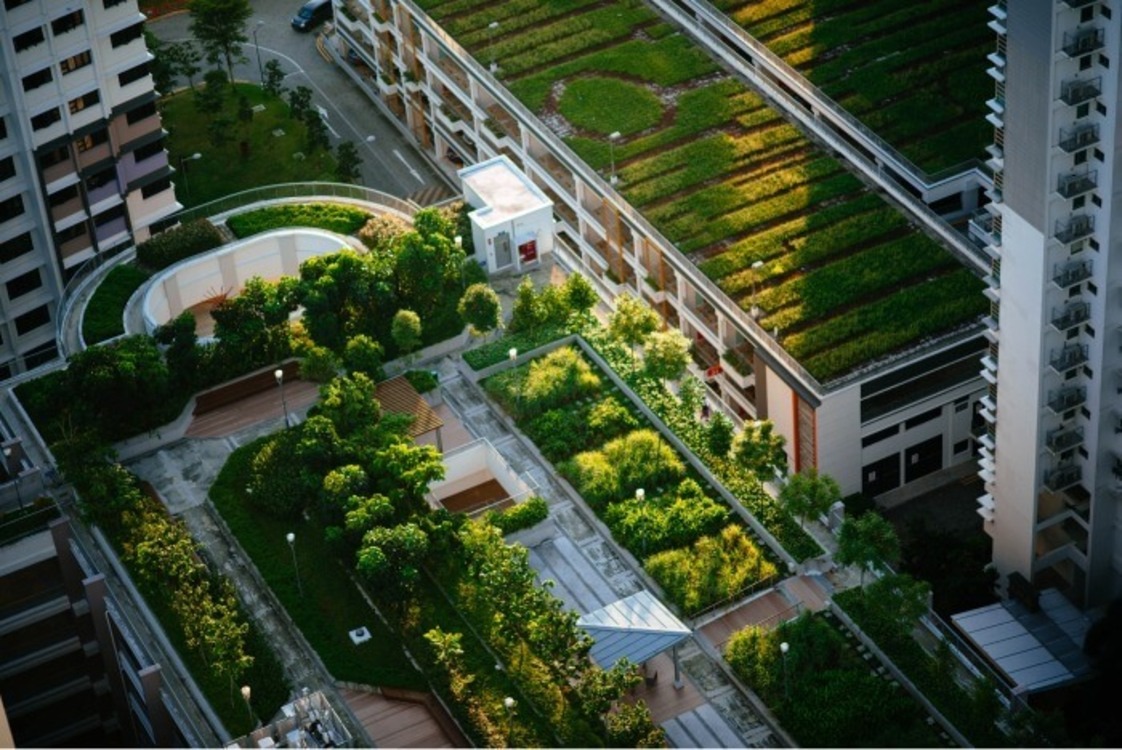
To fully appreciate the scope of the scientists’ work, it helps to understand the three main categories of green roofs used in modern architecture:
- Extensive roofs. The soil layer here is no deeper than 10 cm. They are lightweight, requiring almost no maintenance or irrigation. This is an ideal environment for mosses, meadow grasses, and sedum. It’s precisely this type that researchers are now trying to retrofit for growing edible greens.
- Semi-intensive roofs. Here, the soil is deeper—ranging from 10 to 20 cm. This allows for a broader spectrum of plants: lawn grasses, perennials, wildflowers, and even small shrubs. Essentially, it strikes the perfect balance between the structural weight and its visual and practical potential.
- Intensive roofs. These are bona fide high-altitude parks with a soil depth of over 30 cm. Large bushes and even trees thrive in these conditions. This is the type used to create full-scale urban farms. However, they demand reinforced building structures, major financial investments, and continuous upkeep.
The Future of Urban Space: How Toronto’s Green Roofs Are Changing the World
Toronto’s experience clearly proves that green roofs have long outgrown their status as a neat architectural gimmick or an eco-activist fad. Today, they are a vital piece of urban infrastructure. They literally help megacities adapt to the realities of global warming.
But the real revolution is unfolding right now on the roofs of university buildings and laboratories. If the Canadian scientists’ experiment succeeds and sedum proves its worth as a “nurse plant” for agriculture in shallow soil, it will trigger a massive transformation. Thousands of hectares of empty, gray roofs around the world could be turned into blooming vegetable gardens, growing fresh produce right above consumers’ heads.
This approach would drastically slash the carbon footprint associated with food transport. Low-income neighborhoods would gain access to fresh food, and our concrete jungles would finally become truly living, self-sustaining ecosystems. Toronto is confidently leading the way, proving by example that the future of humanity lies at the intersection of high technology, smart legislation, and a profound respect for nature.

